- Suppliers






ADM 
Antares 
Armor Pharma 
Asahi KASEI 
Ashland 
BASF 
Beneo 
Captisol 
Clariant 
Croda 
DFE Pharma 
Dow 
Excipio Chemicals 
Fuji Chemical 
Gattefossé 
Gangwal 
Indovinya 
Ingredient Pharm 
IOI Oleo 
JRS Pharma 
KLK Oleo 
Lipoid 
Lubrizol Life Science Health 
MAGNESIA 
MEGGLE 
Mingtai Chemical 
Nagase Viita 
Nordic Bioproducts 
pharm-a-spheres 
PMC Isochem 
PQ 
Seppic 
ShinEtsu 
Sigachi 
SPI Pharma 
Südzucker 
Vikram Thermo 
Zerion Pharma  All4Nutra
- Suppliers
ADM Antares Armor Pharma Asahi KASEI Ashland BASF Beneo Captisol Clariant Croda DFE Pharma Dow Excipio Chemicals Fuji Chemical Gattefossé Gangwal Indovinya Ingredient Pharm IOI Oleo JRS Pharma KLK Oleo Lipoid Lubrizol Life Science Health MAGNESIA MEGGLE Mingtai Chemical Nagase Viita Nordic Bioproducts pharm-a-spheres PMC Isochem PQ Seppic ShinEtsu Sigachi SPI Pharma Südzucker Vikram Thermo Zerion Pharma - All4Nutra

Recent advances in 3D and 4D printing in pharmaceutical technology: applications, challenges, and future perspectives

Recent advances in 3D and 4D printing in pharmaceutical technology
Abstract
Background
The conventional drug delivery devices always present a “one-size-fits-all” approach which limits their application in pharmaceutical industry, because of their inability to adapt to individual pharmacokinetic features. Three-dimensional (3D) printing is the most economical substitutes for transferring from the “one-size-fits-all” approach (i.e., mass production) to fabricate small individualized batches.
Main text
3D printing, advanced by the additive manufacturing technology, has gained growing demanding and popularity to develop pharmaceutical dosage forms and medical devices; and offered much more preferences over the traditional fabrication technologies. This advanced technology presents the ability of fabricating customizable design, 3D structures with sophisticated architecture, intended for personalized treatment. As a further advancement, the emergence of four-dimensional (4D) printing extensively contributed to the advancement of personalized medication by combining the benefits of smart multiple functional materials with the 3D printing technology. In spite of all of the offered notable progresses in both techniques, some regulatory issues, scalability, and production cost present key obstruction.
Conclusions
In the present article, an overview on the latest research articles demonstrating some step forward accomplishments for exploiting 3D and 4D printing technologies in developing advanced pharmaceutical dosage forms, medical devices, and tissue engineering as well as presenting the foremost challenges and future perspectives.
Introduction
There is always a continuous demand for developing advanced drug delivery systems (DDS) to boost the therapeutic effect of pharmaceutically active ingredients, including large biomolecules (e.g., peptides and proteins) suffering from poor bioavailability, hydrophobicity, or narrow therapeutic window. Conventional DDS demonstrate a restricted ability for adapting to patient-to-patient pharmacokinetic behaviors variations [1, 2]. Additionally, conventional DDS are more likely to cause undesirable side effects resulting from over- or underdosing [3]. Failure of precisely dose controlling based on individual patient differences can lead to patient incompliance, mainly for pediatrics and geriatrics [4, 5]. More specifically, the use of implantable DDS may rise some safety concerns related to the unfavorable foreign body reactions [6]. Additionally, the presence of different formulations for a certain drug varying the dosage and physical form may affect its in vivo performance [7]. Also, the limitations in size and design of conventional DDS restrict the highest incorporated dosage in a single device, which, in turn, affects the ability and durability for long-term delivery. Accordingly, the need for dosage controlled DDS has attracted the attention of scientists for the last years [8].
Since the research in the drug delivery field constantly attempts to meet new challenges and hard-to-reach therapeutic objectives, such as enhancing the pharmacokinetic profiles, and improving patient compliance, this attitude entailed to manufacture unusual approaches for advanced fabrication techniques [9]. Additive manufacturing has been developed as a highly auspicious procedure for personalized medicine in the pharmaceutical technology field, to resolve the problems related to current DDS [8].
Additive manufacturing, also known as 3D printing technology, utilizes a 3D model as a base to superimpose printing materials layer by layer with computer-aided control into a 3D object using a printer [10]. Additive manufacturing offers greater flexibility levels for the creation of sophisticated 3D structures directly based on design requirements. Compared to conventional manufacturing techniques since 1980 s, and till now, emerging 3D printing technologies have been developed and applied [11, 12]. Because of its extremely automated, high efficiency, extraordinary precision, and low cost, this advancing technology plays a significant role in the fields of construction, automotive industry, electrochemical energy storage, aerospace, flexible sensing as well as medical devices [12].
On the other hand, the more advanced four-dimensional (4D) printing, the smart materials are 3D printed to produce items that alter their shape after production, in a programmed manner over time, when exposed to a certain external stimuli. 4D-printed dosage forms differ from 3D ones in that time is considered as the 4th dimension during their performance. The term “4D printing” describes smart materials manufactured by the additive technique to produce easily achieved, complex-shaped, nonstatic objects that are more advanced than 3D objects. 4D-printed objects can be manufactured with 3D printers [9].
Moreover, 3D printing can be exploited in the biomedical research fields represented in regenerative medication, tissue engineering, cancer research, and drug screening. The term “Bioprinting” describes this emerging, potent, and multipurpose biofabrication technique which demonstrated promising applications in this field. In bioprinting process, depositing solutions or hydrogels of cell-laden polymer on a podium constructed using a computer-aided design (CAD) model is performed [8, 13, 14]. Various merits are offered by bioprinting process over other conventional biofabrication techniques, such as the accurate modeling of cells and biologics, permitting coprinting of numerous cells and biomaterials, and assisting the construction process for a tissue or an organ by imitating three-dimensional (3D) model [15, 16].
Commonly adopted bioprinting methods comprise inkjet-based bioprinting, laser-assisted bioprinting, and extrusion-based bioprinting. The former lies bioink picoliter droplets, via a noncontact process, on a substrate. On the other hand, laser-assisted bioprinting utilizes a laser source to deposit biomaterials onto a substrate. [17, 18]. While in extrusion-based bioprinting technique, layer-by-layer bioink deposition creates predesigned 3D constructs. Such technique offers an advantage of printing highly viscous ink and high cell density over the other techniques, and thus, it is the mostly adopted bioprinting technique [17]. This technique was adopted by Joung et al. to fabricate a spinal cord scaffold aiming to construct an in vitro tissue model of complex central nervous system [19], to fabricate 3D scaffolds intended for bone regeneration by Roque et al. [20], and also employed by Gospodinova et al. to develop hydroxyethylcellulose-based bioink implanted with Hela cells to bioprint a model for cervical tumor [21]. Extrusion-based bioprinting can be further differentiated, based on ink dispensing systems, into the following categories: screw-driven dispensing, piston-driven dispensing, and pneumatic dispensing [22].
Some complications are needed to be overcome upon applying the bioprinting technology. The most challenging one is to simultaneously adjust the bioink printability and keep cell functionality and viability throughout the bioprinting process. Bioink printability considers the ability to form a reliable, integral, and good shaped predesigned 3D constructs [23,24,25,26]. Printability significantly influences the biological function and mechanical properties of printed scaffolds, and is controlled by intrinsic and extrinsic factors [24, 27]. Intrinsic factors are related to bioink properties represented in its concentration, composition, and ratio of the composing components. In contrast, extrinsic factors comprise nozzle characteristics, cross-linking conditions, printing parameters and temperature. An equilibrium between printability and cell viability must be considered, as for example, increasing bioink concentration over a certain level may restrict cell proliferation and spreading [28], while decreasing bioink concentration inversely affects the printability and mechanical properties [29]. Moreover, extreme printing speed and pressure induce excessive shear stress which could ruin cell viability [30], and also, diminish the surface tension and viscosity of the used ink, bringing about poor printability [31]. Consequently, to guarantee both the mechanical characteristics of bioprinted structures and the biological functionality, careful monitoring of the bioprinting-related factors should be kept in consideration.
The current article provides an in-depth demonstration on the latest applications of 3D and 4D printing technologies for developing drug delivery carriers and medical devices, major technical contests and regulatory issues, as well as the future perspective.
Download the full article as PDF here Recent advances in 3D and 4D printing in pharmaceutical technology
or read it here
Salama, A.H. Recent advances in 3D and 4D printing in pharmaceutical technology: applications, challenges, and future perspectives. Futur J Pharm Sci 11, 107 (2025). https://doi.org/10.1186/s43094-025-00866-8
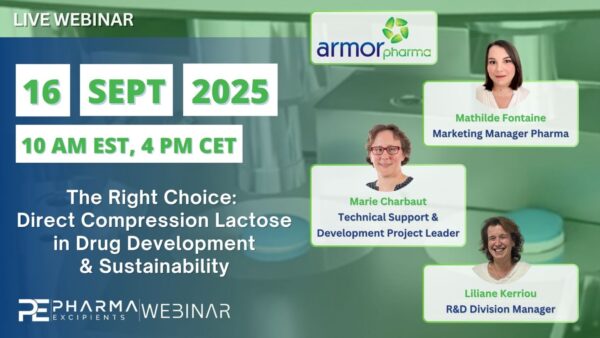
Visit our free webinar:
The Right Choice:
Direct Compression Lactose in Drug Development & Sustainability