





Pharma Excipients
No Result
View All Result
  • Login
  • Shop
  • News
    • Specials
      • Excipients for CBD
      • Excipients & 3D Printing
      • Infographics – The overview
      • GMP-certified excipient production sites
      • The Future of TiO2
      • Excipients in the COVID-19 Vaccines
      • BASF PVP-Iodine
      • RegXcellence™
      • BASF Parenteral Excipients
    • World Days – The overview
  • Excipient basics
    • Excipient Solutions for CBD
    • Inorganic Chemicals
      • Calcium Carbonate
      • Calcium Phosphates
      • Calcium Sulfate
      • Halites
      • Metallic Oxides
      • Silica
    • Organic Chemicals
      • Actual Sugars
      • Artificial Sweeteners
      • Carbohydrates
      • Cellulose
      • Cellulose Esters
      • Cellulose Ethers
      • CMC and Croscarmellose Sodium
      • Converted Starch
      • Dried Starch
      • Microcrystalline Cellulose
      • Modified Starch
      • Starch
      • Sugars
      • Sugar Alcohols
    • Petrochemicals
      • Acrylic Polymers
      • Glycols
      • Mineral Hydrocarbons
      • Mineral Oils
      • Mineral Waxes
      • Petrolatum
      • Polyethylene Glycol (PEG)
      • Povidones
      • Propylene Glycol
      • Other Petrochemical Excipients
    • Oleochemicals
      • Fatty Alcohols
      • Glycerin
      • Mineral Stearates
      • Pharmaceutical Oils
      • Other Oleochemical Excipients
    • Proteins
  • Applications
    • 3D Printing – Drug Carrier
      • 3D Printing
      • Binder
      • Coating
      • Colour / Color
      • Coating Systems and Additives
      • Controlled Release Excipient
      • DC excipient
      • Disintegrant / Superdisintergrant
      • Drug Carrier
    • Emulsifier – Glidant
      • Emulsifier
      • Excipient for Inhalation
      • Filler
      • Film former
      • Flavour / Flavor
      • Glidant
    • Lubricant – Preservative
      • Lubricant
      • Nanotechnology
      • Orally Dissolving Technology Excipient
      • Pellet
      • Plasticizer
      • Preservative
    • Solubilizer – Viscocity Agent
      • Solubilizer
      • Speciality Excipient
      • Surfactants
      • Suspension Agent
      • Sustained Release Agent
      • Sweeteners
      • Taste Masking
      • Topical Excipient
      • Viscosity Agent
  • Sources
    • Handbook of Pharmaceutical Excipients – 9th Edition
    • EINECS Numbers
    • Excipient DMF List
    • Excipient cGMP Certification Organisations
    • FDA Inactive Ingredient List
    • FDA GRAS Substances (SCOGS) Database
    • Excipient E-Numbers
    • Whitepapers / Publications
    • Contract Development|Contract Manufacturing
  • Suppliers
    Excipient Suppliers List
    BIOGRUND Logo
    Evonik Logo
    LI logo violet
    logo roquette
    ADM
    Armor Pharma
    Asahi KASEI
    Ashland
    BASF

    Beneo

    Captisol

    Clariant Logo

    Clariant
    Croda
    DFE Pharma
    Excipio Chemicals
    Fuji Chemical
    Gattefossé

    Gangwal

    IamFluidics
    IamFluidics
    IOI Oleo
    Ingredient Pharm
    JRS Pharma
    Kerry Logo
    Kerry
    KLK Oleo
    KLK Oleo
    Lipoid
    Lubrizol Life Science Health

    Lubrizol Life Science Health
    MAGNESIA

    MAGNESIA
    MEGGLE Excipients & Technology
    MEGGLE
    Nagase Viita
    Nagase Viita
    Nordic Bioproducts
    Nordic Bioproducts
    Pfanstiehl
    Pfanstiehl
    pharm-a-spheres
    pharm-a-spheres
    PMC Isochem
    PMC Isochem
    Seppic
    Seppic
    ShinEtsu
    ShinEtsu
    Sigachi
    Sigachi
    SPI Pharma
    SPI Pharma
    Südzucker
    Südzucker
    Vikram Thermo
    Vikram Thermo
    Zerion Pharma
    Zerion Pharma
    • A-B
      • ADM
      • ARMOR PHARMA
      • Ceolus™ & Celphere™
      • Ashland
      • BASF
      • Beneo – galenIQ
      • Biogrund
      • Budenheim
    • C-G
      • Captisol
      • Croda
      • Cyclolab
      • DFE Pharma
      • DuPont Pharma Solutions
      • Evonik
      • Fuji Chemical Industries
      • Gattefossé
      • Gangwal Healthcare
    • I-O
      • ingredientpharm
      • IOI Oleochemical
      • JRS Pharma
      • Kerry
      • KLK Oleo Life Science
      • Lactalis Ingredients Pharma
      • Lipoid
      • Dr. Paul Lohmann
      • Lubrizol
      • Magnesia
      • MEGGLE Excipients
      • Nagase Viita – Pharmaceutical Ingredients
      • Nordic Bioproducts Group
    • P-Z
      • Pfanstiehl
      • pharm-a-spheres
      • Pharma Line
      • PMC Isochem
      • Roquette Pharma
      • Seppic
      • Shin-Etsu
      • Sigachi Group
      • Südzucker AG
      • VIKRAM THERMO
      • Zerion Pharma
      • ZoomLab® – Your Virtual Pharma Assistant
  • Inquiries
    • Product Inquiry
    • Tailored Tableting Excipients
      • Tailored Film Coating
  • Events
    • Overview Pharmaceutical Webinars
    • Videos CPhI Frankfurt 2025
    • CPhI China 2024
    • ExciPerience – The great excipient event!
  • All4Nutra

No products in the cart.

  • Shop
  • News
    • Specials
      • Excipients for CBD
      • Excipients & 3D Printing
      • Infographics – The overview
      • GMP-certified excipient production sites
      • The Future of TiO2
      • Excipients in the COVID-19 Vaccines
      • BASF PVP-Iodine
      • RegXcellence™
      • BASF Parenteral Excipients
    • World Days – The overview
  • Excipient basics
    • Excipient Solutions for CBD
    • Inorganic Chemicals
      • Calcium Carbonate
      • Calcium Phosphates
      • Calcium Sulfate
      • Halites
      • Metallic Oxides
      • Silica
    • Organic Chemicals
      • Actual Sugars
      • Artificial Sweeteners
      • Carbohydrates
      • Cellulose
      • Cellulose Esters
      • Cellulose Ethers
      • CMC and Croscarmellose Sodium
      • Converted Starch
      • Dried Starch
      • Microcrystalline Cellulose
      • Modified Starch
      • Starch
      • Sugars
      • Sugar Alcohols
    • Petrochemicals
      • Acrylic Polymers
      • Glycols
      • Mineral Hydrocarbons
      • Mineral Oils
      • Mineral Waxes
      • Petrolatum
      • Polyethylene Glycol (PEG)
      • Povidones
      • Propylene Glycol
      • Other Petrochemical Excipients
    • Oleochemicals
      • Fatty Alcohols
      • Glycerin
      • Mineral Stearates
      • Pharmaceutical Oils
      • Other Oleochemical Excipients
    • Proteins
  • Applications
    • 3D Printing – Drug Carrier
      • 3D Printing
      • Binder
      • Coating
      • Colour / Color
      • Coating Systems and Additives
      • Controlled Release Excipient
      • DC excipient
      • Disintegrant / Superdisintergrant
      • Drug Carrier
    • Emulsifier – Glidant
      • Emulsifier
      • Excipient for Inhalation
      • Filler
      • Film former
      • Flavour / Flavor
      • Glidant
    • Lubricant – Preservative
      • Lubricant
      • Nanotechnology
      • Orally Dissolving Technology Excipient
      • Pellet
      • Plasticizer
      • Preservative
    • Solubilizer – Viscocity Agent
      • Solubilizer
      • Speciality Excipient
      • Surfactants
      • Suspension Agent
      • Sustained Release Agent
      • Sweeteners
      • Taste Masking
      • Topical Excipient
      • Viscosity Agent
  • Sources
    • Handbook of Pharmaceutical Excipients – 9th Edition
    • EINECS Numbers
    • Excipient DMF List
    • Excipient cGMP Certification Organisations
    • FDA Inactive Ingredient List
    • FDA GRAS Substances (SCOGS) Database
    • Excipient E-Numbers
    • Whitepapers / Publications
    • Contract Development|Contract Manufacturing
  • Suppliers
    Excipient Suppliers List
    BIOGRUND Logo
    Evonik Logo
    LI logo violet
    logo roquette
    ADM
    Armor Pharma
    Asahi KASEI
    Ashland
    BASF
    Beneo
    Captisol
    Clariant Logo
    Clariant
    Croda
    DFE Pharma
    Excipio Chemicals
    Fuji Chemical
    Gattefossé
    Gangwal
    IamFluidics
    IamFluidics
    IOI Oleo
    Ingredient Pharm
    JRS Pharma
    Kerry Logo
    Kerry
    KLK Oleo
    KLK Oleo
    Lipoid
    Lubrizol Life Science Health
    Lubrizol Life Science Health
    MAGNESIA
    MAGNESIA
    MEGGLE Excipients & Technology
    MEGGLE
    Nagase Viita
    Nagase Viita
    Nordic Bioproducts
    Nordic Bioproducts
    Pfanstiehl
    Pfanstiehl
    pharm-a-spheres
    pharm-a-spheres
    PMC Isochem
    PMC Isochem
    Seppic
    Seppic
    ShinEtsu
    ShinEtsu
    Sigachi
    Sigachi
    SPI Pharma
    SPI Pharma
    Südzucker
    Südzucker
    Vikram Thermo
    Vikram Thermo
    Zerion Pharma
    Zerion Pharma
    • A-B
      • ADM
      • ARMOR PHARMA
      • Ceolus™ & Celphere™
      • Ashland
      • BASF
      • Beneo – galenIQ
      • Biogrund
      • Budenheim
    • C-G
      • Captisol
      • Croda
      • Cyclolab
      • DFE Pharma
      • DuPont Pharma Solutions
      • Evonik
      • Fuji Chemical Industries
      • Gattefossé
      • Gangwal Healthcare
    • I-O
      • ingredientpharm
      • IOI Oleochemical
      • JRS Pharma
      • Kerry
      • KLK Oleo Life Science
      • Lactalis Ingredients Pharma
      • Lipoid
      • Dr. Paul Lohmann
      • Lubrizol
      • Magnesia
      • MEGGLE Excipients
      • Nagase Viita – Pharmaceutical Ingredients
      • Nordic Bioproducts Group
    • P-Z
      • Pfanstiehl
      • pharm-a-spheres
      • Pharma Line
      • PMC Isochem
      • Roquette Pharma
      • Seppic
      • Shin-Etsu
      • Sigachi Group
      • Südzucker AG
      • VIKRAM THERMO
      • Zerion Pharma
      • ZoomLab® – Your Virtual Pharma Assistant
  • Inquiries
    • Product Inquiry
    • Tailored Tableting Excipients
      • Tailored Film Coating
  • Events
    • Overview Pharmaceutical Webinars
    • Videos CPhI Frankfurt 2025
    • CPhI China 2024
    • ExciPerience – The great excipient event!
  • All4Nutra
No Result
View All Result
Pharma Excipients
No Result
View All Result

Startseite » News » Nano-and Microfabrication Techniques in Drug Delivery – Insights Part 3
Nano-and Microfabrication Techniques in Drug Delivery – Insights Part 3

13. May 2023
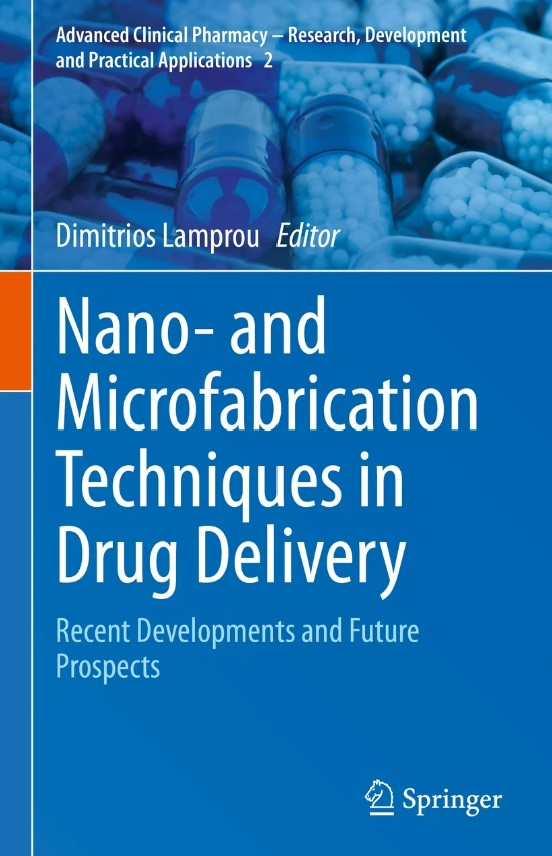
Nano-and Microfabrication Techniques in Drug Delivery

Nano-and Microfabrication Techniques in Drug Delivery

Nano-and Microfabrication Techniques in Drug Delivery

See the new book, edited by Dimitrios Lamprou. It brings together technical, clinical, regulatory and industrial perspectives. It provides future prospective and includes the potential clinical applications of nano/microfabrication technologies. 

Description: New materials and manufacturing techniques are evolving with the potential to address the challenges associated with the manufacture of medicinal products that will teach new tricks to old drugs. Nano- and microfabrication techniques include manufacturing methods such as additive manufacturing, lithography, micro moulding, spray drying, and lab-on-a-chip, among many others. The increasing resolution of new techniques allows researchers to produce objects with micrometric resolutions. The book follows a consecutive order, beginning with a background in the current field and limitations in the manufacturing of different pharmaceutical products, moving on to the classification of each method by providing recent examples, and future prospective on a variety of traditional and new nanoand microfabrication techniques. The book focuses on the materials used to prepare these systems and their biocompatibility, including applied topics such as clinical applications and regulatory aspects, offering the reader a holistic view of this rapidly growing field.

Chapter 11

Micro-molding and Its Application to Drug Delivery

Micro-molding techniques are used in many areas including pharmaceutical technology. Injection molding is the cyclic process of polymer processing. Most of them are thermoplastics. The procedure is performed by injecting a molten polymer of a certain viscosity from an injection unit into a tempered mold using heat and pressure. The workpiece hardens in the mold by cooling or by cross-linking. Hot embossing uses pressure. The template is pressed into a heated polymer. In this case, a thermo-softening polymer is placed between molds, heated, and later allowed to cool maintaining constant pressure. Casting is a process where the non-viscous polymer is poured into a tempered mold. The casting takes the shape of the mold cavity and is created in it by evaporating the solvent or dispersant, gelling, chemical reactions, or cross-linking. These techniques can also be applied to prepare solid dosage forms or controlled-release systems such as implants or vaginal rings among others. In this way, using these techniques results in precise medication. It is directly related to the patient’s quality of life and successful treatment.

See the chapter

Vranić, E. (2023). Micro-molding and Its Application to Drug Delivery. In: Lamprou, D. (eds) Nano- and Microfabrication Techniques in Drug Delivery . Advanced Clinical Pharmacy – Research, Development and Practical Applications, vol 2. Springer, Cham. https://doi.org/10.1007/978-3-031-26908-0_11


Chapter 12

Supercritical Fluids: A Promising Technique in Pharmaceutics

The unique properties of supercritical carbon dioxide provide numerous opportunities for developing environmentally friendly pharmaceutical processes. The applications of supercritical carbon dioxide range from particle engineering to encapsulation to biopolymeric scaffold manufacturing. Moreover, the tunable nature of supercritical carbon dioxide can also impart interesting properties in the final product that may not be possible via any other conventional process. This chapter aims to provide an overview of the available processes and techniques according to the role of supercritical carbon dioxide and how can those be applied in pharmaceutical research and development and manufacturing. The application of supercritical carbon dioxide as solvent, antisolvent and solute/additive is discussed along with examples to highlight advancements in this field and how pharmaceutical manufacturing could benefit from moving to a greener and cleaner processing technique that is environmentally sustainable.

See the chapter

Trivedi, V., Ajiboye, A.L. (2023). Supercritical Fluids: A Promising Technique in Pharmaceutics. In: Lamprou, D. (eds) Nano- and Microfabrication Techniques in Drug Delivery . Advanced Clinical Pharmacy – Research, Development and Practical Applications, vol 2. Springer, Cham. https://doi.org/10.1007/978-3-031-26908-0_12


Chapter 13

Microfluidics as a Tool for the Synthesis of Advanced Drug Delivery Systems

Advanced drug delivery systems hold great potential for the diagnosis and treatment of several diseases, and the benefits of nanomedicine-based products in healthcare have recently started to crystallize. Yet, their translation into clinical applications is still considered to be slow, mainly due to high batch-to-batch variation, complexity of preparation, high costs, and compromised scale-up feasibility. Considering the impact that mixing kinetics play on the properties of nanomedicines, microfluidics emerged as a technique to foster the preparation of micro- and nanoparticles with precisely controlled features, such as narrow size distribution, high homogeneity and reproducibility, high drug encapsulation efficiency, and enhanced scale-up feasibility. This chapter provides an overview on recent advances in microfluidic-assisted particle production. The basic principles of flow patterns and regimes are reviewed, as well as the materials and geometries used for the preparation of microfluidic devices. The impact of different parameters of the microfluidic setup on the physicochemical properties of the formulations is also discussed, and some of the most relevant micro- and nanoparticle technologies are reviewed. Possibilities for scale-up and the introduction of microfluidics in industrial settings are also briefly addressed.

See the chapter

Martins, J.P., Santos, H.A. (2023). Microfluidics as a Tool for the Synthesis of Advanced Drug Delivery Systems. In: Lamprou, D. (eds) Nano- and Microfabrication Techniques in Drug Delivery . Advanced Clinical Pharmacy – Research, Development and Practical Applications, vol 2. Springer, Cham. https://doi.org/10.1007/978-3-031-26908-0_13


Chapter 14

Nanofluidic Technologies for Drug Screening and Drug Delivery

Recently, nanofluidics exploiting 10–1000 nm spaces has developed and suggested a potential of novel analytical methods for pharmaceutical studies such as monitoring drug response of rare targets (extracellular vesicles, single cell, etc.) and ultrahigh-sensitivity assays of the diverse biological samples. A platform of nanofluidic device, where a network of micro- and nanochannels are fabricated on a substrate, allows analyses with minimal volumes (aL, fL, and pL) and a short analysis time (ms to min) by integrating chemical operations. In this chapter, fundamental methods and technologies of nanofluidics including device fabrication by top-down and bottom-up technologies, ultrasmall fluid manipulation by valves and liquid/liquid and gas/liquid interfaces, separation for biomolecules and nanoparticles, detection by electrical methods and optical methods and using analytical instruments, and high-throughput screening by an array of nanostructures in multi-nanofluidic channels are introduced. Applications of nanofluidics to single-cell analysis and shotgun proteomics, which are important for drug discovery and development to identify specific cellular responses to drug treatments, are presented.

See the chapter

Kazoe, Y., Sueyoshi, K., Seetasang, S., Xu, Y. (2023). Nanofluidic Technologies for Drug Screening and Drug Delivery. In: Lamprou, D. (eds) Nano- and Microfabrication Techniques in Drug Delivery . Advanced Clinical Pharmacy – Research, Development and Practical Applications, vol 2. Springer, Cham. https://doi.org/10.1007/978-3-031-26908-0_14


Chapter 15

Nanoparticles at the Stage of Clinical Trials

The search of new therapeutic tools and more intensive development of old ones are required to ensure effective treatment of various diseases. The usage of nanoparticles opens up future prospects for their involvement in the formulations of newly created biomaterials. They are widely applied for the targeted drug delivery, solving the diagnostic and therapeutic tasks. Nanoparticles have a significant set of factors that ensure their superiority over the conventional methods of the treatment. Among them are the ability to bypass biological barriers, a variety of pharmacokinetic profiles, and accurate delivery to the target tissue. This review discusses the current and future research of lipid, polymer, organic, and viral nanoparticles. In addition, the aspects related to the pharmacokinetics of nanoparticles during the application in vitro and their potential toxicity are considered in the area of clinical trials.

See the chapter

Osetrov, K., Morozkina, S., Snetkov, P., Uspenskaya, M. (2023). Nanoparticles at the Stage of Clinical Trials. In: Lamprou, D. (eds) Nano- and Microfabrication Techniques in Drug Delivery . Advanced Clinical Pharmacy – Research, Development and Practical Applications, vol 2. Springer, Cham. https://doi.org/10.1007/978-3-031-26908-0_15


Chapter 16

Nasal Drug Delivery Systems for the Treatment of Diseases of the Central Nervous System and Tuberculosis

Nasal drug delivery is a current drug delivery trend that is gaining attraction, especially for respiratory and central nervous system (CNS) diseases. This delivery pathway avoids the undesirable effects of systemic drug delivery, such as excessive dosing, damage to non-diseased organs, or drug destruction before reaching the therapeutic target. Inhaled drugs have been used for therapeutic and recreational purposes since ancient times. The development of modern inhalers for drug delivery has increased the use of intranasal drugs. More than ever, the development of drug-integrated intranasal formulations is extremely promising, providing hope for the treatment of diseases previously thought to be difficult to treat, such as tuberculosis or central nervous system diseases. Numerous investigations of intranasal formulations have been studied and published by pharmacologists over the years. The majority of research products are nanocapsules such as nanoparticles, micelles, liposomes, sol-gels, emulsions, and microspheres. Targeted drug formulations are created based on the features of the disease, the cell’s characteristics, the nature of the cell environment, and the biochemical barriers that the drug has to overcome. Preclinical and clinical assays of drug formulations help to determine their applicability in patients by the examination of their physicochemical properties, drug release, and pharmacokinetics. In this review, we focus on the factors that influence the nasal drug delivery, as well as drug release in the studies of tuberculosis and CNS formulations.

See the chapter

Nhung Vu, T.H., Morozkina, S., Snetkov, P., Uspenskaya, M. (2023). Nasal Drug Delivery Systems for the Treatment of Diseases of the Central Nervous System and Tuberculosis. In: Lamprou, D. (eds) Nano- and Microfabrication Techniques in Drug Delivery . Advanced Clinical Pharmacy – Research, Development and Practical Applications, vol 2. Springer, Cham. https://doi.org/10.1007/978-3-031-26908-0_16


Chapter 17

Regulatory Aspects and Barriers in Using Groundbreaking Technologies

New scientific discoveries and technological applications have been deeply influencing both the R&D and manufacturing of healthcare products, stressing the need for upgrading the regulatory framework, in order to overcome existing regulatory barriers for high-innovation products and to ensure proper quality standards able to preserve public health. In this light, groundbreaking technologies in the pharmaceutical field can be classified as innovation-in-product or innovation-in-process. In the former case, although the existing regulatory pathways can be also applicable to the marketing of high-innovation products, the benefit/risk assessment should be redesigned case-by-case based on the specific features of innovative products. In the latter case, existing technical and regulatory frameworks, which have been designed to meet the need of conventional pharmaceutical production, may not be able to cover all the intrinsic complexity of innovative manufacturing processes (e.g., additive manufacturing). This chapter aims to discuss the critical issues, from a regulatory point of view, in the development of high-innovation products and processes. Nanomedicine products, combination products, and additive manufacturing are reported as case studies of innovative products and processes to highlighting the critical issues in the regulatory pathways for placing them on the market.

See the chapter

Minghetti, P., Musazzi, U.M., Rocco, P. (2023). Regulatory Aspects and Barriers in Using Groundbreaking Technologies. In: Lamprou, D. (eds) Nano- and Microfabrication Techniques in Drug Delivery . Advanced Clinical Pharmacy – Research, Development and Practical Applications, vol 2. Springer, Cham. https://doi.org/10.1007/978-3-031-26908-0_17


See the full book here

Dimitrios Lamprou Nano- and Microfabrication Techniques in Drug Delivery, Recent Developments and Future Prospects, ISSN 2524-5325 ISSN 2524-5333 (electronic), Advanced Clinical Pharmacy – Research, Development and Practical Applications ISBN 978-3-031-26907-3 ISBN 978-3-031-26908-0 (eBook), https://doi.org/10.1007/978-3-031-26908-0


There are the additional articles with the remaining book chapter contents:

  • See Part 1
  • See Part 2
Tags: excipients

Related Posts

Empowering the pharmaceutical workforce for the digital future
Artificial Intelligence

Empowering the pharmaceutical workforce for the digital future

30. April 2026
Comparative Study of Microcrystalline Cellulose Grades on Process Robustness in High Shear Granulation
Asahi Kasei

Comparative Study of Microcrystalline Cellulose Grades on Process Robustness in High Shear Granulation

30. April 2026
Study of Co-processed Excipient for Direct Compression Using the SeDeM-ODT Expert System
Asahi Kasei

Study of Co-processed Excipient for Direct Compression Using the SeDeM-ODT Expert System

29. April 2026
Next Post
Effect of the Freezing Step on Primary Drying Experiments and Simulation of Lyophilization Processes

Effect of the Freezing Step on Primary Drying Experiments and Simulation of Lyophilization Processes

Cart

Shop Search

  • Search for excipients and samples
  • Product Inquiry
  • Newsletter Registration
  • Visit the Homepage

Top Pharma-Excipient Links

  • Pharmaceutical Excipients – Some Definition
  • Inactive ingredient search for approved drug products in the USA
  • Excipient Suppliers List
  • GRAS Substances (SCOGS) Database
  • DC Excipients List
  • Homepage

About | Privacy Policy | Cookie policy | Cookie Settings | Contact | Homepage
Copyright: PharmaExcipients AG

Welcome Back!

Login to your account below

Forgotten Password?

Retrieve your password

Please enter your username or email address to reset your password.

Log In
No Result
View All Result
  • Shop
  • News
    • Specials
      • Excipients for CBD
      • Excipients & 3D Printing
      • Infographics – The overview
      • GMP-certified excipient production sites
      • The Future of TiO2
      • Excipients in the COVID-19 Vaccines
      • BASF PVP-Iodine
      • RegXcellence™
      • BASF Parenteral Excipients
    • World Days – The overview
  • Excipient basics
    • Excipient Solutions for CBD
    • Inorganic Chemicals
      • Calcium Carbonate
      • Calcium Phosphates
      • Calcium Sulfate
      • Halites
      • Metallic Oxides
      • Silica
    • Organic Chemicals
      • Actual Sugars
      • Artificial Sweeteners
      • Carbohydrates
      • Cellulose
      • Cellulose Esters
      • Cellulose Ethers
      • CMC and Croscarmellose Sodium
      • Converted Starch
      • Dried Starch
      • Microcrystalline Cellulose
      • Modified Starch
      • Starch
      • Sugars
      • Sugar Alcohols
    • Petrochemicals
      • Acrylic Polymers
      • Glycols
      • Mineral Hydrocarbons
      • Mineral Oils
      • Mineral Waxes
      • Petrolatum
      • Polyethylene Glycol (PEG)
      • Povidones
      • Propylene Glycol
      • Other Petrochemical Excipients
    • Oleochemicals
      • Fatty Alcohols
      • Glycerin
      • Mineral Stearates
      • Pharmaceutical Oils
      • Other Oleochemical Excipients
    • Proteins
  • Applications
    • 3D Printing – Drug Carrier
      • 3D Printing
      • Binder
      • Coating
      • Colour / Color
      • Coating Systems and Additives
      • Controlled Release Excipient
      • DC excipient
      • Disintegrant / Superdisintergrant
      • Drug Carrier
    • Emulsifier – Glidant
      • Emulsifier
      • Excipient for Inhalation
      • Filler
      • Film former
      • Flavour / Flavor
      • Glidant
    • Lubricant – Preservative
      • Lubricant
      • Nanotechnology
      • Orally Dissolving Technology Excipient
      • Pellet
      • Plasticizer
      • Preservative
    • Solubilizer – Viscocity Agent
      • Solubilizer
      • Speciality Excipient
      • Surfactants
      • Suspension Agent
      • Sustained Release Agent
      • Sweeteners
      • Taste Masking
      • Topical Excipient
      • Viscosity Agent
  • Sources
    • Handbook of Pharmaceutical Excipients – 9th Edition
    • EINECS Numbers
    • Excipient DMF List
    • Excipient cGMP Certification Organisations
    • FDA Inactive Ingredient List
    • FDA GRAS Substances (SCOGS) Database
    • Excipient E-Numbers
    • Whitepapers / Publications
    • Contract Development|Contract Manufacturing
  • Suppliers
    • A-B
      • ADM
      • ARMOR PHARMA
      • Ceolus™ & Celphere™
      • Ashland
      • BASF
      • Beneo – galenIQ
      • Biogrund
      • Budenheim
    • C-G
      • Captisol
      • Croda
      • Cyclolab
      • DFE Pharma
      • DuPont Pharma Solutions
      • Evonik
      • Fuji Chemical Industries
      • Gattefossé
      • Gangwal Healthcare
    • I-O
      • ingredientpharm
      • IOI Oleochemical
      • JRS Pharma
      • Kerry
      • KLK Oleo Life Science
      • Lactalis Ingredients Pharma
      • Lipoid
      • Dr. Paul Lohmann
      • Lubrizol
      • Magnesia
      • MEGGLE Excipients
      • Nagase Viita – Pharmaceutical Ingredients
      • Nordic Bioproducts Group
    • P-Z
      • Pfanstiehl
      • pharm-a-spheres
      • Pharma Line
      • PMC Isochem
      • Roquette Pharma
      • Seppic
      • Shin-Etsu
      • Sigachi Group
      • Südzucker AG
      • VIKRAM THERMO
      • Zerion Pharma
      • ZoomLab® – Your Virtual Pharma Assistant
  • Inquiries
    • Product Inquiry
    • Tailored Tableting Excipients
      • Tailored Film Coating
  • Events
    • Overview Pharmaceutical Webinars
    • Videos CPhI Frankfurt 2025
    • CPhI China 2024
    • ExciPerience – The great excipient event!
  • All4Nutra

About | Privacy Policy | Cookie policy | Cookie Settings | Contact | Homepage
Copyright: PharmaExcipients AG

























