
- Suppliers






ADM 
Antares 
Armor Pharma 
Asahi KASEI 
Ashland 
BASF 
Beneo 
Captisol 
Clariant 
Croda 
DFE Pharma 
Dow 
Excipio Chemicals 
Fuji Chemical 
Gattefossé 
Gangwal 
Indovinya 
Ingredient Pharm 
IOI Oleo 
JRS Pharma 
KLK Oleo 
Lipoid 
Lubrizol Life Science Health 
MAGNESIA 
MEGGLE 
Mingtai Chemical 
Nagase Viita 
Nordic Bioproducts 
pharm-a-spheres 
PMC Isochem 
PQ 
Seppic 
ShinEtsu 
Sigachi 
SPI Pharma 
Südzucker 
Vikram Thermo 
Zerion Pharma  All4Nutra
- Suppliers
ADM Antares Armor Pharma Asahi KASEI Ashland BASF Beneo Captisol Clariant Croda DFE Pharma Dow Excipio Chemicals Fuji Chemical Gattefossé Gangwal Indovinya Ingredient Pharm IOI Oleo JRS Pharma KLK Oleo Lipoid Lubrizol Life Science Health MAGNESIA MEGGLE Mingtai Chemical Nagase Viita Nordic Bioproducts pharm-a-spheres PMC Isochem PQ Seppic ShinEtsu Sigachi SPI Pharma Südzucker Vikram Thermo Zerion Pharma - All4Nutra

The Future of Green Chemistry: Evolution and Recent Trends in Deep Eutectic Solvents Research
Green Chemistry Solvents
Abstract
Deep eutectic solvents are a sustainable and chemically tunable class of solvents formed by strong hydrogen bonding between a hydrogen bond acceptor and a hydrogen bond donor. Their extreme versatility has established deep eutectic solvents in ten key applied areas, including the green extraction of bioactive compounds, CO2 capture, electrochemistry, and the catalytic media. Research is shifting towards highly innovative frontier trends, such as the role of deep eutectic solvents in dynamic covalent chemistry and as templates for advanced photocatalytic nanomaterials. Other innovative directions include artificial organelles for bioremediation, thermoacoustic deep eutectic solvents for smart drug delivery, and their use as multifunctional interfaces for 2D materials. The future of deep eutectic solvents lies in process engineering and scale-up, supported by computational chemistry, confirming their position as a central pillar of the circular economy. This trajectory marks the transition of deep eutectic solvents from laboratory curiosities to a scalable industrial reality.
1. The Rise of Green Chemistry and the Critical Need for New Solvents
Global chemical production is under increasing pressure to reduce its environmental footprint. The primary goal of green chemistry is to minimize waste generation and the use of hazardous substances. In this context, attention is focused on replacing conventional organic solvents, which often exhibit high volatility, inherent toxicity, and contribute to emission of volatile organic compounds into the atmosphere. The development of green processes and approaches in green chemistry is especially important for reducing the impact of these agents and processes on the environment and ensuring their efficiency and cost-effectiveness. The field of green chemistry is gradually developing with the aim of solving problems such as health risks to humans and environmental hazards. Green chemistry in general seeks to promote sustainability and is currently attracting the attention of the broad scientific community and many international institutions. The principles of green chemistry emphasize reducing solvent consumption, minimizing waste, and using safe green solvents.
Green chemistry is a key factor in sustainability and is transforming conventional chemical processes by integrating greener methods, advanced techniques, and sustainable materials. Green chemistry integrates renewable resources, green synthesis, and safer solvents to promote sustainability and reduce environmental impact, while adhering to the 12 principles that guide the development of green and efficient chemical processes, minimizing waste, pollution, costs, and risks.
2. The Historical Development of Deep Eutectic Solvents
Mixtures or systems with low-temperature phase transitions have been known to the scientific community since the late nineteenth century. In general, a eutectic is a mixture whose eutectic point is lower than the melting point of any of the components that make up the mixture. In other words, the term eutectic introduced by the British physicist and chemist Frederick Guthrie in 1884, refers to a eutectic system formed from two or more substances in such proportions that the melting/freezing point is as low as possible. Therefore, the eutectic temperature is the lowest/melting freezing point of all mixing ratios for the components. Guthrie first described combinations of substances that exhibit the lowest possible melting points in specific compositions. These eutectic systems were initially studied extensively in metallurgy and materials science and laid the foundation for later solvent developments. Regarding the use of the “eutectic solvent,” it dates back to around 1930, and other articles from around the 1950s.
A major breakthrough occurred in 2003 when Andrew Abbott and his team introduced the term “deep eutectic solvents” (DES). They identified a family of solvents produced by simply mixing choline chloride (a quaternary ammonium salt that functions as the hydrogen bond acceptor; HBA) and urea (a hydrogen bond donor; HBD) in a molar ratio of 1:2. This mixture formed a clear liquid that exhibits a melting point of about 12 °C, remarkably lower than the melting points of choline chloride of 302 °C and urea of 133 °C. This discovery showed that inexpensive, biodegradable, and easily prepared solvents could be created by exploiting intermolecular hydrogen bonding. The first definition of deep eutectic solvents was formulated by a group led by Smith a year later, who sought to explore and explain their differences from ionic liquids (IL) and thus distinguish the two concepts [8].
Following this discovery, DES were initially classified into four primary types on the based of their chemical composition (ionic DES). Type I: quaternary ammonium salt + metal halide (choline chloride + CuCl2); Type II: quaternary ammonium salt + hydrated metal halide (choline chloride + FeCl3·6H2O); Type III: quaternary ammonium salt + various HBD such as amides or carboxylic acids (most studied: choline chloride + urea); Type IV: metal chlorides + HBD (zinc chloride + glycerol). Among these, type III DES have been the most extensively investigated due to their favorable low toxicity and biodegradability.
DES types I and II contain a metal halide or hydrated metal halide as the HBD, and these two types of DES are similar to IL but are not the same systems, as IL are salts while DES are mixtures. The melting point for these types of DES depends on the symmetry of the cation, while its acidity can be changed by exchanging the metal halide (chloride ion). DES type IV is a combination of transition metal halides and HBD (urea or ethylene glycol). In this case, the melting point depression is caused by the strength of the anionic hydrogen bonding (charge delocalization), and the freezing point depression increases with the strength of the hydrogen bonding.
Type III DES appears to be the most interesting and exhibits a first-order phase transition through the melting/freezing peak. However, there are also exceptions where a second-order transition occurs, namely, a glass transition (similar to polymers) occurs due to a change in heat capacity. Due to these properties, these mixtures cannot be called DES, but the term low-temperature transition mixtures (LTTM) has been introduced. These systems represent metastable systems where, upon heating, crystallization of the amorphous glass occurs, followed by melting of the crystalline phase. The polarity of HBA and HBD indicates whether DES/LTTM type III are hydrophilic, hydrophobic, or quasihydrophobic.
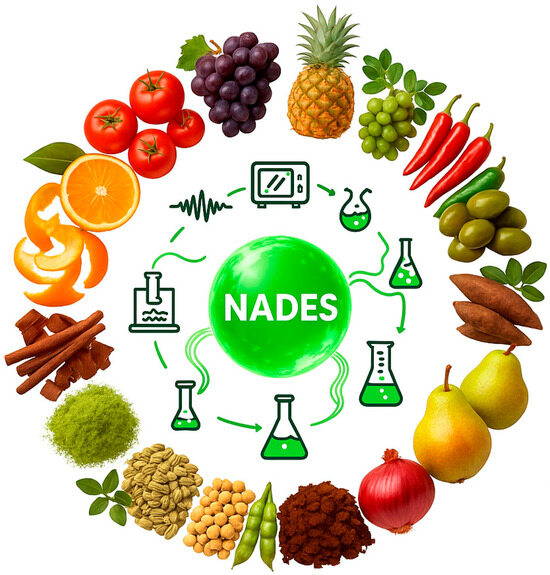
In 2011, Yong Hwa Choi, Robert Verpoorte, and colleagues discovered that similar deep eutectic phenomena occur naturally in living organisms. These naturally occurring solvents are termed natural deep eutectic solvents (NADES). NADES are composed of primary metabolites such as sugars, amino acids, and organic acids. NADES have high biodegradability and low toxicity, offering promising applications as green solvents and possible alternatives to water in biological media.
As research progressed, a fifth category of DES was identified (since 2019): Type V—non-ionic molecular mixtures formed via strong hydrogen bonding without quaternary ammonium salts or metal halides. Many NADES qualify as Type V DES, including mixtures of sugars and organic acids. Some of these DES are hydrophobic.
3. The Most Relevant and Highly Cited Research Areas for Deep Eutectic Solvents
Since their introduction, DES have represented a revolutionary breakthrough in the search for sustainable and green solvents to replace traditional, often toxic, organic solvents. Their unique properties: low toxicity, biocompatibility, non-flammability, and affordability have catapulted DES research into the spotlight.
With increasing global pressure for sustainability and the reduction of environmental burden, DES have established themselves as a key pillar of green chemistry. The growing ability to analyze DES has led to a sharp increase in publications in the last decade. The analysis of citation indices and H factors clearly identifies several leading application domains that are the pillars of DES research and generate the largest number of scientific references. These include not only separation and extraction processes, especially from natural sources, but also the use of DES in synthetic chemistry and biotechnology. The properties of DES predispose them to solve complex problems, from biomass processing to hazardous waste recycling.
This proposal outlines the ten most interesting and frequently cited research areas related to DES that offer significant potential for the scientific community. These areas essentially focus on green chemistry, sustainability, and advanced technologies, making DES a more environmentally friendly and efficient alternative to traditional organic solvents. The following sections will examine each of these areas in detail, with an emphasis on the most influential and frequently cited methods and results that define the current state of knowledge in the field of DES. A detailed analysis will show how DES have become the preferred choice in bioextraction, wastewater treatment, and electrochemical applications, confirming their position as one of the most promising innovations in modern chemistry.
3.1. Extraction of Bioactive Compounds: Natural Deep Eutectic Solvents
NADES are a special subcategory of DES that have gained immense popularity because of their green nature. They are made exclusively from natural, biocompatible, and non-toxic components that are commonly found in cells of organisms (primary metabolites). Choline chloride or betaine are used as HBA to create NADES, while sugars, organic acids, polyols, or amino acids are used mainly as HBD. They are extremely popular because of their low toxicity and biodegradability. Their primary use lies in the extraction of valuable compounds. Specific areas of use of NADES:
-
NADES composition optimization: study of the influence of various molar ratios of HBD and HBA on extraction selectivity and yield.
-
Green extraction: application of NADES for the extraction of polyphenols, flavonoids, alkaloids, and other phytochemicals from plant materials and agro-food waste.
-
Food and pharmaceutical utilization: assess the stability and preservation of extracted bioactive substances within the NADES matrix.
-
Recycling and reuse: developing efficient methods to separate NADES from the extract to ensure industrial scalability.
Several authors have shown that the use of NADES in the isolation of valuable compounds from plant materials significantly reduces the environmental burden of extraction processes compared to volatile and toxic organic solvents. Many studies indicate that NADES often have higher extraction efficiencies for certain groups of bioactive compounds (especially phenolic compounds, flavonoids, anthocyanins, and glycosides) than commonly used solvents.
The authors often report that the specific combination of components in NADES creates unique interactions (such as strong hydrogen bonds) with polar bioactive molecules, leading to better solubilization of target compounds. Some NADES not only extract bioactive compounds but also stabilize them, protecting them from degradation (oxidation or hydrolysis) during and after extraction. Extracts prepared using NADES show greater stability and preservation of antioxidant activity compared to extracts in conventional solvents. NADES thus serve as both a solvent and a stabilizer. NADES are highly effective in combination with modern extraction techniques, such as ultrasound- and microwave-assisted extraction or high-pressure extraction. Synergistic use of NADES with these methods allows for shorter extraction times, lower energy consumption, and an increased the yield of bioactive compounds, which is important for industrial applications.
3.2. Application in Electrochemistry and Energy Systems
The topic of DES applications in electrochemistry and energy systems is a vast and rapidly growing field, motivated by the need for safer, greener, and cheaper alternatives to organic solvents and IL. DES can serve as an environmentally friendly and cost-effective electrolyte in various electrochemical devices, such as batteries (especially zinc ions), supercapacitors, and fuel cells. The main research areas of DES applications within this chapter:
-
Electrolytes for batteries: use of DES in zinc ion batteries as a nontoxic and non-flammable alternative to organic electrolytes.
-
Metal electrodeposition: utilizing DES for the electroplating of metals, a process traditionally challenging because of environmentally harmful reagents (chromium, zinc, nickel).
-
Nanocatalyst production: preparation and stabilization of nanomaterials (metal nanoparticles and composites) directly in DES to enhance catalytic activity.
-
Characterization of ionic conductivity: study of the viscosity, density, and ionic conductivity of DES and their optimization for energy applications.
DES serve as inexpensive, non-flammable, and safe electrolytes that can replace organic electrolytes in batteries and IL in supercapacitors. The authors of many works have found that DES exhibit a wide electrochemical stability window, which allows the operation of power devices at higher voltages, directly leading to higher energy densities in supercapacitors. In addition, DES electrolytes demonstrate excellent long-term cycling stability without causing corrosion of the current collectors. These systems often allow cell construction under ambient conditions, which reduces manufacturing costs and complexity.
DES are effective and green solvents for electrochemical plating (electrodeposition) and surface treatment, especially for metals that are difficult or impossible to deposit from aqueous solutions (aluminum, zinc, and various alloys). DES (based on choline chloride) have successfully replaced highly toxic cyanide-containing baths or organic solvents in plating processes (nickel, chromium, or zinc alloys), making the process more sustainable. DES enable the deposition of metal coatings and nanocomposites with new and improved morphological and structural properties, which are crucial for sensing and catalysis.
DES are strong and selective leaching agents for the extraction of critical and valuable metals from waste, especially batteries and electronic components. Studies demonstrate that DES can be used to selectively dissolve metal oxides from lithium-ion battery cathodes (cobalt, nickel, and manganese), thus offering a green and efficient alternative to traditional hydrometallurgical processes (which use strong and hazardous acids). Studies have confirmed that specific DES components, such as polyphenols or organic acids, have excellent complexing properties that facilitate the efficient and selective recovery of metals.
3.3. Catalysis and Organic Synthesis: Green Synthesis
DES represent a highly active and promising field of research in the fields of catalysis and organic synthesis (especially green chemistry). DES are increasingly recognized as green reaction media and even as active catalysts for various organic transformations, leading to a reduction in the consumption of hazardous solvents. In general, research on DES in this area focuses on their dual role and environmental benefits:
-
Reaction medium replacement: substitution of volatile organic compounds with DES in organic synthesis.
-
Heterogeneous and homogeneous catalysis: using DES as precursors for the synthesis of DES-functionalized catalysts or as solvents for enzymatic synthesis.
-
Catalyst regeneration: investigate the recycling and reuse of the DES/catalytic system to lower operating costs.
-
DES-dependent reactions: discovering novel reactions that are only feasible within the specific environment provided by DES.
DES are considered an attractive alternative to conventional organic solvents because they combine low volatility with thermal stability, are easy to formulate from inexpensive components, and can be tailored to specific chemical processes. These distinctive properties contribute significantly to the principles of green chemistry, which is why the use of DES reduces the environmental burden of organic synthesis and is particularly important for sustainable industrial applications. As many authors have shown, DES demonstrate similar or even higher catalytic activity compared to conventional catalysts in some reactions, they allow reactions to proceed under milder conditions (without required an additional acid catalyst), and DES-based catalytic systems are often easily separable and recyclable without significant loss of activity, further reducing costs and waste.
DES support lipase-catalyzed transesterification, aminolysis, etc., often achieving rates and selectivities comparable to those of conventional organic solvents. DES are used as catalysts in the synthesis of key pharmaceutical molecules, and their unique structural properties (tunable solvation and ionic interactions) enhance the kinetics and selectivity of reactions. Overall, the main conclusions are that DES are highly promising and multifunctional media—they can serve as a solvent, catalyst, and even a reactant in one, thus radically simplifying and greening processes in organic synthesis.
Jančíková, V.; Jablonský, M. The Future of Green Chemistry: Evolution and Recent Trends in Deep Eutectic Solvents Research. Appl. Sci. 2026, 16, 654. https://doi.org/10.3390/app16020654
Read the full article here.
Download the PDF Document here.


