





Pharma Excipients
No Result
View All Result
  • Login
  • Shop
  • News
    • Specials
      • Excipients for CBD
      • Excipients & 3D Printing
      • Infographics – The overview
      • GMP-certified excipient production sites
      • The Future of TiO2
      • Excipients in the COVID-19 Vaccines
      • BASF PVP-Iodine
      • RegXcellence™
      • BASF Parenteral Excipients
    • World Days – The overview
  • Excipient basics
    • Excipient Solutions for CBD
    • Inorganic Chemicals
      • Calcium Carbonate
      • Calcium Phosphates
      • Calcium Sulfate
      • Halites
      • Metallic Oxides
      • Silica
    • Organic Chemicals
      • Actual Sugars
      • Artificial Sweeteners
      • Carbohydrates
      • Cellulose
      • Cellulose Esters
      • Cellulose Ethers
      • CMC and Croscarmellose Sodium
      • Converted Starch
      • Dried Starch
      • Microcrystalline Cellulose
      • Modified Starch
      • Starch
      • Sugars
      • Sugar Alcohols
    • Petrochemicals
      • Acrylic Polymers
      • Glycols
      • Mineral Hydrocarbons
      • Mineral Oils
      • Mineral Waxes
      • Petrolatum
      • Polyethylene Glycol (PEG)
      • Povidones
      • Propylene Glycol
      • Other Petrochemical Excipients
    • Oleochemicals
      • Fatty Alcohols
      • Glycerin
      • Mineral Stearates
      • Pharmaceutical Oils
      • Other Oleochemical Excipients
    • Proteins
  • Applications
    • 3D Printing – Drug Carrier
      • 3D Printing
      • Binder
      • Coating
      • Colour / Color
      • Coating Systems and Additives
      • Controlled Release Excipient
      • DC excipient
      • Disintegrant / Superdisintergrant
      • Drug Carrier
    • Emulsifier – Glidant
      • Emulsifier
      • Excipient for Inhalation
      • Filler
      • Film former
      • Flavour / Flavor
      • Glidant
    • Lubricant – Preservative
      • Lubricant
      • Nanotechnology
      • Orally Dissolving Technology Excipient
      • Pellet
      • Plasticizer
      • Preservative
    • Solubilizer – Viscocity Agent
      • Solubilizer
      • Speciality Excipient
      • Surfactants
      • Suspension Agent
      • Sustained Release Agent
      • Sweeteners
      • Taste Masking
      • Topical Excipient
      • Viscosity Agent
  • Sources
    • Handbook of Pharmaceutical Excipients – 9th Edition
    • EINECS Numbers
    • Excipient DMF List
    • Excipient cGMP Certification Organisations
    • FDA Inactive Ingredient List
    • FDA GRAS Substances (SCOGS) Database
    • Excipient E-Numbers
    • Whitepapers / Publications
    • Contract Development|Contract Manufacturing
  • Suppliers
    Excipient Suppliers List
    BIOGRUND Logo
    Evonik Logo
    LI logo violet
    logo roquette
    ADM
    Antares Navi Logo
    Antares
    Armor Pharma
    Asahi KASEI
    Ashland

    BASF

    Beneo

    Captisol

    Clariant Logo

    Clariant
    Croda
    DFE Pharma
    Dow Logo
    Dow
    Excipio Chemicals
    Fuji Chemical

    Gattefossé

    Gangwal

    IOI Oleo
    Ingredient Pharm
    JRS Pharma
    Kerry Logo
    Kerry
    KLK Oleo
    KLK Oleo
    Lipoid
    Lubrizol Life Science Health

    Lubrizol Life Science Health
    MAGNESIA

    MAGNESIA
    MEGGLE Excipients & Technology
    MEGGLE
    Nagase Viita
    Nagase Viita
    Nordic Bioproducts
    Nordic Bioproducts
    pharm-a-spheres
    pharm-a-spheres
    PMC Isochem
    PMC Isochem
    PQ Logo
    PQ
    Seppic
    Seppic
    ShinEtsu
    ShinEtsu
    Sigachi
    Sigachi
    SPI Pharma
    SPI Pharma
    Südzucker
    Südzucker
    Vikram Thermo Logo
    Vikram Thermo
    Zerion Pharma
    Zerion Pharma
    • A-B
      • ADM
      • ARMOR PHARMA
      • Ceolus™ & Celphere™
      • Ashland
      • BASF
      • Beneo – galenIQ
      • Biogrund
      • Budenheim
    • C-G
      • Captisol
      • Croda
      • Cyclolab
      • DFE Pharma
      • DuPont Pharma Solutions
      • Evonik
      • Fuji Chemical Industries
      • Gattefossé
      • Gangwal Healthcare
    • I-O
      • ingredientpharm
      • IOI Oleochemical
      • JRS Pharma
      • Kerry
      • KLK Oleo Life Science
      • Lactalis Ingredients Pharma
      • Lipoid
      • Dr. Paul Lohmann
      • Lubrizol
      • Magnesia
      • MEGGLE Excipients
      • Nagase Viita – Pharmaceutical Ingredients
      • Nordic Bioproducts Group
    • P-Z
      • Pfanstiehl
      • pharm-a-spheres
      • Pharma Line
      • PMC Isochem
      • Roquette Pharma
      • Seppic
      • Shin-Etsu
      • Sigachi Group
      • Südzucker AG
      • VIKRAM THERMO
      • Zerion Pharma
      • ZoomLab® – Your Virtual Pharma Assistant
  • Inquiries
    • Product Inquiry
    • Tailored Tableting Excipients
      • Tailored Film Coating
  • Events
    • Overview Pharmaceutical Webinars
    • Videos CPhI Frankfurt 2025
    • CPhI China 2024
    • ExciPerience – The great excipient event!
  • All4Nutra

No products in the cart.

  • Shop
  • News
    • Specials
      • Excipients for CBD
      • Excipients & 3D Printing
      • Infographics – The overview
      • GMP-certified excipient production sites
      • The Future of TiO2
      • Excipients in the COVID-19 Vaccines
      • BASF PVP-Iodine
      • RegXcellence™
      • BASF Parenteral Excipients
    • World Days – The overview
  • Excipient basics
    • Excipient Solutions for CBD
    • Inorganic Chemicals
      • Calcium Carbonate
      • Calcium Phosphates
      • Calcium Sulfate
      • Halites
      • Metallic Oxides
      • Silica
    • Organic Chemicals
      • Actual Sugars
      • Artificial Sweeteners
      • Carbohydrates
      • Cellulose
      • Cellulose Esters
      • Cellulose Ethers
      • CMC and Croscarmellose Sodium
      • Converted Starch
      • Dried Starch
      • Microcrystalline Cellulose
      • Modified Starch
      • Starch
      • Sugars
      • Sugar Alcohols
    • Petrochemicals
      • Acrylic Polymers
      • Glycols
      • Mineral Hydrocarbons
      • Mineral Oils
      • Mineral Waxes
      • Petrolatum
      • Polyethylene Glycol (PEG)
      • Povidones
      • Propylene Glycol
      • Other Petrochemical Excipients
    • Oleochemicals
      • Fatty Alcohols
      • Glycerin
      • Mineral Stearates
      • Pharmaceutical Oils
      • Other Oleochemical Excipients
    • Proteins
  • Applications
    • 3D Printing – Drug Carrier
      • 3D Printing
      • Binder
      • Coating
      • Colour / Color
      • Coating Systems and Additives
      • Controlled Release Excipient
      • DC excipient
      • Disintegrant / Superdisintergrant
      • Drug Carrier
    • Emulsifier – Glidant
      • Emulsifier
      • Excipient for Inhalation
      • Filler
      • Film former
      • Flavour / Flavor
      • Glidant
    • Lubricant – Preservative
      • Lubricant
      • Nanotechnology
      • Orally Dissolving Technology Excipient
      • Pellet
      • Plasticizer
      • Preservative
    • Solubilizer – Viscocity Agent
      • Solubilizer
      • Speciality Excipient
      • Surfactants
      • Suspension Agent
      • Sustained Release Agent
      • Sweeteners
      • Taste Masking
      • Topical Excipient
      • Viscosity Agent
  • Sources
    • Handbook of Pharmaceutical Excipients – 9th Edition
    • EINECS Numbers
    • Excipient DMF List
    • Excipient cGMP Certification Organisations
    • FDA Inactive Ingredient List
    • FDA GRAS Substances (SCOGS) Database
    • Excipient E-Numbers
    • Whitepapers / Publications
    • Contract Development|Contract Manufacturing
  • Suppliers
    Excipient Suppliers List
    BIOGRUND Logo
    Evonik Logo
    LI logo violet
    logo roquette
    ADM
    Antares Navi Logo
    Antares
    Armor Pharma
    Asahi KASEI
    Ashland
    BASF
    Beneo
    Captisol
    Clariant Logo
    Clariant
    Croda
    DFE Pharma
    Dow Logo
    Dow
    Excipio Chemicals
    Fuji Chemical
    Gattefossé
    Gangwal
    IOI Oleo
    Ingredient Pharm
    JRS Pharma
    Kerry Logo
    Kerry
    KLK Oleo
    KLK Oleo
    Lipoid
    Lubrizol Life Science Health
    Lubrizol Life Science Health
    MAGNESIA
    MAGNESIA
    MEGGLE Excipients & Technology
    MEGGLE
    Nagase Viita
    Nagase Viita
    Nordic Bioproducts
    Nordic Bioproducts
    pharm-a-spheres
    pharm-a-spheres
    PMC Isochem
    PMC Isochem
    PQ Logo
    PQ
    Seppic
    Seppic
    ShinEtsu
    ShinEtsu
    Sigachi
    Sigachi
    SPI Pharma
    SPI Pharma
    Südzucker
    Südzucker
    Vikram Thermo Logo
    Vikram Thermo
    Zerion Pharma
    Zerion Pharma
    • A-B
      • ADM
      • ARMOR PHARMA
      • Ceolus™ & Celphere™
      • Ashland
      • BASF
      • Beneo – galenIQ
      • Biogrund
      • Budenheim
    • C-G
      • Captisol
      • Croda
      • Cyclolab
      • DFE Pharma
      • DuPont Pharma Solutions
      • Evonik
      • Fuji Chemical Industries
      • Gattefossé
      • Gangwal Healthcare
    • I-O
      • ingredientpharm
      • IOI Oleochemical
      • JRS Pharma
      • Kerry
      • KLK Oleo Life Science
      • Lactalis Ingredients Pharma
      • Lipoid
      • Dr. Paul Lohmann
      • Lubrizol
      • Magnesia
      • MEGGLE Excipients
      • Nagase Viita – Pharmaceutical Ingredients
      • Nordic Bioproducts Group
    • P-Z
      • Pfanstiehl
      • pharm-a-spheres
      • Pharma Line
      • PMC Isochem
      • Roquette Pharma
      • Seppic
      • Shin-Etsu
      • Sigachi Group
      • Südzucker AG
      • VIKRAM THERMO
      • Zerion Pharma
      • ZoomLab® – Your Virtual Pharma Assistant
  • Inquiries
    • Product Inquiry
    • Tailored Tableting Excipients
      • Tailored Film Coating
  • Events
    • Overview Pharmaceutical Webinars
    • Videos CPhI Frankfurt 2025
    • CPhI China 2024
    • ExciPerience – The great excipient event!
  • All4Nutra
No Result
View All Result
Pharma Excipients
No Result
View All Result

Startseite » News » Comparative Evaluation of Glidants for Enhancing the Flowability of Poorly Flowing Powdered Materials with Varying Particle Sizes and Morphologies

Comparative Evaluation of Glidants for Enhancing the Flowability of Poorly Flowing Powdered Materials with Varying Particle Sizes and Morphologies

21. June 2026
Comparative Evaluation of Glidants for Enhancing the Flowability of Poorly Flowing Powdered Materials with Varying Particle Sizes and Morphologies

Comparative Evaluation of Glidants for Enhancing the Flowability of Poorly Flowing Powdered Materials with Varying Particle Sizes and Morphologies

Abstract

Background: An increasing number of commercially available drug substances and bioactive ingredients are characterized by poor flowability. Inadequate flow properties may lead to material blockage during transport within production lines, as well as the formation of air voids within the bulk. Such phenomena can disrupt the technological process and may even result in batches that fail to meet quality requirements. Therefore, ensuring adequate powder flow is of utmost importance in the manufacture of health-related products.

Methods: Binary mixtures were prepared using one of four model substances (ibuprofen, metamizole sodium, mefenamic acid, or sunflower lecithin) combined with a glidant (colloidal silica, precipitated silica, or tricalcium phosphate). The glidant content ranged from 0.5 to 10.0% w/w depending on the model substance, and mixing was carried out for 5–30 min. The resulting binary mixtures were evaluated for flow properties using the angle of repose method, and in selected cases, bulk density was also determined.

Results/Conclusions: The study demonstrated that powder flow improvement depended not only on the glidant but primarily on the properties of the host material (particle size, shape, and bulk density). Coarser powders such as ibuprofen responded well to low glidant levels, although excessive silicon dioxide caused oversilication. Metamizole sodium showed progressively better flow with increasing particle size and density, and tribasic calcium phosphate further improved performance, particularly with longer mixing times. Very fine or cohesive powders, such as mefenamic acid and sunflower lecithin, showed limited response to silica-based glidants, whereas tribasic calcium phosphate proved more effective and additionally increased bulk density. Overall, no universal glidant strategy was identified; effective flow enhancement requires a tailored approach based on specific powder characteristics.

Introduction

An increasing number of commercially available drug substances and bioactive ingredients exhibit poor flow properties. Powder flowability is critical for manufacturing operations such as mixing, granulation, capsule filling, and tableting. Inadequate powder flow can lead to blockages during material transport by promoting air pocket formation within the bulk, potentially disrupting production and resulting in batches that fail to meet quality requirements. Enhancing flowability improves process performance, minimizes raw material losses, and ensures uniform dosing in the final product. Therefore, ensuring adequate powder flow is essential for the reliable manufacture of health-related products [1,2,3,4].

Various technological approaches can be employed to improve the flowability of powders. One common method is granulation (either wet or dry), which increases particle size, reduces interparticle cohesion, and decreases the tendency of powders to cake. However, granulation processes extend production cycle times, increase energy consumption, and consequently raise overall production costs.
A practical and beneficial alternative is the use of flow-enhancing aids, commonly referred to as glidants. These substances, applied in relatively small quantities, can convert even poorly flowing powders into materials suitable for demanding direct compression (DC) technology, which is currently the most straightforward and cost-effective method for the production of oral solid dosage forms (OSDFs) [5,6,7,8].

Various glidants are used in the development and production of solid dosage forms, with silicon dioxide being the most commonly used. It has a long history of use in the pharmaceutical industry, is well characterized in pharmacopoeias, and has broad regulatory acceptance. Two types are mainly used in industry, colloidal and precipitated silicas. However, its highly fluffy nature can lead to significant dust generation during processing. It has also been the subject of consumer debate regarding nanomaterials, although no significant toxicological evidence supports related health concerns [9,10,11]. Talc is a clay mineral composed of hydrated magnesium silicate. It is relatively inexpensive and has been traditionally used as a glidant in pharmaceutical and industrial applications to improve powder flow properties. However, it is increasingly perceived as obsolete and is used less frequently, partly due to health and regulatory controversies surrounding inconsistent contamination levels and the potential presence of asbestos in natural talc [12,13,14,15]. Calcium phosphates, such as special grades of fine hydroxyapatite, are not as widely acknowledged as glidants. They are naturally occurring minerals and, in addition to improving flowability, can serve as safe sources of calcium and phosphorus in nutraceuticals or dietary supplements. However, it should be borne in mind that they may form chelates with certain substances present in the formulations [16,17,18].

Glidants in pharmaceutical formulations are used in amounts necessary to achieve the intended technological effect, in accordance with the quantum satis principle. Although there are no regulatory requirements specifying exact usage levels, higher concentrations should be scientifically justified, and their impact on the final product’s properties, including mechanical strength and disintegration time, ought to be evaluated. It has also been reported that excessive concentrations of glidants may produce the opposite effect by impairing flowability. Typically, colloidal silica is used at concentrations of 0.1–1% w/w, whereas talc generally requires higher amounts, usually 1–10% w/w. Fine tribasic calcium phosphate is effective at concentrations similar to those of silicon dioxide [9,18,19,20,21].

The mechanism of action of glidants is primarily based on reducing friction, as well as cohesion and adhesion between powder particles. Effective glidants consist of very fine particles that deposit onto larger particles of the active substance and excipients, forming a thin surface layer (see Figure 1). This layer smooths the surface and decreases the actual contact area, thereby reducing van der Waals forces and electrostatic interactions between powder particles. Owing to their high specific surface area, glidants can also preferentially adsorb moisture from other particle surfaces, limiting the formation of capillary bridges and preventing agglomeration and caking [22,23,24,25,26].

The aim of the present study was to compare the effects of three commonly applied glidants, i.e., colloidal silicon dioxide, precipitated silica, and fine tribasic calcium phosphate, on the flow properties of selected bioactive substances widely used in medicinal and health-related products. The materials investigated included ibuprofen, metamizole sodium, mefenamic acid, and lecithin, all of which are characterized by poor flowability. Addressing this functional limitation at an early stage of development is essential for the successful production of safe and reliable oral solid dosage forms. The study examined the influence of glidant concentration and mixing time on the flow behaviour of binary mixtures containing various ratios of glidant and model substance. Flow properties were evaluated by measuring the angle of repose, and the powders were classified according to the relative ranking of flow described in pharmacopoeias, including the European Pharmacopoeia (Ph. Eur.) and the United States Pharmacopeia–National Formulary (USP–NF). Values of 25–30 indicate excellent flow properties; 31–35, good flow properties; 36–40, fair flow properties (no aid needed); 41–45, passable flow (the powder may hang up); 46–55, poor flow (the powder must be agitated or vibrated to induce flow); 56–65, very poor flow; and above 66, very, very poor flow. Additionally, the effect of glidants on bulk density was analyzed, as this parameter may influence both powder flowability and the size of the final dosage forms [27,28,29].

Download the full article as PDF here Comparative Evaluation of Glidants for Enhancing the Flowability of Poorly Flowing Powdered Materials with Varying Particle Sizes and Morphologies

or continue reading here

Materials

Glidants: colloidal silicon dioxide (CSD), Aerosil® 200 from Evonik Operations GmbH (Essen, Germany), with a bulk density of about 30 g/mL and a specific surface area of approximately 200 m2/g; precipitated silicon dioxide (PSD), Syloid® 244 FP from Grace GmbH & Co. KG (Worms, Germany), exhibiting a bulk density near 70 g/mL and a surface area of roughly 350 m2/g; tribasic calcium phosphate (TCP), PharSQ® Flow T 200 from Chemische Fabrik Budenheim KG (Budenheim, Germany), characterized by a bulk density of about 200 g/mL and a specific surface area close to 66 m2/g [30,31,32,33,34]. Examples of scanning electron microscope (SEM) images of the glidants used in this study, taken at a magnification of 10,000×, are presented in Figure 2.

Model bioactive substances: sunflower lecithin (LEC) powder from National Lecithin (Hale Cheshire, UK); mefenamic acid (MA) from Yung Zip Chemical Ind Co., Ltd. (Dajia, Taiwan); ibuprofen 50 (IBU_50) from BASF ChemTrade GmbH (Burgbernheim, Germany); ibuprofen SN (IBU_SN) from Strides Shasun Ltd. (Puducherry, India); metamizole sodium monohydrate (MSM 1) from Sofarimex Indústria Química e Farmacêutica, S.A. (Lisboa, Portugal); metamizole sodium monohydrate (MSM 2) from Shandong Xinhua Pharmaceutical Co., Ltd. (Zibo, China); metamizole sodium monohydrate (MSM 3) from Vani Pharma Labs Ltd. (Hyderabad, India).

Zakowiecki, D.; Edinger, P.; Wagner, M.; Hess, T.; Lipiak, D.; Cal, K. Comparative Evaluation of Glidants for Enhancing the Flowability of Poorly Flowing Powdered Materials with Varying Particle Sizes and Morphologies. Pharmaceutics 2026, 18, 721. https://doi.org/10.3390/pharmaceutics18060721


Read more interesting articles on Glidants here:

  • A Comprehensive Review On Formulation And Evaluation Of Chewable Tablet
  • Effect of microcrystalline cellulose (MCC) type and roll compaction force on the mechanical properties of tablets containing a high dose of poorly compactible substance
  • Formulation and in-vitro Evaluation of Extended Release Metformin Hydrochloride Directly Compressible Tablets by Using ULTRAMOD Polymer Premix
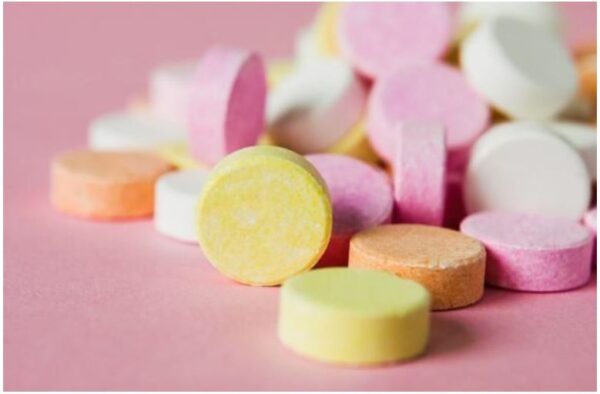
A Comprehensive Review On Formulation And Evaluation Of Chewable Tablet
Tags: excipientsformulation

Related Posts

Design and development of Lornoxicam self-nanoemulsifying drug delivery system (SNEDDS) loaded 3D-printed tablet shells with tunable drug release profile
3D Printing

Design and development of Lornoxicam self-nanoemulsifying drug delivery system (SNEDDS) loaded 3D-printed tablet shells with tunable drug release profile

5. July 2026
Oral nanoparticle-encapsulated enzyme replacement therapy for mucopolysaccharidosis type I (MPS-I)
Antares

Oral nanoparticle-encapsulated enzyme replacement therapy for mucopolysaccharidosis type I (MPS-I): a proof of concept study

5. July 2026
Suitability of Oral Formulations Available to Children at the Time of Pediatric Labeling
Capsules

Suitability of Oral Formulations Available to Children at the Time of Pediatric Labeling

4. July 2026
Next Post
Don’t Forget About Flavor

Don’t Forget About Flavor: How Excipient Source Impacts Taste

Cart

Shop Search

  • Search for excipients and samples
  • Product Inquiry
  • Newsletter Registration
  • Visit the Homepage

Top Pharma-Excipient Links

  • Pharmaceutical Excipients – Some Definition
  • Inactive ingredient search for approved drug products in the USA
  • Excipient Suppliers List
  • GRAS Substances (SCOGS) Database
  • DC Excipients List
  • Homepage

About | Privacy Policy | Cookie policy | Cookie Settings | Contact | Homepage
Copyright: PharmaExcipients AG

Welcome Back!

Login to your account below

Forgotten Password?

Retrieve your password

Please enter your username or email address to reset your password.

Log In
No Result
View All Result
  • Shop
  • News
    • Specials
      • Excipients for CBD
      • Excipients & 3D Printing
      • Infographics – The overview
      • GMP-certified excipient production sites
      • The Future of TiO2
      • Excipients in the COVID-19 Vaccines
      • BASF PVP-Iodine
      • RegXcellence™
      • BASF Parenteral Excipients
    • World Days – The overview
  • Excipient basics
    • Excipient Solutions for CBD
    • Inorganic Chemicals
      • Calcium Carbonate
      • Calcium Phosphates
      • Calcium Sulfate
      • Halites
      • Metallic Oxides
      • Silica
    • Organic Chemicals
      • Actual Sugars
      • Artificial Sweeteners
      • Carbohydrates
      • Cellulose
      • Cellulose Esters
      • Cellulose Ethers
      • CMC and Croscarmellose Sodium
      • Converted Starch
      • Dried Starch
      • Microcrystalline Cellulose
      • Modified Starch
      • Starch
      • Sugars
      • Sugar Alcohols
    • Petrochemicals
      • Acrylic Polymers
      • Glycols
      • Mineral Hydrocarbons
      • Mineral Oils
      • Mineral Waxes
      • Petrolatum
      • Polyethylene Glycol (PEG)
      • Povidones
      • Propylene Glycol
      • Other Petrochemical Excipients
    • Oleochemicals
      • Fatty Alcohols
      • Glycerin
      • Mineral Stearates
      • Pharmaceutical Oils
      • Other Oleochemical Excipients
    • Proteins
  • Applications
    • 3D Printing – Drug Carrier
      • 3D Printing
      • Binder
      • Coating
      • Colour / Color
      • Coating Systems and Additives
      • Controlled Release Excipient
      • DC excipient
      • Disintegrant / Superdisintergrant
      • Drug Carrier
    • Emulsifier – Glidant
      • Emulsifier
      • Excipient for Inhalation
      • Filler
      • Film former
      • Flavour / Flavor
      • Glidant
    • Lubricant – Preservative
      • Lubricant
      • Nanotechnology
      • Orally Dissolving Technology Excipient
      • Pellet
      • Plasticizer
      • Preservative
    • Solubilizer – Viscocity Agent
      • Solubilizer
      • Speciality Excipient
      • Surfactants
      • Suspension Agent
      • Sustained Release Agent
      • Sweeteners
      • Taste Masking
      • Topical Excipient
      • Viscosity Agent
  • Sources
    • Handbook of Pharmaceutical Excipients – 9th Edition
    • EINECS Numbers
    • Excipient DMF List
    • Excipient cGMP Certification Organisations
    • FDA Inactive Ingredient List
    • FDA GRAS Substances (SCOGS) Database
    • Excipient E-Numbers
    • Whitepapers / Publications
    • Contract Development|Contract Manufacturing
  • Suppliers
    • A-B
      • ADM
      • ARMOR PHARMA
      • Ceolus™ & Celphere™
      • Ashland
      • BASF
      • Beneo – galenIQ
      • Biogrund
      • Budenheim
    • C-G
      • Captisol
      • Croda
      • Cyclolab
      • DFE Pharma
      • DuPont Pharma Solutions
      • Evonik
      • Fuji Chemical Industries
      • Gattefossé
      • Gangwal Healthcare
    • I-O
      • ingredientpharm
      • IOI Oleochemical
      • JRS Pharma
      • Kerry
      • KLK Oleo Life Science
      • Lactalis Ingredients Pharma
      • Lipoid
      • Dr. Paul Lohmann
      • Lubrizol
      • Magnesia
      • MEGGLE Excipients
      • Nagase Viita – Pharmaceutical Ingredients
      • Nordic Bioproducts Group
    • P-Z
      • Pfanstiehl
      • pharm-a-spheres
      • Pharma Line
      • PMC Isochem
      • Roquette Pharma
      • Seppic
      • Shin-Etsu
      • Sigachi Group
      • Südzucker AG
      • VIKRAM THERMO
      • Zerion Pharma
      • ZoomLab® – Your Virtual Pharma Assistant
  • Inquiries
    • Product Inquiry
    • Tailored Tableting Excipients
      • Tailored Film Coating
  • Events
    • Overview Pharmaceutical Webinars
    • Videos CPhI Frankfurt 2025
    • CPhI China 2024
    • ExciPerience – The great excipient event!
  • All4Nutra

About | Privacy Policy | Cookie policy | Cookie Settings | Contact | Homepage
Copyright: PharmaExcipients AG






















