Pharma Excipients
No Result
View All Result
  • Login
  • Shop
  • News
    • Specials
      • Excipients for CBD
      • Excipients & 3D Printing
      • Infographics – The overview
      • GMP-certified excipient production sites
      • The Future of TiO2
      • Excipients in the COVID-19 Vaccines
      • BASF PVP-Iodine
      • RegXcellence™
      • BASF Parenteral Excipients
    • World Days – The overview
  • Excipient basics
    • Excipient Solutions for CBD
    • Inorganic Chemicals
      • Calcium Carbonate
      • Calcium Phosphates
      • Calcium Sulfate
      • Halites
      • Metallic Oxides
      • Silica
    • Organic Chemicals
      • Actual Sugars
      • Artificial Sweeteners
      • Carbohydrates
      • Cellulose
      • Cellulose Esters
      • Cellulose Ethers
      • CMC and Croscarmellose Sodium
      • Converted Starch
      • Dried Starch
      • Microcrystalline Cellulose
      • Modified Starch
      • Starch
      • Sugars
      • Sugar Alcohols
    • Petrochemicals
      • Acrylic Polymers
      • Glycols
      • Mineral Hydrocarbons
      • Mineral Oils
      • Mineral Waxes
      • Petrolatum
      • Polyethylene Glycol (PEG)
      • Povidones
      • Propylene Glycol
      • Other Petrochemical Excipients
    • Oleochemicals
      • Fatty Alcohols
      • Glycerin
      • Mineral Stearates
      • Pharmaceutical Oils
      • Other Oleochemical Excipients
    • Proteins
  • Applications
    • 3D Printing – Drug Carrier
      • 3D Printing
      • Binder
      • Coating
      • Colour / Color
      • Coating Systems and Additives
      • Controlled Release Excipient
      • DC excipient
      • Disintegrant / Superdisintergrant
      • Drug Carrier
    • Emulsifier – Glidant
      • Emulsifier
      • Excipient for Inhalation
      • Filler
      • Film former
      • Flavour / Flavor
      • Glidant
    • Lubricant – Preservative
      • Lubricant
      • Nanotechnology
      • Orally Dissolving Technology Excipient
      • Pellet
      • Plasticizer
      • Preservative
    • Solubilizer – Viscocity Agent
      • Solubilizer
      • Speciality Excipient
      • Surfactants
      • Suspension Agent
      • Sustained Release Agent
      • Sweeteners
      • Taste Masking
      • Topical Excipient
      • Viscocity Agent
  • Sources
    • EINECS Numbers
    • Excipient DMF List
    • Excipient cGMP Certification Organisations
    • FDA Inactive Ingredient List
    • FDA GRAS Substances (SCOGS) Database
    • Excipient E-Numbers
    • Whitepapers / Publications
    • Contract Development|Contract Manufacturing
  • Suppliers
    Excipient Suppliers List
    BIOGRUND Logo
    Evonik Logo
    LI logo violet
    logo roquette
    ADM
    Armor Pharma
    Asahi KASEI
    Ashland
    BASF

    Beneo

    Budenheim
    Captisol
    Croda
    DFE Pharma
    Excipio Chemicals
    Fuji Chemical
    Gattefossé

    Gangwal

    IOI Oleo
    Ingredient Pharm
    JRS Pharma
    KLK Oleo
    KLK Oleo
    Lipoid
    Dr. Paul Lohmann
    Lubrizol Life Science Health
    Lubrizol Life Science Health
    MAGNESIA

    MAGNESIA
    MEGGLE Excipients & Technology
    MEGGLE
    Nagase Viita
    Nagase Viita
    Nordic Bioproducts
    Nordic Bioproducts
    Pfanstiehl
    Pfanstiehl
    pharm-a-spheres
    pharm-a-spheres
    PMC Isochem
    PMC Isochem
    Seppic
    Seppic
    ShinEtsu
    ShinEtsu
    Sigachi
    Sigachi
    SPI Pharma
    SPI Pharma
    Südzucker
    Südzucker
    Vikram Thermo
    Vikram Thermo
    Zerion Pharma
    Zerion Pharma
    • A-B
      • ADM
      • ARMOR PHARMA
      • Ceolus™ & Celphere™
      • Ashland
      • BASF
      • Beneo – galenIQ
      • Biogrund
      • Budenheim
    • C-G
      • Captisol
      • Croda
      • Cyclolab
      • DFE Pharma
      • DuPont Pharma Solutions
      • Evonik
      • Fuji Chemical Industries
      • Gattefossé
      • Gangwal Healthcare
    • I-O
      • ingredientpharm
      • IOI Oleochemical
      • JRS Pharma
      • Kerry
      • KLK Oleo Life Sciences
      • Lactalis Ingredients Pharma
      • Lipoid
      • Dr. Paul Lohmann
      • Lubrizol
      • Magnesia
      • MEGGLE Excipients
      • Nagase Viita – Pharmaceutical Ingredients
      • Nordic Bioproducts Group
    • P-Z
      • Pfanstiehl
      • pharm-a-spheres
      • Pharma Line
      • PMC Isochem
      • Roquette Pharma
      • Seppic
      • Shin-Etsu
      • Sigachi Group
      • Südzucker AG
      • VIKRAM THERMO
      • Zerion Pharma
      • ZoomLab® – Your Virtual Pharma Assistant
  • Inquiries
    • Product Inquiry
    • Tailored Tableting Excipients
      • Tailored Film Coating
  • Events
    • Overview Pharmaceutical Webinars
    • Videos CPhI Frankfurt 2025
    • CPhI China 2024
    • ExciPerience – The great excipient event!
  • More
    • Handbook of Pharmaceutical Excipients – 9th Edition
    • Jobs
      • Job Submission

No products in the cart.

  • Shop
  • News
    • Specials
      • Excipients for CBD
      • Excipients & 3D Printing
      • Infographics – The overview
      • GMP-certified excipient production sites
      • The Future of TiO2
      • Excipients in the COVID-19 Vaccines
      • BASF PVP-Iodine
      • RegXcellence™
      • BASF Parenteral Excipients
    • World Days – The overview
  • Excipient basics
    • Excipient Solutions for CBD
    • Inorganic Chemicals
      • Calcium Carbonate
      • Calcium Phosphates
      • Calcium Sulfate
      • Halites
      • Metallic Oxides
      • Silica
    • Organic Chemicals
      • Actual Sugars
      • Artificial Sweeteners
      • Carbohydrates
      • Cellulose
      • Cellulose Esters
      • Cellulose Ethers
      • CMC and Croscarmellose Sodium
      • Converted Starch
      • Dried Starch
      • Microcrystalline Cellulose
      • Modified Starch
      • Starch
      • Sugars
      • Sugar Alcohols
    • Petrochemicals
      • Acrylic Polymers
      • Glycols
      • Mineral Hydrocarbons
      • Mineral Oils
      • Mineral Waxes
      • Petrolatum
      • Polyethylene Glycol (PEG)
      • Povidones
      • Propylene Glycol
      • Other Petrochemical Excipients
    • Oleochemicals
      • Fatty Alcohols
      • Glycerin
      • Mineral Stearates
      • Pharmaceutical Oils
      • Other Oleochemical Excipients
    • Proteins
  • Applications
    • 3D Printing – Drug Carrier
      • 3D Printing
      • Binder
      • Coating
      • Colour / Color
      • Coating Systems and Additives
      • Controlled Release Excipient
      • DC excipient
      • Disintegrant / Superdisintergrant
      • Drug Carrier
    • Emulsifier – Glidant
      • Emulsifier
      • Excipient for Inhalation
      • Filler
      • Film former
      • Flavour / Flavor
      • Glidant
    • Lubricant – Preservative
      • Lubricant
      • Nanotechnology
      • Orally Dissolving Technology Excipient
      • Pellet
      • Plasticizer
      • Preservative
    • Solubilizer – Viscocity Agent
      • Solubilizer
      • Speciality Excipient
      • Surfactants
      • Suspension Agent
      • Sustained Release Agent
      • Sweeteners
      • Taste Masking
      • Topical Excipient
      • Viscocity Agent
  • Sources
    • EINECS Numbers
    • Excipient DMF List
    • Excipient cGMP Certification Organisations
    • FDA Inactive Ingredient List
    • FDA GRAS Substances (SCOGS) Database
    • Excipient E-Numbers
    • Whitepapers / Publications
    • Contract Development|Contract Manufacturing
  • Suppliers
    Excipient Suppliers List
    BIOGRUND Logo
    Evonik Logo
    LI logo violet
    logo roquette
    ADM
    Armor Pharma
    Asahi KASEI
    Ashland
    BASF
    Beneo
    Budenheim
    Captisol
    Croda
    DFE Pharma
    Excipio Chemicals
    Fuji Chemical
    Gattefossé
    Gangwal
    IOI Oleo
    Ingredient Pharm
    JRS Pharma
    KLK Oleo
    KLK Oleo
    Lipoid
    Dr. Paul Lohmann
    Lubrizol Life Science Health
    Lubrizol Life Science Health
    MAGNESIA
    MAGNESIA
    MEGGLE Excipients & Technology
    MEGGLE
    Nagase Viita
    Nagase Viita
    Nordic Bioproducts
    Nordic Bioproducts
    Pfanstiehl
    Pfanstiehl
    pharm-a-spheres
    pharm-a-spheres
    PMC Isochem
    PMC Isochem
    Seppic
    Seppic
    ShinEtsu
    ShinEtsu
    Sigachi
    Sigachi
    SPI Pharma
    SPI Pharma
    Südzucker
    Südzucker
    Vikram Thermo
    Vikram Thermo
    Zerion Pharma
    Zerion Pharma
    • A-B
      • ADM
      • ARMOR PHARMA
      • Ceolus™ & Celphere™
      • Ashland
      • BASF
      • Beneo – galenIQ
      • Biogrund
      • Budenheim
    • C-G
      • Captisol
      • Croda
      • Cyclolab
      • DFE Pharma
      • DuPont Pharma Solutions
      • Evonik
      • Fuji Chemical Industries
      • Gattefossé
      • Gangwal Healthcare
    • I-O
      • ingredientpharm
      • IOI Oleochemical
      • JRS Pharma
      • Kerry
      • KLK Oleo Life Sciences
      • Lactalis Ingredients Pharma
      • Lipoid
      • Dr. Paul Lohmann
      • Lubrizol
      • Magnesia
      • MEGGLE Excipients
      • Nagase Viita – Pharmaceutical Ingredients
      • Nordic Bioproducts Group
    • P-Z
      • Pfanstiehl
      • pharm-a-spheres
      • Pharma Line
      • PMC Isochem
      • Roquette Pharma
      • Seppic
      • Shin-Etsu
      • Sigachi Group
      • Südzucker AG
      • VIKRAM THERMO
      • Zerion Pharma
      • ZoomLab® – Your Virtual Pharma Assistant
  • Inquiries
    • Product Inquiry
    • Tailored Tableting Excipients
      • Tailored Film Coating
  • Events
    • Overview Pharmaceutical Webinars
    • Videos CPhI Frankfurt 2025
    • CPhI China 2024
    • ExciPerience – The great excipient event!
  • More
    • Handbook of Pharmaceutical Excipients – 9th Edition
    • Jobs
      • Job Submission
No Result
View All Result
Pharma Excipients
No Result
View All Result

Startseite » News » Exploring granulation in pharmaceuticals: the role of cellulose ethers

Exploring granulation in pharmaceuticals: the role of cellulose ethers

3. December 2024
Exploring granulation in pharmaceuticals

Exploring granulation in pharmaceuticals

Solid pharmaceutical dosage forms, such as tablets and capsules, are the most used drug delivery systems, favored for their ease of production and patient preference. These forms combine active pharmaceutical ingredients (APIs) with excipients that are carefully selected and processed to ensure stability, efficacy, and safety. A key process in manufacturing these forms is granulation, which improves crucial powder properties such as flowability, compactability, and compressibility. These factors are essential in ensuring uniform content and proper dissolution of the final product. Granulation transforms fine powders into granules, making the material easier to handle for processes like tablet compression or capsule filling. [1]

Understanding the granulation process in more depth reveals its importance in pharmaceutical manufacturing. Different granulation methods, such as wet and dry granulation, offer distinct advantages that optimize product performance and address formulation challenges. [2,3] Binders play a crucial role in both methods, helping to create strong and uniform granules. Among the most versatile and widely used binders are cellulose ethers, which improve granule strength and flow properties. In wet granulation, cellulose ethers act as binding agents that facilitate particle adhesion, [4] while in dry granulation, some cellulose derivatives enhance compressibility and tablet integrity. [5] This article explores how granulation works and examines why cellulose ethers are useful for this process.

Which characteristics should have the granules?

Granules are formed when primary powder particles adhere together, typically ranging in size from 0.2 to 4.0 mm, depending on their intended application. In the case of tablet and capsule production, granules serve as an essential intermediate, with an optimal size range of 0.2 to 0.5 mm. [6] Achieving granules with the desired properties requires careful attention to several factors. Enhancing granule density improves their strength and stability, while a spherical shape significantly enhances flowability, facilitating smoother processing. Maintaining a narrow particle size distribution is equally important, as it optimizes packing density and further improves performance. Moisture content also plays a pivotal role, with ideal levels typically kept between 1% and 2%, ensuring the granules remain cohesive without becoming overly wet. Together, these factors contribute to the consistent and efficient performance of granules in their intended applications. [7]

Granulation processes can be divided into two primary types:

1. Wet Granulation

Wet granulation is a technique where a liquid solution (normally water or a solvent) is added to powdered ingredients to create bonds between particles. This process involves mixing the powder with a binder solution, forming agglomerates or even a paste or dough that are later broken down into granules and dried. Wet granulation provides strong, uniform granules, making it a preferred choice for formulations that demand consistency and cohesion. In wet granulation processes, the choice of equipment plays an important role in achieving desired particle properties. Among the most widely used technologies are high-shear mixers (Figure 1a), fluid bed (Figure 1b) and twin screw granulators (Figure 1c). [8,9]

Figure 1. Wet granulation technologies
Figure 1. Wet granulation technologies: a) Loedige MGT-L5 bench-top high shear mixer, b) Diosna Minilab XP Fluid Bed Processor and c) Leistritz ZSE-12 Twin Screw Extruder

Key Benefits of Wet Granulation:

  • Enhanced granule strength: The added moisture creates solid bonds, resulting in durable granules that hold up well during tablet compression.
  • Improved drug release: Granules created via wet granulation often dissolve more uniformly, supporting controlled drug release.
  • Compatibility with multiple binders: Wet granulation allows for a range of binders, making it suitable for various formulations

The Role of Cellulose Ethers in Wet Granulation

Materials commonly used as wet binders in pharmaceutical practices include synthetic and semi-synthetic compounds, such as cellulose derivatives, vinyl pyrrolidone derivatives, and modified starches.[10] Among these, cellulose ethers are especially popular in wet granulation for their effective binding properties. When dissolved in water or other solvents, cellulose ethers form a viscous solution that coats particles and promotes cohesion, enhancing granule strength and uniformity. [11]

The following cellulose ethers help achieve granules in wet granulation with ideal flow and compression properties, making them particularly useful for tablets requiring precise dissolution rates and consistent API distribution.

Hydroxypropyl Methylcellulose, Hypromellose (HPMC): This polymer is often used in formulations requiring controlled-release effects. Its gel-forming properties make it ideal for sustained-release tablets, as it can slow down the drug dissolution rate.  Typically, low viscosity grades of HPMC such as 3 to 6 mPas are mostly used as binder either in dry powder form or solubilized in the granulation solution. Shin-Etsu offers low viscosity grades of Hypromellose 2910 from 3 to 15 mPas under the brand names PHARMACOAT® and TYLOPUR®.

Hydroxypropyl Cellulose (HPC): This cellulose ether is highly effective in forming a gel matrix, which promotes binding during granule formation. It also enhances the stability of the granules, making them less likely to break apart.

Low-substituted Hydroxypropyl Cellulose (L-HPC): is a low-substituted form of hydroxypropyl cellulose that performs well in applications requiring swelling and disintegration, making it ideal for wet granulation. Its good  water retention and broad compatibility with drugs and excipients ensure its versatility in tablet formulations. Typical grades used are  LH-11, LH-21 or LH-B1.

2. Dry granulation

Dry granulation is an alternative technique for compressing and compacting powder particles without using liquids. This method is ideal for moisture-sensitive drugs that may degrade if exposed to water or other solvents. Dry granulation involves either roller compaction (Figure 2) or slugging to compress the powder mixture into larger, dense compacts, which are then milled into granules. This process eliminates the need for drying, making it simpler and faster than wet granulation. [12]
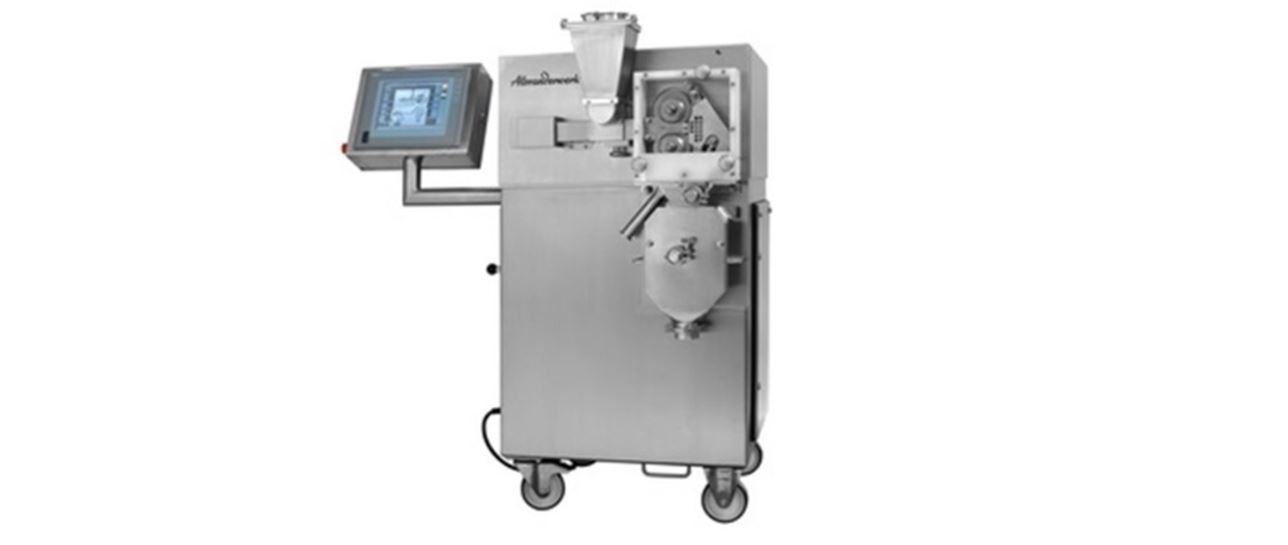
Figure 2. Dry granulation technology
Figure 2. Dry granulation technology: Alexanderwerk WP-120 Roll Compactor

Key benefits of dry granulation:

  • No solvent requirement: Perfect for solvent-sensitive APIs and excipients.
  • Reduced processing steps: With no need for drying, dry granulation is a simplified process, saving time and energy.
  • Enhanced stability: Since no solvents are used, there is less risk of chemical degradation or instability in sensitive formulations.

The role of cellulose ethers in dry granulation

Although cellulose ethers are traditionally used as binders in wet granulation, they also offer significant advantages in dry granulation, primarily for their compressibility-enhancing properties.[13] In dry granulation, the most used cellulose derivatives improve the structural integrity of granules and tablets without additional moisture, making them crucial for producing stable, high-quality tablets. Examples of these include:

Microcrystalline Cellulose (MCC): although not technically an ether, MCC is a widely used cellulose derivative that provides excellent compressibility having dry binding properties. It adds mechanical strength to the granules, ensuring uniform tablet formation during compression.

Hydroxypropyl Cellulose (HPC): Used in low concentrations, HPC can improve the mechanical strength and compressibility of granules, contributing to tablet durability while still allowing quick disintegration.

Low-substituted hydroxypropyl Cellulose (L-HPC): It provides cohesion in the compressed granules, improving flowability and enhancing mechanical strength. Its ability to function without moisture, while offering excellent compression properties, makes it ideal for efficient granule formation and stable tablet production. Suitable L-HPC grades are LH-31-32 or the NBD range.

Wet vs. dry granulation: choosing the right method
Both wet and dry granulation methods offer unique benefits,[14] and the choice between them depends on the specific needs of the formulation:

Formulation stability: If the drug or excipients are sensitive to moisture, dry granulation is often preferred to avoid potential degradation.

Dissolution requirements: Wet granulation is commonly chosen for formulations that require controlled or sustained release, as it allows for greater manipulation of dissolution rates with binders like HPMC.

Process simplicity: Dry granulation involves fewer steps and no drying, making it a quicker and more cost-effective option for stable drugs. Summary Both wet and dry granulation play indispensable roles in modern pharmaceutical manufacturing, each with its advantages and ideal applications. Cellulose ethers are essential in both processes, acting as versatile binders and functional additives that enhance granule formation, compressibility, and even drug release. Whether in the cohesive structure of wet granulation or the compressible nature of dry granulation, cellulose ethers are essential in ensuring the quality, consistency, and effectiveness of pharmaceutical tablets and capsules.

Summary

Both wet and dry granulation play indispensable roles in modern pharmaceutical manufacturing, each with its advantages and ideal applications. Cellulose ethers are essential in both processes, acting as versatile binders and functional additives that enhance granule formation, compressibility, and even drug release. Whether in the cohesive structure of wet granulation or the compressible nature of dry granulation, cellulose ethers are essential in ensuring the quality, consistency, and effectiveness of pharmaceutical tablets and capsules.

Read the original article here

Source: Shin-Etsu new blog article, website Exploring granulation in pharmaceuticals: the role of cellulose ethers, https://www.setylose.com/en/blog/exploring-granulation-in-pharmaceuticals-the-role-of-cellulose-ethers


Interested in more information or a sample from Shin-Etsu excipients?

Tags: excipientsformulation

Related Posts

Vitamin E Premixes
Copovidone

New Vitamin E TPGS- Premixes by PMC Isochem

11. December 2025
Polymeric Oral Fast Dissolving Films of Metformin Fabrication, Optimization, In Vitro and In Vivo Evaluation
Disintegrant / Superdisintergrant

Polymeric Oral Fast Dissolving Films of Metformin: Fabrication, Optimization, In Vitro and In Vivo Evaluation

10. December 2025
Dose performance of the OnDosis Minitablet Dosage Manager
News

Dose performance of the OnDosis Minitablet Dosage Manager

10. December 2025
Next Post
Patent on modified-release Gamma-Hydroxybutyrate formulations having improved pharmacokinetics_ingredientpharm

Modified-release Gamma-Hydroxybutyrate - Cellets formulation

Cart

Shop Search

  • Search for excipients and samples
  • Product Inquiry
  • Newsletter Registration
  • Visit the Homepage

Top Pharma-Excipient Links

  • Pharmaceutical Excipients – Some Definition
  • Inactive ingredient search for approved drug products in the USA
  • Excipient Suppliers List
  • GRAS Substances (SCOGS) Database
  • DC Excipients List
  • Homepage

About | Privacy Policy | Cookie policy | Cookie Settings | Contact | Homepage
Copyright: PharmaExcipients AG

Welcome Back!

Login to your account below

Forgotten Password?

Retrieve your password

Please enter your username or email address to reset your password.

Log In
No Result
View All Result
  • Shop
  • News
    • Specials
      • Excipients for CBD
      • Excipients & 3D Printing
      • Infographics – The overview
      • GMP-certified excipient production sites
      • The Future of TiO2
      • Excipients in the COVID-19 Vaccines
      • BASF PVP-Iodine
      • RegXcellence™
      • BASF Parenteral Excipients
    • World Days – The overview
  • Excipient basics
    • Excipient Solutions for CBD
    • Inorganic Chemicals
      • Calcium Carbonate
      • Calcium Phosphates
      • Calcium Sulfate
      • Halites
      • Metallic Oxides
      • Silica
    • Organic Chemicals
      • Actual Sugars
      • Artificial Sweeteners
      • Carbohydrates
      • Cellulose
      • Cellulose Esters
      • Cellulose Ethers
      • CMC and Croscarmellose Sodium
      • Converted Starch
      • Dried Starch
      • Microcrystalline Cellulose
      • Modified Starch
      • Starch
      • Sugars
      • Sugar Alcohols
    • Petrochemicals
      • Acrylic Polymers
      • Glycols
      • Mineral Hydrocarbons
      • Mineral Oils
      • Mineral Waxes
      • Petrolatum
      • Polyethylene Glycol (PEG)
      • Povidones
      • Propylene Glycol
      • Other Petrochemical Excipients
    • Oleochemicals
      • Fatty Alcohols
      • Glycerin
      • Mineral Stearates
      • Pharmaceutical Oils
      • Other Oleochemical Excipients
    • Proteins
  • Applications
    • 3D Printing – Drug Carrier
      • 3D Printing
      • Binder
      • Coating
      • Colour / Color
      • Coating Systems and Additives
      • Controlled Release Excipient
      • DC excipient
      • Disintegrant / Superdisintergrant
      • Drug Carrier
    • Emulsifier – Glidant
      • Emulsifier
      • Excipient for Inhalation
      • Filler
      • Film former
      • Flavour / Flavor
      • Glidant
    • Lubricant – Preservative
      • Lubricant
      • Nanotechnology
      • Orally Dissolving Technology Excipient
      • Pellet
      • Plasticizer
      • Preservative
    • Solubilizer – Viscocity Agent
      • Solubilizer
      • Speciality Excipient
      • Surfactants
      • Suspension Agent
      • Sustained Release Agent
      • Sweeteners
      • Taste Masking
      • Topical Excipient
      • Viscocity Agent
  • Sources
    • EINECS Numbers
    • Excipient DMF List
    • Excipient cGMP Certification Organisations
    • FDA Inactive Ingredient List
    • FDA GRAS Substances (SCOGS) Database
    • Excipient E-Numbers
    • Whitepapers / Publications
    • Contract Development|Contract Manufacturing
  • Suppliers
    • A-B
      • ADM
      • ARMOR PHARMA
      • Ceolus™ & Celphere™
      • Ashland
      • BASF
      • Beneo – galenIQ
      • Biogrund
      • Budenheim
    • C-G
      • Captisol
      • Croda
      • Cyclolab
      • DFE Pharma
      • DuPont Pharma Solutions
      • Evonik
      • Fuji Chemical Industries
      • Gattefossé
      • Gangwal Healthcare
    • I-O
      • ingredientpharm
      • IOI Oleochemical
      • JRS Pharma
      • Kerry
      • KLK Oleo Life Sciences
      • Lactalis Ingredients Pharma
      • Lipoid
      • Dr. Paul Lohmann
      • Lubrizol
      • Magnesia
      • MEGGLE Excipients
      • Nagase Viita – Pharmaceutical Ingredients
      • Nordic Bioproducts Group
    • P-Z
      • Pfanstiehl
      • pharm-a-spheres
      • Pharma Line
      • PMC Isochem
      • Roquette Pharma
      • Seppic
      • Shin-Etsu
      • Sigachi Group
      • Südzucker AG
      • VIKRAM THERMO
      • Zerion Pharma
      • ZoomLab® – Your Virtual Pharma Assistant
  • Inquiries
    • Product Inquiry
    • Tailored Tableting Excipients
      • Tailored Film Coating
  • Events
    • Overview Pharmaceutical Webinars
    • Videos CPhI Frankfurt 2025
    • CPhI China 2024
    • ExciPerience – The great excipient event!
  • More
    • Handbook of Pharmaceutical Excipients – 9th Edition
    • Jobs
      • Job Submission

About | Privacy Policy | Cookie policy | Cookie Settings | Contact | Homepage
Copyright: PharmaExcipients AG