Pharma Excipients
No Result
View All Result
  • Login
  • Shop
  • News
    • Specials
      • Excipients for CBD
      • Excipients & 3D Printing
      • Infographics – The overview
      • GMP-certified excipient production sites
      • The Future of TiO2
      • Excipients in the COVID-19 Vaccines
      • BASF PVP-Iodine
      • RegXcellence™
      • BASF Parenteral Excipients
    • World Days – The overview
  • Excipient basics
    • Excipient Solutions for CBD
    • Inorganic Chemicals
      • Calcium Carbonate
      • Calcium Phosphates
      • Calcium Sulfate
      • Halites
      • Metallic Oxides
      • Silica
    • Organic Chemicals
      • Actual Sugars
      • Artificial Sweeteners
      • Carbohydrates
      • Cellulose
      • Cellulose Esters
      • Cellulose Ethers
      • CMC and Croscarmellose Sodium
      • Converted Starch
      • Dried Starch
      • Microcrystalline Cellulose
      • Modified Starch
      • Starch
      • Sugars
      • Sugar Alcohols
    • Petrochemicals
      • Acrylic Polymers
      • Glycols
      • Mineral Hydrocarbons
      • Mineral Oils
      • Mineral Waxes
      • Petrolatum
      • Polyethylene Glycol (PEG)
      • Povidones
      • Propylene Glycol
      • Other Petrochemical Excipients
    • Oleochemicals
      • Fatty Alcohols
      • Glycerin
      • Mineral Stearates
      • Pharmaceutical Oils
      • Other Oleochemical Excipients
    • Proteins
  • Applications
    • 3D Printing – Drug Carrier
      • 3D Printing
      • Binder
      • Coating
      • Colour / Color
      • Coating Systems and Additives
      • Controlled Release Excipient
      • DC excipient
      • Disintegrant / Superdisintergrant
      • Drug Carrier
    • Emulsifier – Glidant
      • Emulsifier
      • Excipient for Inhalation
      • Filler
      • Film former
      • Flavour / Flavor
      • Glidant
    • Lubricant – Preservative
      • Lubricant
      • Nanotechnology
      • Orally Dissolving Technology Excipient
      • Pellet
      • Plasticizer
      • Preservative
    • Solubilizer – Viscocity Agent
      • Solubilizer
      • Speciality Excipient
      • Surfactants
      • Suspension Agent
      • Sustained Release Agent
      • Sweeteners
      • Taste Masking
      • Topical Excipient
      • Viscocity Agent
  • Sources
    • EINECS Numbers
    • Excipient DMF List
    • Excipient cGMP Certification Organisations
    • FDA Inactive Ingredient List
    • FDA GRAS Substances (SCOGS) Database
    • Excipient E-Numbers
    • Whitepapers / Publications
    • Contract Development|Contract Manufacturing
  • Suppliers
    Excipient Suppliers List
    BIOGRUND Logo
    Evonik Logo
    LI logo violet
    logo roquette
    ADM
    Armor Pharma
    Asahi KASEI
    Ashland
    BASF

    Beneo

    Budenheim
    Captisol
    Croda
    DFE Pharma
    Excipio Chemicals
    Fuji Chemical
    Gattefossé

    Gangwal

    IOI Oleo
    Ingredient Pharm
    JRS Pharma
    Kerry Logo
    Kerry
    KLK Oleo
    KLK Oleo
    Lipoid
    Lubrizol Life Science Health

    Lubrizol Life Science Health
    MAGNESIA

    MAGNESIA
    MEGGLE Excipients & Technology
    MEGGLE
    Nagase Viita
    Nagase Viita
    Nordic Bioproducts
    Nordic Bioproducts
    Pfanstiehl
    Pfanstiehl
    pharm-a-spheres
    pharm-a-spheres
    PMC Isochem
    PMC Isochem
    Seppic
    Seppic
    ShinEtsu
    ShinEtsu
    Sigachi
    Sigachi
    SPI Pharma
    SPI Pharma
    Südzucker
    Südzucker
    Vikram Thermo
    Vikram Thermo
    Zerion Pharma
    Zerion Pharma
    • A-B
      • ADM
      • ARMOR PHARMA
      • Ceolus™ & Celphere™
      • Ashland
      • BASF
      • Beneo – galenIQ
      • Biogrund
      • Budenheim
    • C-G
      • Captisol
      • Croda
      • Cyclolab
      • DFE Pharma
      • DuPont Pharma Solutions
      • Evonik
      • Fuji Chemical Industries
      • Gattefossé
      • Gangwal Healthcare
    • I-O
      • ingredientpharm
      • IOI Oleochemical
      • JRS Pharma
      • Kerry
      • KLK Oleo Life Sciences
      • Lactalis Ingredients Pharma
      • Lipoid
      • Dr. Paul Lohmann
      • Lubrizol
      • Magnesia
      • MEGGLE Excipients
      • Nagase Viita – Pharmaceutical Ingredients
      • Nordic Bioproducts Group
    • P-Z
      • Pfanstiehl
      • pharm-a-spheres
      • Pharma Line
      • PMC Isochem
      • Roquette Pharma
      • Seppic
      • Shin-Etsu
      • Sigachi Group
      • Südzucker AG
      • VIKRAM THERMO
      • Zerion Pharma
      • ZoomLab® – Your Virtual Pharma Assistant
  • Inquiries
    • Product Inquiry
    • Tailored Tableting Excipients
      • Tailored Film Coating
  • Events
    • Overview Pharmaceutical Webinars
    • Videos CPhI Frankfurt 2025
    • CPhI China 2024
    • ExciPerience – The great excipient event!
  • More
    • Handbook of Pharmaceutical Excipients – 9th Edition
    • Jobs
      • Job Submission

No products in the cart.

  • Shop
  • News
    • Specials
      • Excipients for CBD
      • Excipients & 3D Printing
      • Infographics – The overview
      • GMP-certified excipient production sites
      • The Future of TiO2
      • Excipients in the COVID-19 Vaccines
      • BASF PVP-Iodine
      • RegXcellence™
      • BASF Parenteral Excipients
    • World Days – The overview
  • Excipient basics
    • Excipient Solutions for CBD
    • Inorganic Chemicals
      • Calcium Carbonate
      • Calcium Phosphates
      • Calcium Sulfate
      • Halites
      • Metallic Oxides
      • Silica
    • Organic Chemicals
      • Actual Sugars
      • Artificial Sweeteners
      • Carbohydrates
      • Cellulose
      • Cellulose Esters
      • Cellulose Ethers
      • CMC and Croscarmellose Sodium
      • Converted Starch
      • Dried Starch
      • Microcrystalline Cellulose
      • Modified Starch
      • Starch
      • Sugars
      • Sugar Alcohols
    • Petrochemicals
      • Acrylic Polymers
      • Glycols
      • Mineral Hydrocarbons
      • Mineral Oils
      • Mineral Waxes
      • Petrolatum
      • Polyethylene Glycol (PEG)
      • Povidones
      • Propylene Glycol
      • Other Petrochemical Excipients
    • Oleochemicals
      • Fatty Alcohols
      • Glycerin
      • Mineral Stearates
      • Pharmaceutical Oils
      • Other Oleochemical Excipients
    • Proteins
  • Applications
    • 3D Printing – Drug Carrier
      • 3D Printing
      • Binder
      • Coating
      • Colour / Color
      • Coating Systems and Additives
      • Controlled Release Excipient
      • DC excipient
      • Disintegrant / Superdisintergrant
      • Drug Carrier
    • Emulsifier – Glidant
      • Emulsifier
      • Excipient for Inhalation
      • Filler
      • Film former
      • Flavour / Flavor
      • Glidant
    • Lubricant – Preservative
      • Lubricant
      • Nanotechnology
      • Orally Dissolving Technology Excipient
      • Pellet
      • Plasticizer
      • Preservative
    • Solubilizer – Viscocity Agent
      • Solubilizer
      • Speciality Excipient
      • Surfactants
      • Suspension Agent
      • Sustained Release Agent
      • Sweeteners
      • Taste Masking
      • Topical Excipient
      • Viscocity Agent
  • Sources
    • EINECS Numbers
    • Excipient DMF List
    • Excipient cGMP Certification Organisations
    • FDA Inactive Ingredient List
    • FDA GRAS Substances (SCOGS) Database
    • Excipient E-Numbers
    • Whitepapers / Publications
    • Contract Development|Contract Manufacturing
  • Suppliers
    Excipient Suppliers List
    BIOGRUND Logo
    Evonik Logo
    LI logo violet
    logo roquette
    ADM
    Armor Pharma
    Asahi KASEI
    Ashland
    BASF
    Beneo
    Budenheim
    Captisol
    Croda
    DFE Pharma
    Excipio Chemicals
    Fuji Chemical
    Gattefossé
    Gangwal
    IOI Oleo
    Ingredient Pharm
    JRS Pharma
    Kerry Logo
    Kerry
    KLK Oleo
    KLK Oleo
    Lipoid
    Lubrizol Life Science Health
    Lubrizol Life Science Health
    MAGNESIA
    MAGNESIA
    MEGGLE Excipients & Technology
    MEGGLE
    Nagase Viita
    Nagase Viita
    Nordic Bioproducts
    Nordic Bioproducts
    Pfanstiehl
    Pfanstiehl
    pharm-a-spheres
    pharm-a-spheres
    PMC Isochem
    PMC Isochem
    Seppic
    Seppic
    ShinEtsu
    ShinEtsu
    Sigachi
    Sigachi
    SPI Pharma
    SPI Pharma
    Südzucker
    Südzucker
    Vikram Thermo
    Vikram Thermo
    Zerion Pharma
    Zerion Pharma
    • A-B
      • ADM
      • ARMOR PHARMA
      • Ceolus™ & Celphere™
      • Ashland
      • BASF
      • Beneo – galenIQ
      • Biogrund
      • Budenheim
    • C-G
      • Captisol
      • Croda
      • Cyclolab
      • DFE Pharma
      • DuPont Pharma Solutions
      • Evonik
      • Fuji Chemical Industries
      • Gattefossé
      • Gangwal Healthcare
    • I-O
      • ingredientpharm
      • IOI Oleochemical
      • JRS Pharma
      • Kerry
      • KLK Oleo Life Sciences
      • Lactalis Ingredients Pharma
      • Lipoid
      • Dr. Paul Lohmann
      • Lubrizol
      • Magnesia
      • MEGGLE Excipients
      • Nagase Viita – Pharmaceutical Ingredients
      • Nordic Bioproducts Group
    • P-Z
      • Pfanstiehl
      • pharm-a-spheres
      • Pharma Line
      • PMC Isochem
      • Roquette Pharma
      • Seppic
      • Shin-Etsu
      • Sigachi Group
      • Südzucker AG
      • VIKRAM THERMO
      • Zerion Pharma
      • ZoomLab® – Your Virtual Pharma Assistant
  • Inquiries
    • Product Inquiry
    • Tailored Tableting Excipients
      • Tailored Film Coating
  • Events
    • Overview Pharmaceutical Webinars
    • Videos CPhI Frankfurt 2025
    • CPhI China 2024
    • ExciPerience – The great excipient event!
  • More
    • Handbook of Pharmaceutical Excipients – 9th Edition
    • Jobs
      • Job Submission
No Result
View All Result
Pharma Excipients
No Result
View All Result

Startseite » News » Solid lipid nanoparticles in cervical cancer: a comprehensive review of a decade of progress and prospects

Solid lipid nanoparticles in cervical cancer: a comprehensive review of a decade of progress and prospects

28. July 2025
Solid lipid nanoparticles in cervical cancer

Solid lipid nanoparticles in cervical cancer

Abstract

Background: Cervical cancer is the second most commonly diagnosed cancer worldwide and the third leading cause of death among women, with approximately 604 127 new cases being reported in 2020. Conventional treatment methods, such as chemotherapy, radiation therapy, surgery, and hormonal therapy, often face significant challenges, including systemic toxicity and reduced efficacy, particularly in the advanced stages of the disease. The treatment of cervical cancer is further complicated by tumor heterogeneity, resistance mechanisms to chemotherapeutic drugs, and the persistent presence of HPV. However, in recent years, nanotechnological interventions, particularly solid lipid nanoparticles (SLNs), have gained increasing attention owing to their robust potential to effectively deliver chemotherapeutic agents while minimizing systemic toxicity. SLNs present a compelling solution for reducing side effects, enhancing drug solubility, improving stability and bioavailability, and overcoming the limitations and resistance associated with conventional treatment strategies.

Methods: To provide the context and evidence, relevant publications were searched on Google Scholar, PubMed, ScienceDirect, Dimensions AI, and EBSCO host, using specific keywords such as “cervical cancer”, “drug loading”, “encapsulation efficiency”, “HPV”, “sustained drug release”, and “solid lipid nanoparticles (SLNs)”. We did not impose any restrictions on the publication date during the selection of papers. However, it is imperative to highlight that the initial reports containing specified keywords began publication in 2013.

Conclusion: SLNs represent a promising frontier in drug delivery, particularly within cervical cancer therapeutics, because of their ability to facilitate the targeted delivery of chemotherapeutic agents and genetic materials. The potential of SLNs to encapsulate and protect vital therapeutic compounds presents significant opportunities for developing innovative treatment strategies including DNA and peptide vaccines. However, the lack of approved SLN-encapsulated vaccines for cervical cancer underscores the need for rigorous in vivo research and clinical trials to validate their safety and efficacy. Future studies should not only optimize SLNs for various agents but also explore diverse combination therapies to enhance therapeutic outcomes.

Introduction

Cervical cancer (CC) develops from a malignant epithelial tumor that leads to the proliferation of cells in the cervix. The predominant cause is persistent infection of Human papillomavirus (HPV), particularly HPV 16 and 18.1 Moreover, HIV-infected females have a 6-fold increased risk of developing CC compared to the general population.2 Emerging evidence suggests that HIV and HPV co-infection significantly contributes to cervical carcinogenesis through multifactorial viral interactions, encompassing immunosuppression, chronic inflammation, and the induction of epithelial–mesenchymal transition (EMT)3 (Table 1). The disease commonly presents as either less common adenocarcinoma (20–30%) or more common squamous cell carcinoma (70–80%).4,5 Additionally, factors such as multiple sexual partners,6,7 consistent use of oral contraceptives,6 early initiation of sexual activity,7 and a higher number of vaginal deliveries8,9 are also associated with the development of CC. The risk factors associated with the development of cervical cancer are illustrated in Fig. 1.10 Prognostic factors, including depth of cervical stromal invasion, tumor size, lymph node involvement, histological features, and International Federation of Gynecology and Obstetrics (FIGO) cancer stage, influence the prognosis of CC.11–13 Higher FIGO stage, increased node involvement, larger tumors, and deeper invasion are associated with poorer prognosis, leading to worsened overall survival (OS) and disease-free survival (DFS).
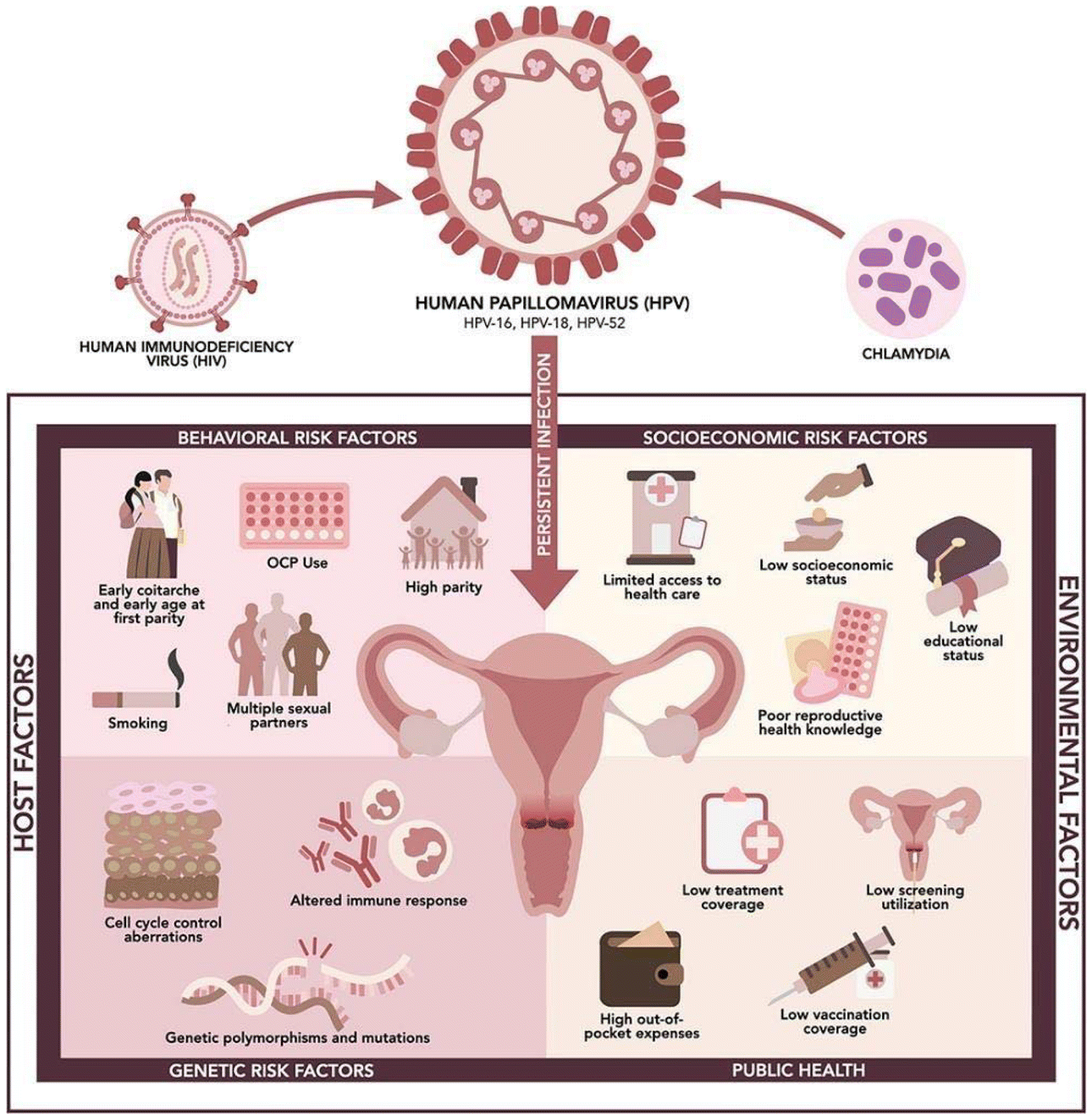
Fig. 1 Risk factors associated with CC. Reproduced from Lintao et al.10 licensed under the terms of the Creative Commons Attribution License (CC BY).

CC ranks as the third leading cause of death in women globally and is the second most frequently diagnosed cancer in women, especially those under 25 years of age.14 In 2020, there were 341 833 reported cases of CC worldwide, with a total of 604 127 new cases.15 According to Global Cancer Statistics, it is projected that there will be approximately 13 820 new cases and 4360 deaths in 2024 due to CC in the US.16 The incidence and mortality of CC vary based on the geographic and socioeconomic status of the country, with a heavy burden on low-middle-income countries (LMICs) and those with a lower Human Development Index (HDI).17 Astonishingly, 88% of all deaths and 83% of new CC cases occur in LMICs, including India, Sub-Saharan Africa, and Latin America.15,18

The treatment of CC depends on the stage and extent of spread. This includes surgery, radiotherapy, and chemotherapy, with increasing research on immunotherapy and targeted therapy.19 The National Comprehensive Cancer Network (NCCN) clinical practice guidelines recommend specific surgical procedures, such as conization, loop electrosurgical excision procedure (LEEP), or radical trachelectomy, for fertility preservation in women diagnosed with early stage disease.5 For women of childbearing age, radical hysterectomy or total hysterectomy with or without salpingo-oophorectomy is the treatment of choice.20,21 Radical hysterectomy using the open technique is the preferred option for tumors greater than 2 cm and larger cervical lesions.22 In the case of locally advanced stages (FIGO IIB/IIIB and FIGO IVA), concurrent chemotherapy with radiation therapy (RT) [external beam radiation therapy (EBRT), brachytherapy (internal RT), and intensity-modulated radiotherapy (IMRT)] followed by surgery is the most widely used method for managing CC.23,24 RT alone is not used for treatment due to its association with numerous adverse effects such as abdominal cramps, diarrhea, pelvic pain, skin toxicity, and lymphedema, which reduce the quality of life (QoL).25 Moreover, the treatment of locally advanced disease with chemoradiation has been associated with a high failure rate of 30–50%.26 In treating metastatic CC (Stage FIGO IVB) and locally advanced cervical cancer, pelvic exenteration for localized recurrence and chemotherapy alone, or in combination with radiation therapy, followed by surgery are crucial treatment options.27 Cisplatin is the most effective single agent, and the European Society for Medical Oncology (ESMO) recommends cisplatin over radiotherapy for local control and survival.28 Research has shown that the efficacy of cisplatin increases when it is combined with other chemotherapeutic agents.29,30 In a phase III study conducted by a gynecologic oncologic group, it was reported that combining cisplatin with topotecan and paclitaxel resulted in response rates of 39% and 29%, respectively.31 However, the median progression-free survival (mPFS) and median overall survival (mOS) for metastatic and recurrent CC remain low despite advances in treatment.28

The combination of targeted therapies, such as Bevacizumab with Cisplatin, has significantly improved progression-free survival (PFS) and overall survival (OS) in metastatic diseases.32,33 Additionally, immunotherapy targeting HPV oncogenes has been found to effectively target dysplastic precancerous lesions and malignant epithelial cervical cells.34 This exploration has led to the development of various checkpoint blockades, vaccines, and adoptive T-cell therapies, each with varying rates of success and many currently under clinical trials.35

Despite the wide range of treatment options, CC still faces numerous obstacles, particularly in the treatment of metastatic and locally advanced disease. There is a significant need to improve the survival outcomes of patients with stages IB3 to IVA undergoing chemoradiation.36 Moreover, the long-term side effects of these therapies are a major concern due to the potential risks of bladder, bowel, and sexual dysfunction, severely impacting prognosis.37 This highlights the urgent need for novel therapeutic approaches for the treatment of CC, particularly to achieve modest benefits for mOS and mPFS. Therefore, it is imperative to explore innovative delivery platforms, such as nanostructured lipid carriers (NLC), polymeric nanocarriers, and solid lipid nanoparticles (SLNs), which offer promising advantages in terms of drug bioavailability, tumor selectivity, and toxicity reduction.38–40 The following section discusses the evolution and potential of nanotechnology, especially SLNs, as a transformative approach in CC therapy. This transformative approach can provide personalized therapy, minimize adverse effects, and optimize treatment efficacy. Current research is primarily focused on utilizing nanotechnological tools to enhance drug delivery, reduce side effects, ensure accurate diagnosis, and improve overall survival in the management of CC.41,42 Extensive studies have been conducted on nanocarriers, such as lipid nanoparticles, dendrimers, and liposomes, because of their potential to cross the cell membrane and accumulate at the tumor site, thereby increasing the concentration of the drug at the target.43,44 Furthermore, these nanocarriers can also play a crucial role in developing cost-effective HPV vaccines to enhance vaccine efficacy for the successful prevention of CC in women at higher risk.45,46

Download the full article as PDF here Solid lipid nanoparticles in cervical cancer: a comprehensive review of a decade of progress and prospects

or read it here

Table 2. Overview of SLN formulation and evaluation parameter

Table 2. Overview of SLN formulation and evaluation parameter

Excipients mentioned in the paper beside others: Gelucire® 50/13, Span® 85, Tween® 80, dichloromethane, DOTAP, dimethylsulfoxide, PEG 6000, Polysorbate 80, Glyceryl monostearate, lecithin soy

Pooja Tiwary, Krishil Oswal, Ryan Varghese, Ravi Vamsi Perib and Pardeep Gupta, Solid lipid nanoparticles in cervical cancer: a comprehensive review of a decade of progress and prospects, Article information, DOI https://doi.org/10.1039/D5PM00109A


Are you looking for excipients in commercial quantities?

Order your commercial quantities of excipients with Pharma Excipients
Tags: excipientsformulation

Related Posts

The RNA delivery dilemma—lipid versus polymer nanoparticle platforms
Drug Delivery

The RNA delivery dilemma – lipid versus polymer nanoparticle platforms

10. February 2026
Formulation, Optimization and Evaluation of Ketoconazole Loaded Pegylated Bilosomal Gel for the Treatment of Topical Fungal Infection
Carbomer

Formulation, Optimization and Evaluation of Ketoconazole Loaded Pegylated Bilosomal Gel for the Treatment of Topical Fungal Infection

10. February 2026
Rationalizing nose-to-brain drug delivery - Machine learning-guided optimization and mechanistic elucidation of olfactory deposition for nasal sprays
Lactose

Rationalizing nose-to-brain drug delivery: Machine learning-guided optimization and mechanistic elucidation of olfactory deposition for nasal sprays

9. February 2026
Next Post
Patent on methods of administering gamma-hydroxybutyrate compositions with divalproex sodium

Patent on methods of administering gamma-hydroxybutyrate compositions with divalproex sodium - by ingredientpharm

Cart

Shop Search

  • Search for excipients and samples
  • Product Inquiry
  • Newsletter Registration
  • Visit the Homepage

Top Pharma-Excipient Links

  • Pharmaceutical Excipients – Some Definition
  • Inactive ingredient search for approved drug products in the USA
  • Excipient Suppliers List
  • GRAS Substances (SCOGS) Database
  • DC Excipients List
  • Homepage

About | Privacy Policy | Cookie policy | Cookie Settings | Contact | Homepage
Copyright: PharmaExcipients AG

Welcome Back!

Login to your account below

Forgotten Password?

Retrieve your password

Please enter your username or email address to reset your password.

Log In
No Result
View All Result
  • Shop
  • News
    • Specials
      • Excipients for CBD
      • Excipients & 3D Printing
      • Infographics – The overview
      • GMP-certified excipient production sites
      • The Future of TiO2
      • Excipients in the COVID-19 Vaccines
      • BASF PVP-Iodine
      • RegXcellence™
      • BASF Parenteral Excipients
    • World Days – The overview
  • Excipient basics
    • Excipient Solutions for CBD
    • Inorganic Chemicals
      • Calcium Carbonate
      • Calcium Phosphates
      • Calcium Sulfate
      • Halites
      • Metallic Oxides
      • Silica
    • Organic Chemicals
      • Actual Sugars
      • Artificial Sweeteners
      • Carbohydrates
      • Cellulose
      • Cellulose Esters
      • Cellulose Ethers
      • CMC and Croscarmellose Sodium
      • Converted Starch
      • Dried Starch
      • Microcrystalline Cellulose
      • Modified Starch
      • Starch
      • Sugars
      • Sugar Alcohols
    • Petrochemicals
      • Acrylic Polymers
      • Glycols
      • Mineral Hydrocarbons
      • Mineral Oils
      • Mineral Waxes
      • Petrolatum
      • Polyethylene Glycol (PEG)
      • Povidones
      • Propylene Glycol
      • Other Petrochemical Excipients
    • Oleochemicals
      • Fatty Alcohols
      • Glycerin
      • Mineral Stearates
      • Pharmaceutical Oils
      • Other Oleochemical Excipients
    • Proteins
  • Applications
    • 3D Printing – Drug Carrier
      • 3D Printing
      • Binder
      • Coating
      • Colour / Color
      • Coating Systems and Additives
      • Controlled Release Excipient
      • DC excipient
      • Disintegrant / Superdisintergrant
      • Drug Carrier
    • Emulsifier – Glidant
      • Emulsifier
      • Excipient for Inhalation
      • Filler
      • Film former
      • Flavour / Flavor
      • Glidant
    • Lubricant – Preservative
      • Lubricant
      • Nanotechnology
      • Orally Dissolving Technology Excipient
      • Pellet
      • Plasticizer
      • Preservative
    • Solubilizer – Viscocity Agent
      • Solubilizer
      • Speciality Excipient
      • Surfactants
      • Suspension Agent
      • Sustained Release Agent
      • Sweeteners
      • Taste Masking
      • Topical Excipient
      • Viscocity Agent
  • Sources
    • EINECS Numbers
    • Excipient DMF List
    • Excipient cGMP Certification Organisations
    • FDA Inactive Ingredient List
    • FDA GRAS Substances (SCOGS) Database
    • Excipient E-Numbers
    • Whitepapers / Publications
    • Contract Development|Contract Manufacturing
  • Suppliers
    • A-B
      • ADM
      • ARMOR PHARMA
      • Ceolus™ & Celphere™
      • Ashland
      • BASF
      • Beneo – galenIQ
      • Biogrund
      • Budenheim
    • C-G
      • Captisol
      • Croda
      • Cyclolab
      • DFE Pharma
      • DuPont Pharma Solutions
      • Evonik
      • Fuji Chemical Industries
      • Gattefossé
      • Gangwal Healthcare
    • I-O
      • ingredientpharm
      • IOI Oleochemical
      • JRS Pharma
      • Kerry
      • KLK Oleo Life Sciences
      • Lactalis Ingredients Pharma
      • Lipoid
      • Dr. Paul Lohmann
      • Lubrizol
      • Magnesia
      • MEGGLE Excipients
      • Nagase Viita – Pharmaceutical Ingredients
      • Nordic Bioproducts Group
    • P-Z
      • Pfanstiehl
      • pharm-a-spheres
      • Pharma Line
      • PMC Isochem
      • Roquette Pharma
      • Seppic
      • Shin-Etsu
      • Sigachi Group
      • Südzucker AG
      • VIKRAM THERMO
      • Zerion Pharma
      • ZoomLab® – Your Virtual Pharma Assistant
  • Inquiries
    • Product Inquiry
    • Tailored Tableting Excipients
      • Tailored Film Coating
  • Events
    • Overview Pharmaceutical Webinars
    • Videos CPhI Frankfurt 2025
    • CPhI China 2024
    • ExciPerience – The great excipient event!
  • More
    • Handbook of Pharmaceutical Excipients – 9th Edition
    • Jobs
      • Job Submission

About | Privacy Policy | Cookie policy | Cookie Settings | Contact | Homepage
Copyright: PharmaExcipients AG