- Suppliers





ADM 
Antares 
Armor Pharma 
Asahi KASEI 
Ashland 
BASF 
Beneo 
Captisol 
Clariant 
Croda 
DFE Pharma 
Dow 
Excipio Chemicals 
Fuji Chemical 
Gattefossé 
Gangwal 
Indovinya 
Ingredient Pharm 
IOI Oleo 
JRS Pharma 
KLK Oleo 
Lipoid 
Lubrizol Life Science Health 
MAGNESIA 
MEGGLE 
Mingtai Chemical 
Nagase Viita 
Nordic Bioproducts 
pharm-a-spheres 
PMC Isochem 
PQ 
Seppic 
ShinEtsu 
Sigachi 
SPI Pharma 
Südzucker 
Vikram Thermo 
Zerion Pharma  All4Nutra
- Suppliers
ADM Antares Armor Pharma Asahi KASEI Ashland BASF Beneo Captisol Clariant Croda DFE Pharma Dow Excipio Chemicals Fuji Chemical Gattefossé Gangwal Indovinya Ingredient Pharm IOI Oleo JRS Pharma KLK Oleo Lipoid Lubrizol Life Science Health MAGNESIA MEGGLE Mingtai Chemical Nagase Viita Nordic Bioproducts pharm-a-spheres PMC Isochem PQ Seppic ShinEtsu Sigachi SPI Pharma Südzucker Vikram Thermo Zerion Pharma - All4Nutra

CPHI Milan 2026: The Innovations, Award Winners and Formulation trends worth watching

CPHI Milan 2026
This year´s CPHI Milan is over. Thousands of meetings, countless discussions and an impressive range of technologies were presented across the pharmaceutical industry.
Beyond the busy exhibition halls, several developments caught my attention, particularly in pharmaceutical formulation, excipients, drug delivery and manufacturing.
The CPHI Pharma Awards recognised innovations in oral bioavailability enhancement and precision manufacturing of pharmaceutical materials. At the same time, new developments from excipient suppliers highlighted the growing importance of functional materials, patient-centric dosage forms and technologies designed to make complex molecules easier to formulate.
Here are some of the highlights I consider worth taking a closer look at:
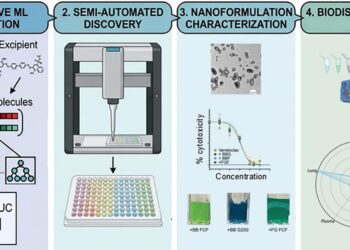
An oral bioavailability technology wins Finished Formulation
The technology addresses a familiar challenge in pharmaceutical development: achieving sufficient oral bioavailability for poorly soluble and poorly permeable drug candidates.
NanoGlass™ has been developed for BCS Class IV and beyond Rule of 5 molecules, where conventional formulation approaches can encounter significant limitations. Its GlassA™ and GlassE™ technologies generate amorphous nanoparticles during dissolution, with the aim of improving solubility, dissolution rate and apparent permeability.
The underlying concept is particularly interesting because improving dissolution alone does not necessarily translate into sufficient systemic exposure. Permeability and the behaviour of the formulation in gastrointestinal fluids also play important roles.
The award highlights continuing progress in oral bioavailability enhancement, an area where polymers, surfactants, lipid-based excipients and other functional materials remain essential to formulation development. [1]
Gattefossé introduces three new solid surfactants for oral formulations
One of the most relevant product developments for the excipient industry came from Gattefossé, which introduced three new solid surfactants at CPHI Milan 2026.
The new range includes LabraSolid™, GSolid™ and Vitamin E TPGSolid™, developed to bring the functionality of lipid-based surfactants into powder formats suitable for oral solid dosage forms.
LabraSolid™ is the solid version of Labrasol® ALF, a widely used excipient offering solubilisation and permeation enhancement functionality.
GSolid™ is derived from Gattefossé’s Gelucire® technology, extending the opportunities for using lipid-based solubilisation approaches in solid formulations.
Vitamin E TPGSolid™, developed in collaboration with PMC Isochem, represents a particularly interesting addition to the range.
The products are intended for use in tablets, hard capsules and sachets, allowing formulators to incorporate surfactants into powder-based manufacturing processes more easily. This could be valuable for drug candidates where poor aqueous solubility or insufficient permeability limits oral absorption.
Traditionally, the incorporation of liquid or semi-solid surfactants into conventional solid dosage forms has required additional formulation considerations, including carrier selection, powder flow and processing compatibility.
By offering these materials in free-flowing powder formats, Gattefossé aims to simplify their incorporation into oral solid formulations while retaining the functional benefits associated with the original surfactants.
Samples of the new range are being made available for formulation evaluation. [2, 3]
PMC Isochem and Vitamin E TPGS: Expanding formulation possibilities
The collaboration between PMC Isochem and Gattefossé deserves additional attention because of the versatility of Vitamin E TPGS in pharmaceutical formulations.
Vitamin E TPGS, or D-alpha-tocopheryl polyethylene glycol 1000 succinate, is a water-dispersible derivative of vitamin E used as a multifunctional pharmaceutical excipient.
Its applications include solubilisation of poorly soluble compounds, emulsification, formulation stabilisation and absorption enhancement. It has also been investigated for amorphous solid dispersions, lipid-based formulations and nanoscale drug delivery systems.
One of the practical challenges associated with Vitamin E TPGS is its waxy, semi-solid physical character, which can complicate incorporation into conventional powder blends.
The development of Vitamin E TPGSolid™ addresses this aspect by providing a solid powder format intended to facilitate processing in oral solid dosage forms.
For formulation scientists, the potential benefits extend beyond easier handling. A suitable powder format could support more straightforward integration into tablets or capsules while retaining the functional properties associated with TPGS.
Actual performance will, of course, need to be established for each drug candidate and formulation process.
The collaboration also highlights the importance of combining specialised excipient chemistry with formulation engineering to create materials that are more convenient for pharmaceutical manufacturing. [2, 4]
Precision manufacturing of dextran receives recognition
Another noteworthy award went to Primogene, winner of the Start-up Initiative category for its Cell-Free Enzymatic Biomanufacturing Platform.
The technology uses enzyme cascades rather than conventional fermentation to manufacture complex molecules with controlled molecular characteristics.
Primogene’s particular focus includes low-molecular-weight dextran with a narrow molecular weight distribution and precise control over chain length and linearity.
For those following pharmaceutical excipients, this development is especially interesting.
Polysaccharide properties such as molecular weight, distribution and structural consistency can influence viscosity, solubility, stability and processing behaviour. Technologies offering greater control over these characteristics could create opportunities for designing materials with more predictable functionality.
The award does not establish a new pharmaceutical excipient application, but it demonstrates how advances in biotechnology may contribute to future material development. [1]
Recognition for an excipient specialist: Future Leader Award
A particularly welcome recognition for the excipients community was the CPHI Pharma Award for Future Leader, presented to Dr Pauline van der Wijst-Janssen of DFE Pharma.
Her work connects pharmaceutical excipient functionality with formulation development and manufacturing performance, including material variability, continuous manufacturing and powder-to-tablet processing.
These fields are becoming increasingly important as pharmaceutical companies seek more robust, predictable and efficient manufacturing processes.
The award also recognises the scientific contribution of excipient specialists to pharmaceutical development, an area that deserves greater visibility within the broader industry. [1]
SPI Pharma and Colorcon announce a strategic partnership
Another significant development came from SPI Pharma and Colorcon, which announced a strategic global partnership on 1 October, shortly before CPHI Milan.
Under the agreement, Colorcon will become SPI Pharma’s global distribution and innovation partner for its Drug Delivery Systems portfolio.
The collaboration covers technologies for chewable tablets, orally disintegrating tablets, orally dispersible powders and sachet or stick-pack applications, including established excipient platforms such as Pharmaburst™, UltraBurst™ and Advantol™ 300.
The partnership combines specialised excipient technologies with Colorcon’s formulation expertise and international market presence.
For pharmaceutical manufacturers, access to integrated excipient solutions and formulation support can help simplify the selection and development of patient-centric dosage forms.
The agreement is also an example of continuing consolidation and collaboration within the pharmaceutical excipient industry, where suppliers are expanding their role in drug product development. [5]
Continuous manufacturing keeps excipient performance in focus
Continuous manufacturing featured prominently in DFE Pharma’s activities at CPHI Milan.
The company’s Continuous Manufacturing Platform brings together excipients, equipment knowledge and application expertise to support pharmaceutical manufacturers throughout development and production.
The technical challenges are familiar to anyone working with continuous direct compression or granulation.
Material properties such as particle size distribution, bulk density, flowability, compressibility and moisture sensitivity can substantially influence processing performance. Variability between excipient batches can also affect feeding behaviour and process consistency.
As continuous manufacturing develops further, reliable excipient functionality and a deeper understanding of critical material attributes become increasingly important.
DFE Pharma also highlighted high-speed tableting, formulation optimisation and process consistency, reinforcing the relationship between material properties and successful manufacturing. [6]
Patient-centric formulation and multifunctional excipients
Roquette presented its expanded pharmaceutical portfolio, bringing together familiar excipients including Avicel® microcrystalline cellulose, PEARLITOL® mannitol, METHOCEL™ cellulose ethers, POLYOX™ polyethylene oxide and KLEPTOSE® cyclodextrins.
The company also previewed an extension of its Qualicaps™ hard capsule portfolio.
The importance of this broad offering lies in the diversity of formulation challenges that must be addressed, ranging from conventional oral solid dosage forms to solubility enhancement, controlled release and biopharmaceutical applications.
Lubrizol placed particular attention on multifunctional excipients for complex drug delivery challenges, including Apisolex™, a polyamino acid-based technology for solubility enhancement in injectable formulations.
Together, these examples illustrate how formulation development increasingly relies on materials capable of providing specific functionality across a variety of drug delivery applications. [7, 8]
Nitrosamine mitigation: Analytical confidence matters
Nitrosamine risk management remains a significant topic for pharmaceutical manufacturers and excipient suppliers.
During CPHI Milan, Capsugel specialists Bram Baert and Sandrine Picco presented practical approaches to nitrosamine mitigation, including the development of controlled low-nitrite capsule materials.
One important aspect of their presentation was the relationship between nitrite specifications, analytical reliability and reproducible manufacturing.
A low reported nitrite value has limited practical significance without a suitable analytical method, reliable process controls and a consistent supply chain.
The discussion reflects a broader challenge for excipient manufacturers: ensuring that material specifications are supported by appropriate analytical capabilities and scientifically justified risk assessments. [9]
What CPHI Milan 2026 tells us about the direction of formulation development
Looking across the award winners and the technologies presented during the exhibition, several developments are particularly interesting.
Oral bioavailability enhancement remains a major area of innovation, especially for drug candidates that require more sophisticated formulation approaches.
The introduction of solid surfactants by Gattefossé and PMC Isochem demonstrates how established functional excipients can be adapted to make them more suitable for conventional pharmaceutical manufacturing.
Advances in biotechnology, illustrated by Primogene’s work with dextran, may also open opportunities for pharmaceutical materials with more precisely controlled properties.
Meanwhile, continuous manufacturing and increasing expectations for material consistency are reinforcing the importance of understanding critical material attributes and excipient variability.
Patient-centric dosage forms are creating further opportunities for materials supporting taste masking, rapid disintegration, flexible dosing and modified release.
What stands out to me after three days in Milan is how closely these developments are connected. Formulation innovation increasingly depends on the interaction between the API, the excipients and the manufacturing process.
For the pharmaceutical excipient community, the developments presented at CPHI Milan 2026 provide plenty to follow over the coming months.
The exhibition has finished. The real test for many of these innovations now begins in formulation laboratories, pilot plants and pharmaceutical manufacturing facilities around the world.
Continue reading the original article here
Sources:
- CPHI Milan. CPHI Celebration 2026: The CPHI Pharma Award Winners Take to the Stage in Milan. 7 October 2026.
- Gattefossé. Re-inventing Oral Bioavailability: New Solid Surfactants for Tablets and Capsules. 2026.
- Drug Development & Delivery. Gattefossé Adds Vitamin E TPGS and Solid Surfactants to Oral Drug Delivery Portfolio. 2026.
- PMC Isochem. Vitamin E TPGS: Pharmaceutical Applications and Drug Delivery Solutions. Company technical information.
- SPI Pharma and Colorcon. Strategic Global Partnership to Expand Access to Innovative Drug Delivery Solutions. 1 October 2026.
- DFE Pharma. DFE Pharma to Showcase Its Continuous Manufacturing Platform at CPHI Milan 2026. 22 September 2026.
- Roquette. End-to-End Pharma Solutions for Patient-Centric Formulations at CPHI. 30 September 2026.
- Lubrizol. Lubrizol Targets Drug Delivery Challenges at CPHI Milan. 24 August 2026.
- Capsugel. Nitrosamine Risk Mitigation: From Regulatory Expectations to Practical Implementation. CPHI Milan, 7 October 2026.
Curated by Philippe Tschopp.
He writes about pharmaceutical excipients, formulation and oral drug delivery, with a focus on excipient functionality, practical formulation considerations and lesser-known material properties.
Disclaimer
This article is based on publicly available information and industry sources at the time of writing and supported by AI. While every effort has been made to ensure accuracy, completeness, and fair representation, the author does not guarantee that all information is current, error-free, or reflective of the latest developments.
The content is provided for informational and educational purposes only and does not constitute technical, regulatory, or commercial advice. No liability is accepted for decisions made based on this material. Readers are encouraged to consult the original manufacturers and official sources to verify details before making professional or business decisions.