Pharma Excipients
No Result
View All Result
  • Login
  • Shop
  • News
    • Specials
      • Excipients for CBD
      • Excipients & 3D Printing
      • Infographics – The overview
      • GMP-certified excipient production sites
      • The Future of TiO2
      • Excipients in the COVID-19 Vaccines
      • BASF PVP-Iodine
      • RegXcellence™
      • BASF Parenteral Excipients
    • World Days – The overview
  • Excipient basics
    • Excipient Solutions for CBD
    • Inorganic Chemicals
      • Calcium Carbonate
      • Calcium Phosphates
      • Calcium Sulfate
      • Halites
      • Metallic Oxides
      • Silica
    • Organic Chemicals
      • Actual Sugars
      • Artificial Sweeteners
      • Carbohydrates
      • Cellulose
      • Cellulose Esters
      • Cellulose Ethers
      • CMC and Croscarmellose Sodium
      • Converted Starch
      • Dried Starch
      • Microcrystalline Cellulose
      • Modified Starch
      • Starch
      • Sugars
      • Sugar Alcohols
    • Petrochemicals
      • Acrylic Polymers
      • Glycols
      • Mineral Hydrocarbons
      • Mineral Oils
      • Mineral Waxes
      • Petrolatum
      • Polyethylene Glycol (PEG)
      • Povidones
      • Propylene Glycol
      • Other Petrochemical Excipients
    • Oleochemicals
      • Fatty Alcohols
      • Glycerin
      • Mineral Stearates
      • Pharmaceutical Oils
      • Other Oleochemical Excipients
    • Proteins
  • Applications
    • 3D Printing – Drug Carrier
      • 3D Printing
      • Binder
      • Coating
      • Colour / Color
      • Coating Systems and Additives
      • Controlled Release Excipient
      • DC excipient
      • Disintegrant / Superdisintergrant
      • Drug Carrier
    • Emulsifier – Glidant
      • Emulsifier
      • Excipient for Inhalation
      • Filler
      • Film former
      • Flavour / Flavor
      • Glidant
    • Lubricant – Preservative
      • Lubricant
      • Nanotechnology
      • Orally Dissolving Technology Excipient
      • Pellet
      • Plasticizer
      • Preservative
    • Solubilizer – Viscocity Agent
      • Solubilizer
      • Speciality Excipient
      • Surfactants
      • Suspension Agent
      • Sustained Release Agent
      • Sweeteners
      • Taste Masking
      • Topical Excipient
      • Viscosity Agent
  • Sources
    • Handbook of Pharmaceutical Excipients – 9th Edition
    • EINECS Numbers
    • Excipient DMF List
    • Excipient cGMP Certification Organisations
    • FDA Inactive Ingredient List
    • FDA GRAS Substances (SCOGS) Database
    • Excipient E-Numbers
    • Whitepapers / Publications
    • Contract Development|Contract Manufacturing
  • Suppliers
    Excipient Suppliers List
    BIOGRUND Logo
    Evonik Logo
    LI logo violet
    Roquette Logo
    ADM
    Antares Navi Logo
    Antares
    Armor Pharma
    Asahi KASEI
    Ashland

    Ashland
    BASF
    Beneo
    Captisol
    Clariant Logo

    Clariant
    Croda
    DFE Pharma
    Dow Logo
    Dow
    Excipio Chemicals
    Fuji Chemical

    Gattefossé

    Gangwal

    Indovinya Logo

    Indovinya
    Ingredient Pharm
    IOI Oleo

    JRS Pharma
    KLK Oleo

    KLK Oleo
    Lipoid
    Lubrizol Life Science Health

    Lubrizol Life Science Health
    MAGNESIA

    MAGNESIA
    MEGGLE Excipients & Technology
    MEGGLE
    Mingtai Chemical Logo
    Mingtai Chemical
    Nagase Viita
    Nagase Viita
    Nordic Bioproducts
    Nordic Bioproducts
    pharm-a-spheres
    pharm-a-spheres
    PMC Isochem
    PMC Isochem
    PQ Logo
    PQ
    Seppic
    Seppic
    ShinEtsu
    ShinEtsu
    Sigachi
    Sigachi
    SPI Pharma
    SPI Pharma
    Südzucker
    Südzucker
    Vikram Thermo Logo
    Vikram Thermo
    Zerion Pharma
    Zerion Pharma
    • A-B
      • ADM
      • ARMOR PHARMA
      • Ceolus™ & Celphere™
      • Ashland
      • BASF
      • Beneo – galenIQ
      • Biogrund
      • Budenheim
    • C-G
      • Captisol
      • Croda
      • Cyclolab
      • DFE Pharma
      • DuPont Pharma Solutions
      • Evonik
      • Fuji Chemical Industries
      • Gattefossé
      • Gangwal Healthcare
    • I-O
      • ingredientpharm
      • IOI Oleochemical
      • JRS Pharma
      • Kerry
      • KLK Oleo Life Science
      • Lactalis Ingredients Pharma
      • Lipoid
      • Dr. Paul Lohmann
      • Lubrizol
      • Magnesia
      • MEGGLE Excipients
      • Nagase Viita – Pharmaceutical Ingredients
      • Nordic Bioproducts Group
    • P-Z
      • Pfanstiehl
      • pharm-a-spheres
      • Pharma Line
      • PMC Isochem
      • Roquette Pharma
      • Seppic
      • Shin-Etsu
      • Sigachi Group
      • Südzucker AG
      • VIKRAM THERMO
      • Zerion Pharma
      • ZoomLab® – Your Virtual Pharma Assistant
  • Inquiries
    • Product Inquiry
    • Tailored Tableting Excipients
      • Tailored Film Coating
  • Events
    • Overview Pharmaceutical Webinars
    • Videos CPhI Frankfurt 2025
    • CPhI China 2024
    • ExciPerience – The great excipient event!
  • All4Nutra

No products in the cart.

  • Shop
  • News
    • Specials
      • Excipients for CBD
      • Excipients & 3D Printing
      • Infographics – The overview
      • GMP-certified excipient production sites
      • The Future of TiO2
      • Excipients in the COVID-19 Vaccines
      • BASF PVP-Iodine
      • RegXcellence™
      • BASF Parenteral Excipients
    • World Days – The overview
  • Excipient basics
    • Excipient Solutions for CBD
    • Inorganic Chemicals
      • Calcium Carbonate
      • Calcium Phosphates
      • Calcium Sulfate
      • Halites
      • Metallic Oxides
      • Silica
    • Organic Chemicals
      • Actual Sugars
      • Artificial Sweeteners
      • Carbohydrates
      • Cellulose
      • Cellulose Esters
      • Cellulose Ethers
      • CMC and Croscarmellose Sodium
      • Converted Starch
      • Dried Starch
      • Microcrystalline Cellulose
      • Modified Starch
      • Starch
      • Sugars
      • Sugar Alcohols
    • Petrochemicals
      • Acrylic Polymers
      • Glycols
      • Mineral Hydrocarbons
      • Mineral Oils
      • Mineral Waxes
      • Petrolatum
      • Polyethylene Glycol (PEG)
      • Povidones
      • Propylene Glycol
      • Other Petrochemical Excipients
    • Oleochemicals
      • Fatty Alcohols
      • Glycerin
      • Mineral Stearates
      • Pharmaceutical Oils
      • Other Oleochemical Excipients
    • Proteins
  • Applications
    • 3D Printing – Drug Carrier
      • 3D Printing
      • Binder
      • Coating
      • Colour / Color
      • Coating Systems and Additives
      • Controlled Release Excipient
      • DC excipient
      • Disintegrant / Superdisintergrant
      • Drug Carrier
    • Emulsifier – Glidant
      • Emulsifier
      • Excipient for Inhalation
      • Filler
      • Film former
      • Flavour / Flavor
      • Glidant
    • Lubricant – Preservative
      • Lubricant
      • Nanotechnology
      • Orally Dissolving Technology Excipient
      • Pellet
      • Plasticizer
      • Preservative
    • Solubilizer – Viscocity Agent
      • Solubilizer
      • Speciality Excipient
      • Surfactants
      • Suspension Agent
      • Sustained Release Agent
      • Sweeteners
      • Taste Masking
      • Topical Excipient
      • Viscosity Agent
  • Sources
    • Handbook of Pharmaceutical Excipients – 9th Edition
    • EINECS Numbers
    • Excipient DMF List
    • Excipient cGMP Certification Organisations
    • FDA Inactive Ingredient List
    • FDA GRAS Substances (SCOGS) Database
    • Excipient E-Numbers
    • Whitepapers / Publications
    • Contract Development|Contract Manufacturing
  • Suppliers
    Excipient Suppliers List
    BIOGRUND Logo
    Evonik Logo
    LI logo violet
    Roquette Logo
    ADM
    Antares Navi Logo
    Antares
    Armor Pharma
    Asahi KASEI
    Ashland
    Ashland
    BASF
    Beneo
    Captisol
    Clariant Logo
    Clariant
    Croda
    DFE Pharma
    Dow Logo
    Dow
    Excipio Chemicals
    Fuji Chemical
    Gattefossé
    Gangwal
    Indovinya Logo
    Indovinya
    Ingredient Pharm
    IOI Oleo
    JRS Pharma
    KLK Oleo
    KLK Oleo
    Lipoid
    Lubrizol Life Science Health
    Lubrizol Life Science Health
    MAGNESIA
    MAGNESIA
    MEGGLE Excipients & Technology
    MEGGLE
    Mingtai Chemical Logo
    Mingtai Chemical
    Nagase Viita
    Nagase Viita
    Nordic Bioproducts
    Nordic Bioproducts
    pharm-a-spheres
    pharm-a-spheres
    PMC Isochem
    PMC Isochem
    PQ Logo
    PQ
    Seppic
    Seppic
    ShinEtsu
    ShinEtsu
    Sigachi
    Sigachi
    SPI Pharma
    SPI Pharma
    Südzucker
    Südzucker
    Vikram Thermo Logo
    Vikram Thermo
    Zerion Pharma
    Zerion Pharma
    • A-B
      • ADM
      • ARMOR PHARMA
      • Ceolus™ & Celphere™
      • Ashland
      • BASF
      • Beneo – galenIQ
      • Biogrund
      • Budenheim
    • C-G
      • Captisol
      • Croda
      • Cyclolab
      • DFE Pharma
      • DuPont Pharma Solutions
      • Evonik
      • Fuji Chemical Industries
      • Gattefossé
      • Gangwal Healthcare
    • I-O
      • ingredientpharm
      • IOI Oleochemical
      • JRS Pharma
      • Kerry
      • KLK Oleo Life Science
      • Lactalis Ingredients Pharma
      • Lipoid
      • Dr. Paul Lohmann
      • Lubrizol
      • Magnesia
      • MEGGLE Excipients
      • Nagase Viita – Pharmaceutical Ingredients
      • Nordic Bioproducts Group
    • P-Z
      • Pfanstiehl
      • pharm-a-spheres
      • Pharma Line
      • PMC Isochem
      • Roquette Pharma
      • Seppic
      • Shin-Etsu
      • Sigachi Group
      • Südzucker AG
      • VIKRAM THERMO
      • Zerion Pharma
      • ZoomLab® – Your Virtual Pharma Assistant
  • Inquiries
    • Product Inquiry
    • Tailored Tableting Excipients
      • Tailored Film Coating
  • Events
    • Overview Pharmaceutical Webinars
    • Videos CPhI Frankfurt 2025
    • CPhI China 2024
    • ExciPerience – The great excipient event!
  • All4Nutra
No Result
View All Result
Pharma Excipients
No Result
View All Result

Startseite » News » Influence of Core and Membrane Composition on Drug Release from MCC/Isomalt-Based Matrix Pellets in Biorelevant Osmolarity Media
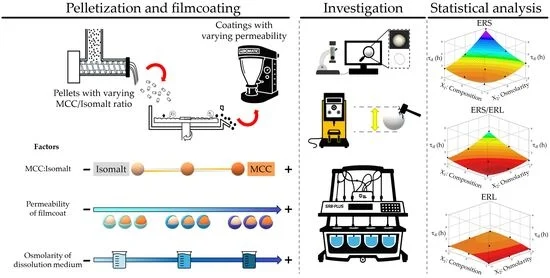
Influence of Core and Membrane Composition on Drug Release from MCC/Isomalt-Based Matrix Pellets in Biorelevant Osmolarity Media

15. September 2026
Influence of Core and Membrane Composition on Drug Release from MCC/Isomalt-Based Matrix Pellets in Biorelevant Osmolarity Media

Influence of Core and Membrane Composition on Drug Release from MCC/Isomalt-Based Matrix Pellets in Biorelevant Osmolarity Media

Abstract

Background/Objectives: Matrix pellet formulations enable homogeneous incorporation of the active ingredient and advanced control of release depending on the excipients added. The aim of this study was to develop, characterize, and assess the drug release profiles of microcrystalline cellulose (MCC) and isomalt-based matrix pellets with direct drug incorporation, advancing beyond the earlier concept of isomalt as a mere inert core with layered drug application, under simulated physiological conditions in vitro.

Methods: Matrix pellets with varying MCC–isomalt ratios (90:10, 70:30, and 50:50) were produced by extrusion/spheronization and subsequently coated with film-forming polymers. Dissolution experiments were performed under varying osmolarity to characterize release profiles. The experimental design data were statistically evaluated.

Results: The extrusion/spheronization technique yielded uniform, robust matrix pellets with acceptable sphericity and mechanical integrity, even at high isomalt levels. Release from coated pellets was significantly influenced by the polymer coating and osmolarity of the dissolution medium. However, with increasing isomalt content in the matrix, the dependence of drug release kinetics on medium osmolarity was substantially reduced.

Conclusions: The production of MCC–isomalt matrix pellets in which isomalt acts as a functional matrix component reduced the effect of osmolarity of dissolution medium on the release of ibuprofen sodium salt in in vitro experiments.

Introduction

Multiparticulate drug delivery systems based on pellets have attracted considerable interest in recent decades [1] as they offer distinct technological, physiological and therapeutic advantages over conventional single-unit dosage forms [2]. Pellets distribute the dose across numerous small units and thereby substantially reduce the risk of dose dumping since each individual unit releases only a limited amount of drug [3]. Within this context, the selection and design of suitable excipients for pellet cores and matrices are critical determinants of manufacturing performance and in vitro–in vivo behaviour.

Isomalt has emerged as a particularly versatile pharmaceutical excipient for oral multiparticulate systems, combining favourable technological functionality with patient-friendly properties. It is frequently employed as an inert core in multiparticulate dosage forms due to its excellent physicochemical characteristics and commercial availability in defined particle size fractions with varying ratios of glucopyranosyl mannitol (GPM) and glucopyranosyl sorbitol (GPS) [4]. Numerous studies have demonstrated that isomalt can enhance the release of selected active pharmaceutical ingredients and is especially suitable as an inert core in drug-layered pellet formulations [5,6,7,8,9]. Positron annihilation lifetime spectroscopy has revealed physical interactions between microcrystalline cellulose and isomalt in composite cores, indicating that increasing proportions of the water-soluble sugar alcohol intensify osmotic effects and thereby promote drug release [10].

In direct compression, isomalt is valued for its excellent flowability, high compressibility and low hygroscopicity, while its low glycaemic and insulinaemic responses, absence of relevant incompatibilities and function as a sugar substitute make it particularly suitable for formulations intended for diabetic patients [1,10]. Owing to its neutral taste, chemical stability, and pleasant mouthfeel, isomalt is particularly suitable as an excipient in chewable and rapidly disintegrating tablets.

Its agglomerated form exhibits high packing density and excellent compressibility, enabling its use in conventional tablets, as demonstrated by Grote et al. [11]. Furthermore, Lura et al. successfully applied agglomerated isomalt in combination with other excipients for the development of mini-tablets, orally dispersible tablets [12], while Bernard et al. used it in pellets [13]. It also functions effectively as a filler in 3D-printed dosage forms, where it provides advantageous sensory and mechanical properties [14]. In matrix pellets and other multiparticulates, isomalt enables optimised release characteristics [15], with its water solubility and chemical inertness contributing to constant release profiles in controlled release systems and allowing its use as a carrier for low- to high-dose formulations [5].

In contrast to conventional inert cores that are coated with solutions/suspensions/or melts of the active ingredient, matrix pellets represent an alternative formulation strategy in which the drug is incorporated directly into the matrix material. This approach allows uniform incorporation of substantially higher drug loads within the entire pellet structure [1,16] and offers two principal advantages: a homogeneous dispersion of the active substance and the possibility of achieving controlled release directly via the matrix itself [17,18]. More recently, the aspect of site-specific delivery, for example, for colon therapy [19], has been receiving increased attention through matrix-based multiparticulate systems. Studies have shown that matrix pellets can be developed on demand, without complex coatings, so that release is initiated only in the lower gastrointestinal tract, and systemic exposure is minimised [20]. In addition, matrix pellet systems offer a variety of other advantages, such as extending the half-life of active pharmaceutical ingredients [21] or compatibility with combination therapies [22] for improving patient convenience and compliance.

The release of active ingredients from matrix pellets is typically governed by several concurrent mechanisms, including diffusion, osmosis, and polymer erosion [23]. Other important factors affecting the release of active ingredients include the properties of the coatings (polymer types and coating thickness) and, notably, the properties of the core [24,25,26]. Among excipients, microcrystalline cellulose (MCC) is widely regarded as the gold standard for extrusion-spheronisation and is considered to have significant advantages over other materials. However, there are several disadvantages associated with its use, including the adsorption of active ingredients to the surface of its fibres [27], its chemical incompatibility with a number of active ingredients [28], and poor disintegration behaviour when used in matrix pellets [29].

In comparison with our previous study, where the release performance was evaluated from the mixture of layered isomalt and MCC composite cores [1], we aimed to examine the release pattern from matrix preparations, where the active pharmaceutical ingredient (API) was incorporated into an MCC–isomalt–API matrix monolithic pellet with a varied ratio of the excipients.

As a model compound, ibuprofen sodium, a non-steroidal anti-inflammatory drug (NSAID), is used. Due to its well-established pharmacological properties, e.g., high tolerability, extensively studied pharmacokinetics, short half-life, and high plasma protein binding, ibuprofen sodium salt serves as an ideal model drug for developing controlled-release systems, such as matrix pellets [17].

Matrix pellet systems are particularly sensitive to the osmotic effects due to their swellable polymer components and drug distribution throughout the matrix structure. The release mechanism involves dissolution medium penetration into the matrix, drug dissolution within the swollen pellet matrix, and subsequent diffusion through the hydrated polymer network. Each of these steps is influenced by the osmotic gradient between the pellet interior and the surrounding medium. The dependence of drug release on osmolarity was observed primarily in pellets with a high microcrystalline cellulose content, whereas pellets with a high isomalt content did not exhibit such dependence [30].

In addition to the properties of the core, the osmotic pressure in the gastrointestinal tract also plays an important role in the drug release profile of such pellets. The osmolality of gastrointestinal fluids varies considerably with nutritional state, ranging from approximately 29–276 mOsm/kg to a median of 559 mOsm/kg in the fasted stomach [31]. To reflect these postprandial conditions in a standardized in vitro setting, Jantratid et al. developed the Fed State Simulated Gastric Fluid (FeSSGF) with an osmolality of 400 mOsm/kg, representing the gastric environment between 75 and 165 min after meal intake [31,32,33].

These variations in the osmotic environment profoundly affect the mechanisms of drug release from matrix pellets through multiple pathways. Osmotic pressure gradients have been shown to drive water influx into pellet matrices, thereby creating internal pressure that has been demonstrated to influence drug dissolution and diffusion rates. Research has shown that an increase in osmolality in the release medium can have a substantial impact on the kinetics of drug release, with osmotic pressure proving to be a pivotal factor in the process of drug transport across intestinal barriers [34]. The composition of the release medium, which includes its pH, ionic strength and osmolarity, has been demonstrated to directly impact the swelling behaviour of polymer matrices [1,35].

The objective of this study was to investigate the applicability of matrix pellets based on MCC and isomalt and to compare the main characteristics of these formulations. Additionally, the study evaluated how varying matrix compositions and polymethacrylate copolymers with different permeability affect the in vitro release behaviour of ibuprofen sodium salt.

Download the full article as PDF here Influence of Core and Membrane Composition on Drug Release from MCC/Isomalt-Based Matrix Pellets in Biorelevant Osmolarity Media

or continue reading here

Materials

Ibuprofen sodium salt (Sigma-Aldrich Chemie GmbH, Merck, Darmstadt, Germany), galenIQ™ 800 (Beneo-Palatinit GmbH, Mannheim, Germany), further referred to as Isomalt and Vivapur® 101 (JRS Pharma GmbH & Co., Rosenberg, Germany), further referred to as MCC, was used for pellet production. The matrix pellets were coated with Eudragit® RL30D and Eudragit® RS30D (Evonik Industries AG, Essen, Germany) polymers, Triethyl citrate (TEC; Fluka Chemie AG, Buchs, Switzerland) and micronized talc (Merck-Sigma-Aldrich Chemie GmbH, Darmstadt, Germany). The dissolution media were made of Disodium hydrogen phosphate (Molar Chemicals Ltd., Budapest, Hungary) and Sodium dihydrogenphosphate (Molar Chemicals Ltd., Budapest, Hungary). The osmolarity was increased with the use of glucose anhydrate (Molar Chemicals Ltd., Budapest, Hungary).

Fleck, C.; Aghrbi, I.; Vlahovic, K.; Erdő, F.; Laki, A.J.; Kállai-Szabó, N.; Antal, I.; Lengyel, M. Influence of Core and Membrane Composition on Drug Release from MCC/Isomalt-Based Matrix Pellets in Biorelevant Osmolarity Media. Pharmaceutics 2026, 18, 1046. https://doi.org/10.3390/pharmaceutics18091046


Are you looking for excipients in commercial quantities?

Are you looking for excipients in commercial quantities
Tags: excipientsformulation

Related Posts

Comprehensive Evaluation of Storage Stability and Cytotoxicity of Co-Spray-Dried Theophylline Dry Powders for Inhalation
Capsules

Comprehensive Evaluation of Storage Stability and Cytotoxicity of Co-Spray-Dried Theophylline Dry Powders for Inhalation: Follow-Up Study

15. September 2026
Fabrication and evaluation of a polymeric muco-adhesive film with local and controlled release of phenytoin
BASF

Fabrication and evaluation of a polymeric muco-adhesive film with local and controlled release of phenytoin

14. September 2026
DoE-guided comparison of SNEDDS, solid dispersion, and polymeric nanoparticles for enhancing apparent epithelial transport and oral exposure of sorafenib
Gattefossé

DoE-guided comparison of SNEDDS, solid dispersion, and polymeric nanoparticles for enhancing apparent epithelial transport and oral exposure of sorafenib

14. September 2026

Cart

Shop Search

  • Search for excipients and samples
  • Product Inquiry
  • Newsletter Registration
  • Visit the Homepage

Top Pharma-Excipient Links

  • Pharmaceutical Excipients – Some Definition
  • Inactive ingredient search for approved drug products in the USA
  • Excipient Suppliers List
  • GRAS Substances (SCOGS) Database
  • DC Excipients List
  • Homepage

About | Privacy Policy | Cookie policy | Cookie Settings | Contact | Homepage
Copyright: PharmaExcipients AG

Welcome Back!

Login to your account below

Forgotten Password?

Retrieve your password

Please enter your username or email address to reset your password.

Log In
No Result
View All Result
  • Shop
  • News
    • Specials
      • Excipients for CBD
      • Excipients & 3D Printing
      • Infographics – The overview
      • GMP-certified excipient production sites
      • The Future of TiO2
      • Excipients in the COVID-19 Vaccines
      • BASF PVP-Iodine
      • RegXcellence™
      • BASF Parenteral Excipients
    • World Days – The overview
  • Excipient basics
    • Excipient Solutions for CBD
    • Inorganic Chemicals
      • Calcium Carbonate
      • Calcium Phosphates
      • Calcium Sulfate
      • Halites
      • Metallic Oxides
      • Silica
    • Organic Chemicals
      • Actual Sugars
      • Artificial Sweeteners
      • Carbohydrates
      • Cellulose
      • Cellulose Esters
      • Cellulose Ethers
      • CMC and Croscarmellose Sodium
      • Converted Starch
      • Dried Starch
      • Microcrystalline Cellulose
      • Modified Starch
      • Starch
      • Sugars
      • Sugar Alcohols
    • Petrochemicals
      • Acrylic Polymers
      • Glycols
      • Mineral Hydrocarbons
      • Mineral Oils
      • Mineral Waxes
      • Petrolatum
      • Polyethylene Glycol (PEG)
      • Povidones
      • Propylene Glycol
      • Other Petrochemical Excipients
    • Oleochemicals
      • Fatty Alcohols
      • Glycerin
      • Mineral Stearates
      • Pharmaceutical Oils
      • Other Oleochemical Excipients
    • Proteins
  • Applications
    • 3D Printing – Drug Carrier
      • 3D Printing
      • Binder
      • Coating
      • Colour / Color
      • Coating Systems and Additives
      • Controlled Release Excipient
      • DC excipient
      • Disintegrant / Superdisintergrant
      • Drug Carrier
    • Emulsifier – Glidant
      • Emulsifier
      • Excipient for Inhalation
      • Filler
      • Film former
      • Flavour / Flavor
      • Glidant
    • Lubricant – Preservative
      • Lubricant
      • Nanotechnology
      • Orally Dissolving Technology Excipient
      • Pellet
      • Plasticizer
      • Preservative
    • Solubilizer – Viscocity Agent
      • Solubilizer
      • Speciality Excipient
      • Surfactants
      • Suspension Agent
      • Sustained Release Agent
      • Sweeteners
      • Taste Masking
      • Topical Excipient
      • Viscosity Agent
  • Sources
    • Handbook of Pharmaceutical Excipients – 9th Edition
    • EINECS Numbers
    • Excipient DMF List
    • Excipient cGMP Certification Organisations
    • FDA Inactive Ingredient List
    • FDA GRAS Substances (SCOGS) Database
    • Excipient E-Numbers
    • Whitepapers / Publications
    • Contract Development|Contract Manufacturing
  • Suppliers
    • A-B
      • ADM
      • ARMOR PHARMA
      • Ceolus™ & Celphere™
      • Ashland
      • BASF
      • Beneo – galenIQ
      • Biogrund
      • Budenheim
    • C-G
      • Captisol
      • Croda
      • Cyclolab
      • DFE Pharma
      • DuPont Pharma Solutions
      • Evonik
      • Fuji Chemical Industries
      • Gattefossé
      • Gangwal Healthcare
    • I-O
      • ingredientpharm
      • IOI Oleochemical
      • JRS Pharma
      • Kerry
      • KLK Oleo Life Science
      • Lactalis Ingredients Pharma
      • Lipoid
      • Dr. Paul Lohmann
      • Lubrizol
      • Magnesia
      • MEGGLE Excipients
      • Nagase Viita – Pharmaceutical Ingredients
      • Nordic Bioproducts Group
    • P-Z
      • Pfanstiehl
      • pharm-a-spheres
      • Pharma Line
      • PMC Isochem
      • Roquette Pharma
      • Seppic
      • Shin-Etsu
      • Sigachi Group
      • Südzucker AG
      • VIKRAM THERMO
      • Zerion Pharma
      • ZoomLab® – Your Virtual Pharma Assistant
  • Inquiries
    • Product Inquiry
    • Tailored Tableting Excipients
      • Tailored Film Coating
  • Events
    • Overview Pharmaceutical Webinars
    • Videos CPhI Frankfurt 2025
    • CPhI China 2024
    • ExciPerience – The great excipient event!
  • All4Nutra

About | Privacy Policy | Cookie policy | Cookie Settings | Contact | Homepage
Copyright: PharmaExcipients AG