





Pharma Excipients
No Result
View All Result
  • Login
  • Shop
  • News
    • Specials
      • Excipients for CBD
      • Excipients & 3D Printing
      • Infographics – The overview
      • GMP-certified excipient production sites
      • The Future of TiO2
      • Excipients in the COVID-19 Vaccines
      • BASF PVP-Iodine
      • RegXcellence™
      • BASF Parenteral Excipients
    • World Days – The overview
  • Excipient basics
    • Excipient Solutions for CBD
    • Inorganic Chemicals
      • Calcium Carbonate
      • Calcium Phosphates
      • Calcium Sulfate
      • Halites
      • Metallic Oxides
      • Silica
    • Organic Chemicals
      • Actual Sugars
      • Artificial Sweeteners
      • Carbohydrates
      • Cellulose
      • Cellulose Esters
      • Cellulose Ethers
      • CMC and Croscarmellose Sodium
      • Converted Starch
      • Dried Starch
      • Microcrystalline Cellulose
      • Modified Starch
      • Starch
      • Sugars
      • Sugar Alcohols
    • Petrochemicals
      • Acrylic Polymers
      • Glycols
      • Mineral Hydrocarbons
      • Mineral Oils
      • Mineral Waxes
      • Petrolatum
      • Polyethylene Glycol (PEG)
      • Povidones
      • Propylene Glycol
      • Other Petrochemical Excipients
    • Oleochemicals
      • Fatty Alcohols
      • Glycerin
      • Mineral Stearates
      • Pharmaceutical Oils
      • Other Oleochemical Excipients
    • Proteins
  • Applications
    • 3D Printing – Drug Carrier
      • 3D Printing
      • Binder
      • Coating
      • Colour / Color
      • Coating Systems and Additives
      • Controlled Release Excipient
      • DC excipient
      • Disintegrant / Superdisintergrant
      • Drug Carrier
    • Emulsifier – Glidant
      • Emulsifier
      • Excipient for Inhalation
      • Filler
      • Film former
      • Flavour / Flavor
      • Glidant
    • Lubricant – Preservative
      • Lubricant
      • Nanotechnology
      • Orally Dissolving Technology Excipient
      • Pellet
      • Plasticizer
      • Preservative
    • Solubilizer – Viscocity Agent
      • Solubilizer
      • Speciality Excipient
      • Surfactants
      • Suspension Agent
      • Sustained Release Agent
      • Sweeteners
      • Taste Masking
      • Topical Excipient
      • Viscocity Agent
  • Sources
    • Handbook of Pharmaceutical Excipients – 9th Edition
    • EINECS Numbers
    • Excipient DMF List
    • Excipient cGMP Certification Organisations
    • FDA Inactive Ingredient List
    • FDA GRAS Substances (SCOGS) Database
    • Excipient E-Numbers
    • Whitepapers / Publications
    • Contract Development|Contract Manufacturing
  • Suppliers
    Excipient Suppliers List
    BIOGRUND Logo
    Evonik Logo
    LI logo violet
    logo roquette
    ADM
    Armor Pharma
    Asahi KASEI
    Ashland
    BASF

    Beneo

    Budenheim
    Captisol
    Croda
    DFE Pharma
    Excipio Chemicals
    Fuji Chemical
    Gattefossé

    Gangwal

    IamFluidics
    IamFluidics
    IOI Oleo
    Ingredient Pharm
    JRS Pharma
    Kerry Logo
    Kerry
    KLK Oleo
    KLK Oleo
    Lipoid
    Lubrizol Life Science Health

    Lubrizol Life Science Health
    MAGNESIA

    MAGNESIA
    MEGGLE Excipients & Technology
    MEGGLE
    Nagase Viita
    Nagase Viita
    Nordic Bioproducts
    Nordic Bioproducts
    Pfanstiehl
    Pfanstiehl
    pharm-a-spheres
    pharm-a-spheres
    PMC Isochem
    PMC Isochem
    Seppic
    Seppic
    ShinEtsu
    ShinEtsu
    Sigachi
    Sigachi
    SPI Pharma
    SPI Pharma
    Südzucker
    Südzucker
    Vikram Thermo
    Vikram Thermo
    Zerion Pharma
    Zerion Pharma
    • A-B
      • ADM
      • ARMOR PHARMA
      • Ceolus™ & Celphere™
      • Ashland
      • BASF
      • Beneo – galenIQ
      • Biogrund
      • Budenheim
    • C-G
      • Captisol
      • Croda
      • Cyclolab
      • DFE Pharma
      • DuPont Pharma Solutions
      • Evonik
      • Fuji Chemical Industries
      • Gattefossé
      • Gangwal Healthcare
    • I-O
      • ingredientpharm
      • IOI Oleochemical
      • JRS Pharma
      • Kerry
      • KLK Oleo Life Sciences
      • Lactalis Ingredients Pharma
      • Lipoid
      • Dr. Paul Lohmann
      • Lubrizol
      • Magnesia
      • MEGGLE Excipients
      • Nagase Viita – Pharmaceutical Ingredients
      • Nordic Bioproducts Group
    • P-Z
      • Pfanstiehl
      • pharm-a-spheres
      • Pharma Line
      • PMC Isochem
      • Roquette Pharma
      • Seppic
      • Shin-Etsu
      • Sigachi Group
      • Südzucker AG
      • VIKRAM THERMO
      • Zerion Pharma
      • ZoomLab® – Your Virtual Pharma Assistant
  • Inquiries
    • Product Inquiry
    • Tailored Tableting Excipients
      • Tailored Film Coating
  • Events
    • Overview Pharmaceutical Webinars
    • Videos CPhI Frankfurt 2025
    • CPhI China 2024
    • ExciPerience – The great excipient event!
  • All4Nutra

No products in the cart.

  • Shop
  • News
    • Specials
      • Excipients for CBD
      • Excipients & 3D Printing
      • Infographics – The overview
      • GMP-certified excipient production sites
      • The Future of TiO2
      • Excipients in the COVID-19 Vaccines
      • BASF PVP-Iodine
      • RegXcellence™
      • BASF Parenteral Excipients
    • World Days – The overview
  • Excipient basics
    • Excipient Solutions for CBD
    • Inorganic Chemicals
      • Calcium Carbonate
      • Calcium Phosphates
      • Calcium Sulfate
      • Halites
      • Metallic Oxides
      • Silica
    • Organic Chemicals
      • Actual Sugars
      • Artificial Sweeteners
      • Carbohydrates
      • Cellulose
      • Cellulose Esters
      • Cellulose Ethers
      • CMC and Croscarmellose Sodium
      • Converted Starch
      • Dried Starch
      • Microcrystalline Cellulose
      • Modified Starch
      • Starch
      • Sugars
      • Sugar Alcohols
    • Petrochemicals
      • Acrylic Polymers
      • Glycols
      • Mineral Hydrocarbons
      • Mineral Oils
      • Mineral Waxes
      • Petrolatum
      • Polyethylene Glycol (PEG)
      • Povidones
      • Propylene Glycol
      • Other Petrochemical Excipients
    • Oleochemicals
      • Fatty Alcohols
      • Glycerin
      • Mineral Stearates
      • Pharmaceutical Oils
      • Other Oleochemical Excipients
    • Proteins
  • Applications
    • 3D Printing – Drug Carrier
      • 3D Printing
      • Binder
      • Coating
      • Colour / Color
      • Coating Systems and Additives
      • Controlled Release Excipient
      • DC excipient
      • Disintegrant / Superdisintergrant
      • Drug Carrier
    • Emulsifier – Glidant
      • Emulsifier
      • Excipient for Inhalation
      • Filler
      • Film former
      • Flavour / Flavor
      • Glidant
    • Lubricant – Preservative
      • Lubricant
      • Nanotechnology
      • Orally Dissolving Technology Excipient
      • Pellet
      • Plasticizer
      • Preservative
    • Solubilizer – Viscocity Agent
      • Solubilizer
      • Speciality Excipient
      • Surfactants
      • Suspension Agent
      • Sustained Release Agent
      • Sweeteners
      • Taste Masking
      • Topical Excipient
      • Viscocity Agent
  • Sources
    • Handbook of Pharmaceutical Excipients – 9th Edition
    • EINECS Numbers
    • Excipient DMF List
    • Excipient cGMP Certification Organisations
    • FDA Inactive Ingredient List
    • FDA GRAS Substances (SCOGS) Database
    • Excipient E-Numbers
    • Whitepapers / Publications
    • Contract Development|Contract Manufacturing
  • Suppliers
    Excipient Suppliers List
    BIOGRUND Logo
    Evonik Logo
    LI logo violet
    logo roquette
    ADM
    Armor Pharma
    Asahi KASEI
    Ashland
    BASF
    Beneo
    Budenheim
    Captisol
    Croda
    DFE Pharma
    Excipio Chemicals
    Fuji Chemical
    Gattefossé
    Gangwal
    IamFluidics
    IamFluidics
    IOI Oleo
    Ingredient Pharm
    JRS Pharma
    Kerry Logo
    Kerry
    KLK Oleo
    KLK Oleo
    Lipoid
    Lubrizol Life Science Health
    Lubrizol Life Science Health
    MAGNESIA
    MAGNESIA
    MEGGLE Excipients & Technology
    MEGGLE
    Nagase Viita
    Nagase Viita
    Nordic Bioproducts
    Nordic Bioproducts
    Pfanstiehl
    Pfanstiehl
    pharm-a-spheres
    pharm-a-spheres
    PMC Isochem
    PMC Isochem
    Seppic
    Seppic
    ShinEtsu
    ShinEtsu
    Sigachi
    Sigachi
    SPI Pharma
    SPI Pharma
    Südzucker
    Südzucker
    Vikram Thermo
    Vikram Thermo
    Zerion Pharma
    Zerion Pharma
    • A-B
      • ADM
      • ARMOR PHARMA
      • Ceolus™ & Celphere™
      • Ashland
      • BASF
      • Beneo – galenIQ
      • Biogrund
      • Budenheim
    • C-G
      • Captisol
      • Croda
      • Cyclolab
      • DFE Pharma
      • DuPont Pharma Solutions
      • Evonik
      • Fuji Chemical Industries
      • Gattefossé
      • Gangwal Healthcare
    • I-O
      • ingredientpharm
      • IOI Oleochemical
      • JRS Pharma
      • Kerry
      • KLK Oleo Life Sciences
      • Lactalis Ingredients Pharma
      • Lipoid
      • Dr. Paul Lohmann
      • Lubrizol
      • Magnesia
      • MEGGLE Excipients
      • Nagase Viita – Pharmaceutical Ingredients
      • Nordic Bioproducts Group
    • P-Z
      • Pfanstiehl
      • pharm-a-spheres
      • Pharma Line
      • PMC Isochem
      • Roquette Pharma
      • Seppic
      • Shin-Etsu
      • Sigachi Group
      • Südzucker AG
      • VIKRAM THERMO
      • Zerion Pharma
      • ZoomLab® – Your Virtual Pharma Assistant
  • Inquiries
    • Product Inquiry
    • Tailored Tableting Excipients
      • Tailored Film Coating
  • Events
    • Overview Pharmaceutical Webinars
    • Videos CPhI Frankfurt 2025
    • CPhI China 2024
    • ExciPerience – The great excipient event!
  • All4Nutra
No Result
View All Result
Pharma Excipients
No Result
View All Result

Startseite » News » Antibody-functionalized lipid nanocarriers for RNA-based cancer gene therapy: advances and challenges in targeted delivery

Antibody-functionalized lipid nanocarriers for RNA-based cancer gene therapy: advances and challenges in targeted delivery

6. September 2025
Antibody-functionalized lipid nanocarriers for RNA-based cancer gene therapy

Antibody-functionalized lipid nanocarriers for RNA-based cancer gene therapy

Abstract

Despite remarkable advances in cancer therapeutics, conventional treatments still face significant hurdles, including systemic toxicity, poor tumor specificity, multidrug resistance, and suboptimal intracellular delivery. Lipid-based nanocarriers (LBNCs) have emerged as versatile platforms for delivering therapeutic RNA molecules, offering biocompatibility and tunable properties that enhance drug stability and bioavailability. Functionalizing these nanocarriers with antibodies has unlocked new potential for achieving precise tumor targeting, leveraging the overexpression of specific receptors on cancer cells. This review provides a comprehensive and focused update on recent developments in antibody-decorated LBNCs designed for RNA-based cancer gene therapy. We discuss cutting-edge advances in conjugation chemistries, including site-specific strategies such as strain-promoted click reactions and Fc-glycan engineering, as well as the integration of emerging antibody formats, including nanobodies and single-domain antibodies. Furthermore, we present studies reporting the various LBNC formulations, including liposomes, solid lipid nanoparticles, lipid nanoparticles, and hybrid systems, highlighting their physicochemical characteristics, in vitro and in vivo performance, and the critical trade-offs between targeting specificity and endosomal escape efficiency. Epidemiological data underscore the pressing need for such innovations, particularly in aggressive and hard-to-treat cancers. While promising, clinical translation remains hindered by challenges in scalable manufacturing, regulatory approval, and biological complexity. Continued interdisciplinary research is essential to transform antibody-functionalized LBNCs from experimental strategies into clinically viable solutions for next-generation, RNA-based cancer therapies.

3. Antibody-decorated lipid-based nano delivery system

Nanocarriers are systems designed for targeted drug delivery, enhancing drug stability, sustaining the release of some molecules, and improving their solubility for systemic delivery. They are also adapted for therapeutic agents’ protection from enzymatic degradation via nucleases and proteases. Due to their small nano-range size, they can extravasate into tumor tissues or penetrate microcapillaries, allowing selective target accumulation and efficient drug uptake.51 Several types of NPs, micelles, or liposomes are used as potential nanocarriers for different anticancer therapeutics, as illustrated in Fig. 5. However, the use of LBNCs shows great promise in the formulation of effective RNA-based cancer nanotherapeutics.

Fig. 5 Different types of nanocarriers, including polymeric (like polymersomes, dendrimers, polymer micelles, and nanospheres), inorganic (including iron oxide NPs, and gold NPs), and LBNPs (like liposomes and lipid nanoparticles (LNPs)). This figure has been created by BioRender https://www.biorender.com/.

3.1 Lipid-based nanocarriers

Lipid-based nanocarriers are considered promising nucleic acid delivery systems in clinical settings. Compared to different nanocarriers, they possess several advantages that mark them as potential nanocarriers for different genetic materials, including adaptability, higher payload capacity, biocompatibility, and low toxicity. There are several types of LBNCs including liposomes, lipid nanoparticles (LNPs), solid lipid nanoparticles (SLNs), and nanostructured lipid carriers (NLCs).52 Liposomes are among the most established nanocarriers, mainly composed of cholesterol and phospholipids. They belong to the nanovesicles category.53 They have a bilayer structure of anionic and neutral phospholipids surrounding an aqueous core, allowing for the encapsulation of both hydrophobic and hydrophilic drugs.31 Possibly, cationic phospholipids could be added to facilitate the loading of nucleic acids. However, unmodified liposomes are quickly cleared by the reticuloendothelial system (RES) and need surface modifications to prolong their half-life.54

LNPs possess micelle structures mode, distinguishing them from traditional liposomes. They were initially developed for gene delivery, where the nucleic acids are entrapped within the core of LNP by cationic and/or ionizable lipids and further stabilized by a phospholipid monolayer containing a PEGylated lipid and sterol.55 They are characterized by efficient nucleic acid delivery, ease of synthesis, and small volume (0.5–1 micron).56 Yet, LNPs face limitations due to their low drug loading capacity and suboptimal biodistribution, which result in significant accumulation in the liver and spleen. This can lead to acute cumulative drug toxicity in these organs. In contrast, SLNs and NLCs are colloidal systems consisting of a hydrophobic core surrounded by an outer surfactant layer. In the case of SLNs, the core is made of a solid lipid, while in the case of NLCs, it consists of a blend of solid and liquid lipids (Table 2).57,58

Table 2 Types of LBNPs and a comparison between them

Liposomes LNP SLN NLC
image file: d5na00323g-u1.tif image file: d5na00323g-u2.tif image file: d5na00323g-u3.tif image file: d5na00323g-u4.tif
Composition The bilayer structure of anionic and neutral phospholipids is mainly composed of cholesterol and phospholipids surrounding an aqueous internal core It comprises cationic and/or ionizable lipids stabilized by a phospholipid monolayer containing a PEGylated lipid and sterol Its outer layer comprises surfactants and/or co-surfactants encapsulating solid lipids. The latter is characterized by a low melting point and solidness at ambient and body temperature, offering enhanced protection of the entrapped drug compared to liposomes Its outer layer comprises surfactants and/or co-surfactants encapsulating both solid and liquid lipids
Cargo Hydrophobic or hydrophilic small molecules, especially siRNA and oligonucleotides Oligonucleotides, mainly nucleic acids Hydrophobic or hydrophilic small molecules, especially siRNA and oligonucleotides Hydrophobic or hydrophilic small molecules
Advantages Convenient to deliver drugs with different characteristics and have a high loading capacity Effective nucleic acid delivery and easily synthesized High stability and a long duration of drug release Solid and liquid lipids lead to a less-ordered, imperfect structure, ensuring better stability and reducing the tendency to leak the drug prematurely during storage
Disadvantages Low stability Limited drug load, high uptake in the liver and spleen Limited drug loading capacity Expensive
References 54 55 and 56 59 and 57 57 and 58

3.2 Antibody-decorated LBNCs

The enhanced EPR effect facilitates the initial passive accumulation of NPs within tumor tissues. The decoration of NPs with targeting ligands can initiate active targeting, thereby increasing the selective delivery of the cargo to cancer cells and significantly improving the therapeutic index.60 The functionalization of LBNCs with various antibodies has emerged as a significant breakthrough in oncology during the past few years. They have garnered attention as an unconventional approach for targeted therapy, offering enhanced specificity and therapeutic efficacy. The functionalized LBNCs exhibited several advantages, including high tumor-targeted accuracy, specificity, wide adaptability, and minimized off-target effects.61 Several types of antibodies, including naked monoclonal antibodies (mAbs), bispecific antibodies (BsAbs), and immune checkpoint mAbs, were used to decorate LBNCs.

3.2.1 Naked mAbs. They target tumor cells selectively via the Fab terminal based on TAAs. Non-conjugated mAbs perform their action through different mechanisms. The first mechanism is direct, in which the antibody targets the growth factor receptor, blocking its ligand binding or manipulating its activity.62 For example, cetuximab is an anti-epidermal growth factor receptor (EGFR) antibody that induces programmed cell death in cancer tissues by interfering with ligand binding and receptor dimerization.63 Indirect mechanisms of mAbs necessitate the involvement of the host’s immune system components. They include complement-dependent cytotoxicity (CDC), antibody-dependent cellular phagocytosis (ADCP), and antibody-dependent cellular cytotoxicity (ADCC).64,65
Several mAbs have been recently approved in 2020, including Tafasitamab targeting CD19,66 Isatuximab targeting CD38,67 and Margetuximab targeting human Epidermal Growth Factor Receptor 2 (HER2).68 Tafasitamab and Isatuximab act through CDC, ADCC, and ADCP, while Margetuximab only acts through the ADCC and ADCP.

Fig. 6 BsAb structure has an Fc region and dual functionality. BsAbs target multiple TAAs and activate cytotoxic immune T cells simultaneously while being connected to accessory cells via their Fc region. This figure has been created by BioRender https://www.biorender.com/.

3.2.2 BsAbs. BsAbs are produced through the conjugation of two different antibodies, which imparts dual functionality to them. They can bind simultaneously to multiple antigens, exerting a better antitumor effect.69 They often target multiple TAAs and concomitantly activate cytotoxic immune T cells (Fig. 6). BsAbs are classified into two types: those that bear an Fc region and those that lack it.70 Blinatumomab was the first FDA-approved bispecific antibody (bsAb) targeting CD19 on tumor cells and CD3+ cytotoxic immune T cells.71 In 2021, Amivantamab targeting EGFR/METR was approved.72

3.2.3 Immune checkpoint mAbs. They target and inhibit specific immunological checkpoint proteins often involved in regulating the immune system. These proteins act as “brakes” to prevent the immune system from attacking the body’s cells and are present on the surface of cancer cells and immune cells.

However, some malignancies exploit these checkpoints to evade detection and destruction by the immune system. By interfering with these inhibitory signals, checkpoint mAbs enhance the immune system’s defenses against cancer cells.73 Several immune checkpoints have been identified, with cytotoxic T-lymphocyte-associated protein 4 (CTLA-4) and programmed cell death protein 1 (PD-1) being the most thoroughly investigated and recognized for their role in immune checkpoint blockade (ICB).74,75 For example, following the approval of Ipilimumab, a CTLA-4 inhibitor, for treating melanoma, patient survival rates significantly improved.76 Table 3 summarizes the key points regarding the types of antibodies.

Table 3 Summary of the popularly used antibodies used to decorate LBNPs

Type Mechanism Advantages FDA approved examples Disadvantages
Naked mAbs They target tumor cells selectively via Fab terminal based on TAAs, marking them for destruction by immune cells High specificity – Tafasitamab targeting CD19 Expensive, non-specific harmful side effects, including off-target effects and immune reaction, unknown survival rates, and prognoses
– Isatuximab targeting CD38
– Margetuximab targeting HER2
BsAbs They can bind simultaneously to multiple antigens Better anticancer activity through dual functionality – Blinatumomab targeting CD19/CD3
– Amivantamab targeting EGFR/METR
Immune checkpoint mAbs Block inhibitory checkpoints like PD-1 and CTLA-4 to activate immune cells against tumors Enhance the immune system’s ability to recognize and destroy tumor cells – Ipilimumab targeting CTLA-4 for melanoma

Other types of antibodies include antibody fragments (such as Fab and scFv), nanobodies, and single-domain antibodies. The fragment of antigen binding (Fab) consists of an antibody light chain (VL + CL domains) connected via a disulfide bond to the antibody heavy chain VH and CH1 domains, and notably lacking an Fc domain. As a result, the risk of immune cell bystander activation and non-specific binding is reduced. On the other hand, they suffer from increased aggregation and low stability.77 Single chain fragment variable (scFv) consists of the variable regions of the light chain (VL) and heavy chain (VH) of an antibody connected by a flexible peptide linker. They have several advantages over conventional monoclonal antibodies (mAbs), including a small size that facilitates their large-scale production and tissue penetration. Yet they suffer from low thermostability and a high risk of immunogenicity.78 Nanobodies are one of the smallest naturally occurring antigen-binding fragments that can resist a wide pH range and high temperatures, tolerate the presence of organic solvents, are highly soluble, rarely immunogenic, and can easily penetrate tissue. However, their small size leads to rapid renal clearance and short half-life.79 Single-domain antibodies are considered the smallest antigen-binding units of antibodies. They are typically composed of a single variable or engineered constant domain responsible for target binding, and are commonly derived from camelids and sharks or created from human antibody domains. They are characterized by high affinity and specificity, and stability. Meanwhile, they still suffer from short half-life and limited binding surface.80

Beyond their structural differences, these emerging antibody formats hold particular promise for functionalizing lipid-based nanocarriers due to their unique advantages. Compared to full-length monoclonal antibodies, smaller fragments such as Fab, scFv, nanobodies, and single-domain antibodies offer reduced immunogenicity, improved tumor penetration due to their smaller size, and greater ease of large-scale manufacturing. Nanobodies, for instance, can access hidden or cryptic epitopes that full-sized antibodies cannot, potentially improving binding specificity in dense tumor microenvironments. Moreover, scFvs enable the creation of bispecific or multispecific constructs that can simultaneously target multiple tumor antigens, potentially enhancing therapeutic efficacy while mitigating off-target effects. However, despite these advantages, smaller antibody formats can have shorter circulation half-lives and may require additional modifications, such as PEGylation, to improve their pharmacokinetics. Incorporating these innovative antibody types into lipid-based nanocarriers thus represents a promising avenue for achieving precise, efficient, and safer targeted RNA delivery in cancer therapy. Future comparative studies are crucial for determining which antibody formats offer optimal performance for specific therapeutic applications.79,80

Download the full article as PDF here Antibody-functionalized lipid nanocarriers for RNA-based cancer gene therapy

or read it here

Nadine Wafik Nabih, Hatem A. F. M. Hassan, Eduard Preisc, Jens Schaeferc, Asaad Babker, Anass M. Abbase, Muhammad Umair Aminc, Udo Bakowsky and Sherif Ashraf Fahmy, Antibody-functionalized lipid nanocarriers for RNA-based cancer gene therapy: advances and challenges in targeted delivery, DOI: 10.1039/D5NA00323G (Review Article) Nanoscale Adv., 2025, Advance Article


Visit our free webinar:

The Right Choice:

Direct Compression Lactose in Drug Development & Sustainability 
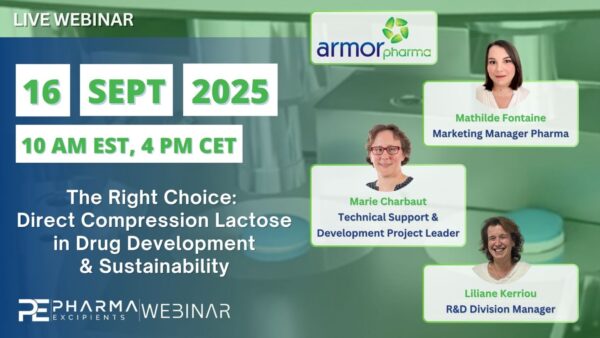
WEBINAR REcording HERE

The Right Choice Direct Compression Lactose in Drug Development & Sustainability
Tags: excipientsformulation

Related Posts

Modern Skin Care Formulations with HyPearls®
Hyaluronic acid

Modern Skin Care Formulations with HyPearls®

28. February 2026
Impact of Drug Hydrophilicity on Transdermal Delivery by Nanoemulsions
BASF

Impact of Drug Hydrophilicity on Transdermal Delivery by Nanoemulsions

28. February 2026
Investigation of different mannitol grades and their performance on a dosing-disc capsule filling process
Capsules

Investigation of different mannitol grades and their performance on a dosing-disc capsule filling process

27. February 2026
Next Post
Preparation of 5-ASA-Loaded Eudragit® S100 Nanoparticles by Emulsion-Based Methods

Preparation of 5-ASA-Loaded Eudragit® S100 Nanoparticles by Emulsion-Based Methods: Comparison between Solvent Evaporation and Supercritical Fluid Extraction

Cart

Shop Search

  • Search for excipients and samples
  • Product Inquiry
  • Newsletter Registration
  • Visit the Homepage

Top Pharma-Excipient Links

  • Pharmaceutical Excipients – Some Definition
  • Inactive ingredient search for approved drug products in the USA
  • Excipient Suppliers List
  • GRAS Substances (SCOGS) Database
  • DC Excipients List
  • Homepage

About | Privacy Policy | Cookie policy | Cookie Settings | Contact | Homepage
Copyright: PharmaExcipients AG

Welcome Back!

Login to your account below

Forgotten Password?

Retrieve your password

Please enter your username or email address to reset your password.

Log In
No Result
View All Result
  • Shop
  • News
    • Specials
      • Excipients for CBD
      • Excipients & 3D Printing
      • Infographics – The overview
      • GMP-certified excipient production sites
      • The Future of TiO2
      • Excipients in the COVID-19 Vaccines
      • BASF PVP-Iodine
      • RegXcellence™
      • BASF Parenteral Excipients
    • World Days – The overview
  • Excipient basics
    • Excipient Solutions for CBD
    • Inorganic Chemicals
      • Calcium Carbonate
      • Calcium Phosphates
      • Calcium Sulfate
      • Halites
      • Metallic Oxides
      • Silica
    • Organic Chemicals
      • Actual Sugars
      • Artificial Sweeteners
      • Carbohydrates
      • Cellulose
      • Cellulose Esters
      • Cellulose Ethers
      • CMC and Croscarmellose Sodium
      • Converted Starch
      • Dried Starch
      • Microcrystalline Cellulose
      • Modified Starch
      • Starch
      • Sugars
      • Sugar Alcohols
    • Petrochemicals
      • Acrylic Polymers
      • Glycols
      • Mineral Hydrocarbons
      • Mineral Oils
      • Mineral Waxes
      • Petrolatum
      • Polyethylene Glycol (PEG)
      • Povidones
      • Propylene Glycol
      • Other Petrochemical Excipients
    • Oleochemicals
      • Fatty Alcohols
      • Glycerin
      • Mineral Stearates
      • Pharmaceutical Oils
      • Other Oleochemical Excipients
    • Proteins
  • Applications
    • 3D Printing – Drug Carrier
      • 3D Printing
      • Binder
      • Coating
      • Colour / Color
      • Coating Systems and Additives
      • Controlled Release Excipient
      • DC excipient
      • Disintegrant / Superdisintergrant
      • Drug Carrier
    • Emulsifier – Glidant
      • Emulsifier
      • Excipient for Inhalation
      • Filler
      • Film former
      • Flavour / Flavor
      • Glidant
    • Lubricant – Preservative
      • Lubricant
      • Nanotechnology
      • Orally Dissolving Technology Excipient
      • Pellet
      • Plasticizer
      • Preservative
    • Solubilizer – Viscocity Agent
      • Solubilizer
      • Speciality Excipient
      • Surfactants
      • Suspension Agent
      • Sustained Release Agent
      • Sweeteners
      • Taste Masking
      • Topical Excipient
      • Viscocity Agent
  • Sources
    • Handbook of Pharmaceutical Excipients – 9th Edition
    • EINECS Numbers
    • Excipient DMF List
    • Excipient cGMP Certification Organisations
    • FDA Inactive Ingredient List
    • FDA GRAS Substances (SCOGS) Database
    • Excipient E-Numbers
    • Whitepapers / Publications
    • Contract Development|Contract Manufacturing
  • Suppliers
    • A-B
      • ADM
      • ARMOR PHARMA
      • Ceolus™ & Celphere™
      • Ashland
      • BASF
      • Beneo – galenIQ
      • Biogrund
      • Budenheim
    • C-G
      • Captisol
      • Croda
      • Cyclolab
      • DFE Pharma
      • DuPont Pharma Solutions
      • Evonik
      • Fuji Chemical Industries
      • Gattefossé
      • Gangwal Healthcare
    • I-O
      • ingredientpharm
      • IOI Oleochemical
      • JRS Pharma
      • Kerry
      • KLK Oleo Life Sciences
      • Lactalis Ingredients Pharma
      • Lipoid
      • Dr. Paul Lohmann
      • Lubrizol
      • Magnesia
      • MEGGLE Excipients
      • Nagase Viita – Pharmaceutical Ingredients
      • Nordic Bioproducts Group
    • P-Z
      • Pfanstiehl
      • pharm-a-spheres
      • Pharma Line
      • PMC Isochem
      • Roquette Pharma
      • Seppic
      • Shin-Etsu
      • Sigachi Group
      • Südzucker AG
      • VIKRAM THERMO
      • Zerion Pharma
      • ZoomLab® – Your Virtual Pharma Assistant
  • Inquiries
    • Product Inquiry
    • Tailored Tableting Excipients
      • Tailored Film Coating
  • Events
    • Overview Pharmaceutical Webinars
    • Videos CPhI Frankfurt 2025
    • CPhI China 2024
    • ExciPerience – The great excipient event!
  • All4Nutra

About | Privacy Policy | Cookie policy | Cookie Settings | Contact | Homepage
Copyright: PharmaExcipients AG


























