Pharma Excipients
No Result
View All Result
  • Login
  • Shop
  • News
    • Specials
      • Excipients for CBD
      • Excipients & 3D Printing
      • Infographics – The overview
      • GMP-certified excipient production sites
      • The Future of TiO2
      • Excipients in the COVID-19 Vaccines
      • BASF PVP-Iodine
      • RegXcellence™
      • BASF Parenteral Excipients
    • World Days – The overview
  • Excipient basics
    • Excipient Solutions for CBD
    • Inorganic Chemicals
      • Calcium Carbonate
      • Calcium Phosphates
      • Calcium Sulfate
      • Halites
      • Metallic Oxides
      • Silica
    • Organic Chemicals
      • Actual Sugars
      • Artificial Sweeteners
      • Carbohydrates
      • Cellulose
      • Cellulose Esters
      • Cellulose Ethers
      • CMC and Croscarmellose Sodium
      • Converted Starch
      • Dried Starch
      • Microcrystalline Cellulose
      • Modified Starch
      • Starch
      • Sugars
      • Sugar Alcohols
    • Petrochemicals
      • Acrylic Polymers
      • Glycols
      • Mineral Hydrocarbons
      • Mineral Oils
      • Mineral Waxes
      • Petrolatum
      • Polyethylene Glycol (PEG)
      • Povidones
      • Propylene Glycol
      • Other Petrochemical Excipients
    • Oleochemicals
      • Fatty Alcohols
      • Glycerin
      • Mineral Stearates
      • Pharmaceutical Oils
      • Other Oleochemical Excipients
    • Proteins
  • Applications
    • 3D Printing – Drug Carrier
      • 3D Printing
      • Binder
      • Coating
      • Colour / Color
      • Coating Systems and Additives
      • Controlled Release Excipient
      • DC excipient
      • Disintegrant / Superdisintergrant
      • Drug Carrier
    • Emulsifier – Glidant
      • Emulsifier
      • Excipient for Inhalation
      • Filler
      • Film former
      • Flavour / Flavor
      • Glidant
    • Lubricant – Preservative
      • Lubricant
      • Nanotechnology
      • Orally Dissolving Technology Excipient
      • Pellet
      • Plasticizer
      • Preservative
    • Solubilizer – Viscocity Agent
      • Solubilizer
      • Speciality Excipient
      • Surfactants
      • Suspension Agent
      • Sustained Release Agent
      • Sweeteners
      • Taste Masking
      • Topical Excipient
      • Viscocity Agent
  • Sources
    • EINECS Numbers
    • Excipient DMF List
    • Excipient cGMP Certification Organisations
    • FDA Inactive Ingredient List
    • FDA GRAS Substances (SCOGS) Database
    • Excipient E-Numbers
    • Whitepapers / Publications
    • Contract Development|Contract Manufacturing
  • Suppliers
    Excipient Suppliers List
    BIOGRUND Logo
    Evonik Logo
    LI logo violet
    logo roquette
    ADM
    Armor Pharma
    Asahi KASEI
    Ashland
    BASF

    Beneo

    Budenheim
    Captisol
    Croda
    DFE Pharma
    Excipio Chemicals
    Fuji Chemical
    Gattefossé

    Gangwal

    IOI Oleo
    Ingredient Pharm
    JRS Pharma
    Kerry Logo
    Kerry
    KLK Oleo
    KLK Oleo
    Lipoid
    Lubrizol Life Science Health

    Lubrizol Life Science Health
    MAGNESIA

    MAGNESIA
    MEGGLE Excipients & Technology
    MEGGLE
    Nagase Viita
    Nagase Viita
    Nordic Bioproducts
    Nordic Bioproducts
    Pfanstiehl
    Pfanstiehl
    pharm-a-spheres
    pharm-a-spheres
    PMC Isochem
    PMC Isochem
    Seppic
    Seppic
    ShinEtsu
    ShinEtsu
    Sigachi
    Sigachi
    SPI Pharma
    SPI Pharma
    Südzucker
    Südzucker
    Vikram Thermo
    Vikram Thermo
    Zerion Pharma
    Zerion Pharma
    • A-B
      • ADM
      • ARMOR PHARMA
      • Ceolus™ & Celphere™
      • Ashland
      • BASF
      • Beneo – galenIQ
      • Biogrund
      • Budenheim
    • C-G
      • Captisol
      • Croda
      • Cyclolab
      • DFE Pharma
      • DuPont Pharma Solutions
      • Evonik
      • Fuji Chemical Industries
      • Gattefossé
      • Gangwal Healthcare
    • I-O
      • ingredientpharm
      • IOI Oleochemical
      • JRS Pharma
      • Kerry
      • KLK Oleo Life Sciences
      • Lactalis Ingredients Pharma
      • Lipoid
      • Dr. Paul Lohmann
      • Lubrizol
      • Magnesia
      • MEGGLE Excipients
      • Nagase Viita – Pharmaceutical Ingredients
      • Nordic Bioproducts Group
    • P-Z
      • Pfanstiehl
      • pharm-a-spheres
      • Pharma Line
      • PMC Isochem
      • Roquette Pharma
      • Seppic
      • Shin-Etsu
      • Sigachi Group
      • Südzucker AG
      • VIKRAM THERMO
      • Zerion Pharma
      • ZoomLab® – Your Virtual Pharma Assistant
  • Inquiries
    • Product Inquiry
    • Tailored Tableting Excipients
      • Tailored Film Coating
  • Events
    • Overview Pharmaceutical Webinars
    • Videos CPhI Frankfurt 2025
    • CPhI China 2024
    • ExciPerience – The great excipient event!
  • More
    • Handbook of Pharmaceutical Excipients – 9th Edition
    • Jobs
      • Job Submission

No products in the cart.

  • Shop
  • News
    • Specials
      • Excipients for CBD
      • Excipients & 3D Printing
      • Infographics – The overview
      • GMP-certified excipient production sites
      • The Future of TiO2
      • Excipients in the COVID-19 Vaccines
      • BASF PVP-Iodine
      • RegXcellence™
      • BASF Parenteral Excipients
    • World Days – The overview
  • Excipient basics
    • Excipient Solutions for CBD
    • Inorganic Chemicals
      • Calcium Carbonate
      • Calcium Phosphates
      • Calcium Sulfate
      • Halites
      • Metallic Oxides
      • Silica
    • Organic Chemicals
      • Actual Sugars
      • Artificial Sweeteners
      • Carbohydrates
      • Cellulose
      • Cellulose Esters
      • Cellulose Ethers
      • CMC and Croscarmellose Sodium
      • Converted Starch
      • Dried Starch
      • Microcrystalline Cellulose
      • Modified Starch
      • Starch
      • Sugars
      • Sugar Alcohols
    • Petrochemicals
      • Acrylic Polymers
      • Glycols
      • Mineral Hydrocarbons
      • Mineral Oils
      • Mineral Waxes
      • Petrolatum
      • Polyethylene Glycol (PEG)
      • Povidones
      • Propylene Glycol
      • Other Petrochemical Excipients
    • Oleochemicals
      • Fatty Alcohols
      • Glycerin
      • Mineral Stearates
      • Pharmaceutical Oils
      • Other Oleochemical Excipients
    • Proteins
  • Applications
    • 3D Printing – Drug Carrier
      • 3D Printing
      • Binder
      • Coating
      • Colour / Color
      • Coating Systems and Additives
      • Controlled Release Excipient
      • DC excipient
      • Disintegrant / Superdisintergrant
      • Drug Carrier
    • Emulsifier – Glidant
      • Emulsifier
      • Excipient for Inhalation
      • Filler
      • Film former
      • Flavour / Flavor
      • Glidant
    • Lubricant – Preservative
      • Lubricant
      • Nanotechnology
      • Orally Dissolving Technology Excipient
      • Pellet
      • Plasticizer
      • Preservative
    • Solubilizer – Viscocity Agent
      • Solubilizer
      • Speciality Excipient
      • Surfactants
      • Suspension Agent
      • Sustained Release Agent
      • Sweeteners
      • Taste Masking
      • Topical Excipient
      • Viscocity Agent
  • Sources
    • EINECS Numbers
    • Excipient DMF List
    • Excipient cGMP Certification Organisations
    • FDA Inactive Ingredient List
    • FDA GRAS Substances (SCOGS) Database
    • Excipient E-Numbers
    • Whitepapers / Publications
    • Contract Development|Contract Manufacturing
  • Suppliers
    Excipient Suppliers List
    BIOGRUND Logo
    Evonik Logo
    LI logo violet
    logo roquette
    ADM
    Armor Pharma
    Asahi KASEI
    Ashland
    BASF
    Beneo
    Budenheim
    Captisol
    Croda
    DFE Pharma
    Excipio Chemicals
    Fuji Chemical
    Gattefossé
    Gangwal
    IOI Oleo
    Ingredient Pharm
    JRS Pharma
    Kerry Logo
    Kerry
    KLK Oleo
    KLK Oleo
    Lipoid
    Lubrizol Life Science Health
    Lubrizol Life Science Health
    MAGNESIA
    MAGNESIA
    MEGGLE Excipients & Technology
    MEGGLE
    Nagase Viita
    Nagase Viita
    Nordic Bioproducts
    Nordic Bioproducts
    Pfanstiehl
    Pfanstiehl
    pharm-a-spheres
    pharm-a-spheres
    PMC Isochem
    PMC Isochem
    Seppic
    Seppic
    ShinEtsu
    ShinEtsu
    Sigachi
    Sigachi
    SPI Pharma
    SPI Pharma
    Südzucker
    Südzucker
    Vikram Thermo
    Vikram Thermo
    Zerion Pharma
    Zerion Pharma
    • A-B
      • ADM
      • ARMOR PHARMA
      • Ceolus™ & Celphere™
      • Ashland
      • BASF
      • Beneo – galenIQ
      • Biogrund
      • Budenheim
    • C-G
      • Captisol
      • Croda
      • Cyclolab
      • DFE Pharma
      • DuPont Pharma Solutions
      • Evonik
      • Fuji Chemical Industries
      • Gattefossé
      • Gangwal Healthcare
    • I-O
      • ingredientpharm
      • IOI Oleochemical
      • JRS Pharma
      • Kerry
      • KLK Oleo Life Sciences
      • Lactalis Ingredients Pharma
      • Lipoid
      • Dr. Paul Lohmann
      • Lubrizol
      • Magnesia
      • MEGGLE Excipients
      • Nagase Viita – Pharmaceutical Ingredients
      • Nordic Bioproducts Group
    • P-Z
      • Pfanstiehl
      • pharm-a-spheres
      • Pharma Line
      • PMC Isochem
      • Roquette Pharma
      • Seppic
      • Shin-Etsu
      • Sigachi Group
      • Südzucker AG
      • VIKRAM THERMO
      • Zerion Pharma
      • ZoomLab® – Your Virtual Pharma Assistant
  • Inquiries
    • Product Inquiry
    • Tailored Tableting Excipients
      • Tailored Film Coating
  • Events
    • Overview Pharmaceutical Webinars
    • Videos CPhI Frankfurt 2025
    • CPhI China 2024
    • ExciPerience – The great excipient event!
  • More
    • Handbook of Pharmaceutical Excipients – 9th Edition
    • Jobs
      • Job Submission
No Result
View All Result
Pharma Excipients
No Result
View All Result

Startseite » News » Formulation development and optimization of artemether-lumefantrine self-nanoemulsifying drug delivery systems

Formulation development and optimization of artemether-lumefantrine self-nanoemulsifying drug delivery systems

29. August 2025
Formulation development and optimization of artemether-lumefantrine self-nanoemulsifying drug delivery systems

Formulation development and optimization of artemether-lumefantrine self-nanoemulsifying drug delivery systems

Abstract

Poor aqueous solubility may decrease the absorption and oral bioavailability of lipophilic drugs. In the current study, artemether (ART) and lumefantrine (LMF) o/w self-nano emulsifying drug delivery system (SNEDDS) formulations were prepared. Equilibrium solubility studies were conducted and pseudo-ternary phase diagrams were constructed to identify excipients with the best solubilizing capacity for ART and LMF. They were subsequently used to manufacture and optimize SNEDDS using experimental designs, which were then characterized. Solubility and emulsification studies revealed that ART and LMF are highly soluble in oleic acid (OA). Cremophor® EL (CEL) and Transcutol® HP (THP) were selected as surfactant and co-surfactant. The addition of Capryol™ 90 (C90) increased the region of nano-emulsion formation without evidence of precipitation of AT and LMF. Compatibility studies revealed no prominent or significant incompatibilities between the drugs and selected excipients. The optimized formulation was stable as dispersions with nano-sized droplets and a loading capacity >99 % for both ART and LMF and a release >95% within 15 min for both drugs, reflecting a significant increase in the rate and extent of dissolution compared to that of the pure drug.

Introduction

Artemether (ART) and lumefantrine (LMF) are recommended and used as first-line combination therapy for the prophylaxis, treatment, and prevention of uncomplicated P. falciparum malaria in South Africa (STG and EML 2020) and by the World Health Organization (WHO, 2019a). Malaria continues to have a significant health impact, with 94% of the 405,000 deaths recorded in 2018 occurring in Africa (WHO 2019b). ART and LMF exhibit poor aqueous solubility of 0.0183 μg/mL (Fule et al. 2013a) and 9.2 μg/mL (Fule et al. 2013b). The octanol water partition coefficient of ART is 3.8 (Kasim et al. 2004) and for LMF is 3.52 (Saini et al. 2015). ART (Fig. 1a) is a derivative of dihydroartemisin in with a β-methyl ether group and a characteristic endoperoxide bridge that contributes to the oil-soluble nature and antimalarial activity of the compound (Heinrich et al. 2017; Rudrapal and Chetia 2016). The structure of LMF (Fig. 1b) contains a fluorene comprised of chlorobenzene groups responsible for the lipophilicity of the compound (Suleman et al. 2015). The lipophilic nature of these active pharmaceutical ingredients (API) means they are able to cross cellular membranes readily.

However, the dissolution and absorption kinetics are the rate-limiting steps, necessitating biopharmaceutical modification of the molecules to enhance bioavailability (Kotila et al. 2013). In recent years, much attention has been focused on using lipid-based formulations to improve the oral bioavailability of poorly water-soluble API (Bhupinder et al. 2013). Lipid-based formulations include solutions, emulsions, micro-emulsions, nano-emulsions, nanoparticles, and self-emulsifying drug delivery systems (SEDDS). Self-nano emulsifying drug delivery system (SNEDDS) formulations have been shown to improve the aqueous solubility and, consequently, the bioavailability of Biopharmaceutics Classification System (BCS) Class II (ART) and IV (LMF) compounds when delivered using conventional dosage forms, thereby eliminating the need for pre-absorptive API solubilization in the gastrointestinal tract (GIT) (Kang et al. 2004; Balaji and Kumari 2013). The characteristics of this technology render it ideal for the delivery of ART (BCS Class II) and LMF (BCS Class IV) API that exhibit dissolution rate-limited absorption (Mishra and Srivastava 2009). Consistent temporal profiles with reduced doses and dosing frequency are vital when using a combination ART-LMF formulation, particularly when treating patients (Mishra and Srivastava 2009).

Fig. 1: Structures of (a) artemether and (b) lumefantrine

SNEDDS are isotropic mixtures of lipids, surfactants, and/or co-surfactants or co-solvents and, uniquely, can form nanoemulsions with gentle agitation in an aqueous environment (Salimi et al. 2014). The oil component of formulations solubilizes specific amounts of lipophilic API and facilitates self-emulsification, thereby increasing the solubility and dissolution rate of the API in intestinal fluids (Gershanik and Benita 2000; Nielsen et al. 2007). Sequestering an API in lipid droplets protects the API from chemical and enzymatic degradation and influences the formation of lipoproteins that promote lymphatic transportation of lipophilic compounds (Hauss et al.1998). Furthermore, the lipid content influences API absorption through activation of lipid digestion in the gastrointestinal tract (GIT), resulting in increased secretion of pancreatic juices and bile (Khoo et al. 2003).

The potential advantage(s) of self-emulsifying systems include 100% API entrapment capacity and the manufacture of physically stable formulations that can be filled into soft or hard capsules as they are anhydrous, and that dissolution before absorption is not required (Mishra and Srivastava, 2009; Gupta et al. 2013). Sub-micron droplets may be formed, leading to an increased surface area for absorption, with the potential to increase the rate and extent of absorption. Due to the availability of API in the core of the oil, absorption into the lymphatic system reduces the hepatic first-pass metabolism of the API. Of the lipids used in SEDDS, the long-chain fatty acids are converted to triglycerides by re-esterification in the small intestine, followed by the incorporation into chylomicrons, which are large lipoproteins (Chatterjee et al. 2016). Digestible lipids are more efficient absorption enhancers of poorly soluble API than non-digestible lipids or mineral oils such as liquid paraffin. However, their use is limited as their ability to dissolve large amounts of API is marginal (Nanjwade et al. 2011). Modified or hydrolyzed vegetable oils have been widely used since they form good emulsifying systems with a diverse range of oral surfactants approved for oral use and exhibit better API solubility-enhancing properties (Hauss et al. 1998). The length of the fatty acid chain of the lipids influences API absorption. However, long and medium-chain triglycerides have been successfully used to produce SNEDDS (Do Thi et al. 2009; Deckelbaum et al. 1990).

Surfactants are included in formulations to improve the interaction and affinity of lipids with the intestinal membrane and/or the permeability of the membrane to the API as they partition into the cell membrane and disrupt the organization of the lipid bilayers, leading to permeation enhancement (Swenson et al. 1994). Surfactant behavior is rationalized in terms of hydrophilic-lipophilic balance (HLB) value, and those with a relatively high HLB value facilitate rapid dispersion of lipids resulting in excellent self-emulsifying performance that form oil in water (o/w) emulsions in GIT fluids and are recommended for this approach to drug delivery (Swenson et al. 1994; Wakerly et al. 1986).

Non-ionic surfactants are preferred due to their safety profile, better emulsion stability across a wide pH range, ionic strength and ability to reversibly alter permeation across the intestinal mucosa (Swenson et al. 1994). The addition of co-surfactants may aid the self-emulsification process by decreasing blending stress at the interface of two immiscible fluids and permitting sufficient flexibility of the interfacial film to take up different curvature orientations required to form nano-emulsions (Solans et al. 2005). Moreover, organic solvents added to a formulation may act as co-surfactants in nano-emulsion systems, facilitating the dissolution of hydrophilic surfactants and/or API in the lipids (Patel et al. 2010). Volatile solvents used in conventional SNEDDS migrate into the shells of capsules resulting in precipitation of lipophilic API. Consequently, their use is not recommended (Constantinides 1995).

Fig. 2: Solubility of ART and LMF in 5.0 g of different liquid lipids and surfactants at 25 °C, mean ± S.D. (n=3)

Preformulation studies form an essential part of the formulation development process by providing insight into the physical and chemical characteristics of an API alone and in combination with excipients, resulting in a decrease in time and cost during formulation development, as well as increasing the chance of market success and adequate therapeutic efficacy over the shelf-life of the product (Constantinides 1995; Fathima et al. 2011). These studies promote a quality-by-design (QbD) approach where quality is built into a product by design, as advocated by the Food and Drug Administration (FDA) and the International Council on Harmonization (ICH) (Wen and Park, 2010; Kumar and Gupta 2015).

QbD is an essential aspect of risk management, and understanding and identifying critical raw material attributes is vital for successfully developing optimized dosage forms (Kumar and Gupta 2015; Gawade et al. 2013). Specific criteria that should be met during excipient selection are outlined in an ICH guideline (ICH 1995), which states that all materials must be non-toxic or physiologically inert and must be generally regarded as safe (GRAS) materials (GI 2005). These preformulation studies aimed to characterize ART and LMF, identify and select the most suitable excipients for solubilization and nano-emulsion formation and to investigate potential incompatibilities between LMF, ART and excipients that may have significant implications on the stability, in-vivo dissolution, bioavailability and organoleptic properties of the SNEDDS. The aim was to design a high-quality o/w emulsion that will perform consistently in vitro. The information generated will provide a scientific basis and understanding to support the establishment of a design space and manufacturing controls for producing a highquality SNEDDS product.

Download the full article as PDF here Formulation development and optimization of artemether-lumefantrine

or read it here

Materials

ART and LMF were purchased from SkyRun® (Taizhou, China). Lauroglycol™ 90 (propylene glycol monolaurate type II), Lauroglycol™ FCC (propylene glycol monolaurate type I), Labrafac™ PG (propylene glycol dicaprylocaprate), Labrafil® M1944CS (oleoyl macrogol-6 glycerides), Transcutol® HP (diethylene glycol monoethyl ether) and Capryol™ 90 (propylene glycol monocaprylate type II) were donated by Gattefossé SAS (Saint-Priest Cedex, France). Cremophor® EL (polyoxyl 35 castor oil) was purchased from Sigma Aldrich (Johannesburg, Gauteng, South Africa). Grapeseed oil, propylene glycol, Tween® 80 (polysorbate 80), benzyl alcohol, sesame oil, PEG 400, and oleic acid were purchased from Unilab (Manda-luyong, Philippines). Olive oil was purchased from Escentia Products (Gauteng, South Africa).

Division of Pharmaceutics, Faculty of Pharmacy, Rhodes University, South Africa, Formulation development and optimization of artemether-lumefantrine self-nanoemulsifying drug delivery system, T. R. MUDYAHOTO, O. A. OMOTESO, S. M. KHAMANGA, R. B. WALKER, Received March 14, 2025, accepted June 24, 2025, Corresponding author: R.B. Walker (Ph.D.), Division of Pharmaceutics, Faculty of Pharmacy, Rhodes University, Makhanda 6139, South Africa, Pharmazie 80: 39-50 (2025) doi: 10.1691/ph.2025.5008, Pharmazie is a full open access journal following the CC BY 4.0 license model.


Visit our free webinar:

The Right Choice:

Direct Compression Lactose in Drug Development & Sustainability 
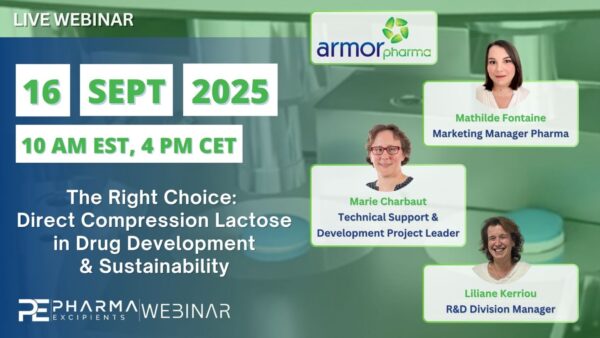
WEBINAR REcording HERE

The Right Choice Direct Compression Lactose in Drug Development & Sustainability
Tags: excipientsformulation

Related Posts

Redefining Formulation Confidence
News

Redefining Formulation Confidence: Vikram Thermo Unveils a New Identity for the Future of Excipients

14. January 2026
Green Chemistry Solvents
News

The Future of Green Chemistry: Evolution and Recent Trends in Deep Eutectic Solvents Research

14. January 2026
Figure 1. Solubility of drug in (a) oil; (b) surfactants and co-surfactants.
BASF

Ivermectin-Loaded Oral Microemulsion for Oral Use

13. January 2026
Next Post
Granule Moisture Content Prediction During Fluid Bed Drying

Granule Moisture Content Prediction During Fluid Bed Drying

Cart

Shop Search

  • Search for excipients and samples
  • Product Inquiry
  • Newsletter Registration
  • Visit the Homepage

Top Pharma-Excipient Links

  • Pharmaceutical Excipients – Some Definition
  • Inactive ingredient search for approved drug products in the USA
  • Excipient Suppliers List
  • GRAS Substances (SCOGS) Database
  • DC Excipients List
  • Homepage

About | Privacy Policy | Cookie policy | Cookie Settings | Contact | Homepage
Copyright: PharmaExcipients AG

Welcome Back!

Login to your account below

Forgotten Password?

Retrieve your password

Please enter your username or email address to reset your password.

Log In
No Result
View All Result
  • Shop
  • News
    • Specials
      • Excipients for CBD
      • Excipients & 3D Printing
      • Infographics – The overview
      • GMP-certified excipient production sites
      • The Future of TiO2
      • Excipients in the COVID-19 Vaccines
      • BASF PVP-Iodine
      • RegXcellence™
      • BASF Parenteral Excipients
    • World Days – The overview
  • Excipient basics
    • Excipient Solutions for CBD
    • Inorganic Chemicals
      • Calcium Carbonate
      • Calcium Phosphates
      • Calcium Sulfate
      • Halites
      • Metallic Oxides
      • Silica
    • Organic Chemicals
      • Actual Sugars
      • Artificial Sweeteners
      • Carbohydrates
      • Cellulose
      • Cellulose Esters
      • Cellulose Ethers
      • CMC and Croscarmellose Sodium
      • Converted Starch
      • Dried Starch
      • Microcrystalline Cellulose
      • Modified Starch
      • Starch
      • Sugars
      • Sugar Alcohols
    • Petrochemicals
      • Acrylic Polymers
      • Glycols
      • Mineral Hydrocarbons
      • Mineral Oils
      • Mineral Waxes
      • Petrolatum
      • Polyethylene Glycol (PEG)
      • Povidones
      • Propylene Glycol
      • Other Petrochemical Excipients
    • Oleochemicals
      • Fatty Alcohols
      • Glycerin
      • Mineral Stearates
      • Pharmaceutical Oils
      • Other Oleochemical Excipients
    • Proteins
  • Applications
    • 3D Printing – Drug Carrier
      • 3D Printing
      • Binder
      • Coating
      • Colour / Color
      • Coating Systems and Additives
      • Controlled Release Excipient
      • DC excipient
      • Disintegrant / Superdisintergrant
      • Drug Carrier
    • Emulsifier – Glidant
      • Emulsifier
      • Excipient for Inhalation
      • Filler
      • Film former
      • Flavour / Flavor
      • Glidant
    • Lubricant – Preservative
      • Lubricant
      • Nanotechnology
      • Orally Dissolving Technology Excipient
      • Pellet
      • Plasticizer
      • Preservative
    • Solubilizer – Viscocity Agent
      • Solubilizer
      • Speciality Excipient
      • Surfactants
      • Suspension Agent
      • Sustained Release Agent
      • Sweeteners
      • Taste Masking
      • Topical Excipient
      • Viscocity Agent
  • Sources
    • EINECS Numbers
    • Excipient DMF List
    • Excipient cGMP Certification Organisations
    • FDA Inactive Ingredient List
    • FDA GRAS Substances (SCOGS) Database
    • Excipient E-Numbers
    • Whitepapers / Publications
    • Contract Development|Contract Manufacturing
  • Suppliers
    • A-B
      • ADM
      • ARMOR PHARMA
      • Ceolus™ & Celphere™
      • Ashland
      • BASF
      • Beneo – galenIQ
      • Biogrund
      • Budenheim
    • C-G
      • Captisol
      • Croda
      • Cyclolab
      • DFE Pharma
      • DuPont Pharma Solutions
      • Evonik
      • Fuji Chemical Industries
      • Gattefossé
      • Gangwal Healthcare
    • I-O
      • ingredientpharm
      • IOI Oleochemical
      • JRS Pharma
      • Kerry
      • KLK Oleo Life Sciences
      • Lactalis Ingredients Pharma
      • Lipoid
      • Dr. Paul Lohmann
      • Lubrizol
      • Magnesia
      • MEGGLE Excipients
      • Nagase Viita – Pharmaceutical Ingredients
      • Nordic Bioproducts Group
    • P-Z
      • Pfanstiehl
      • pharm-a-spheres
      • Pharma Line
      • PMC Isochem
      • Roquette Pharma
      • Seppic
      • Shin-Etsu
      • Sigachi Group
      • Südzucker AG
      • VIKRAM THERMO
      • Zerion Pharma
      • ZoomLab® – Your Virtual Pharma Assistant
  • Inquiries
    • Product Inquiry
    • Tailored Tableting Excipients
      • Tailored Film Coating
  • Events
    • Overview Pharmaceutical Webinars
    • Videos CPhI Frankfurt 2025
    • CPhI China 2024
    • ExciPerience – The great excipient event!
  • More
    • Handbook of Pharmaceutical Excipients – 9th Edition
    • Jobs
      • Job Submission

About | Privacy Policy | Cookie policy | Cookie Settings | Contact | Homepage
Copyright: PharmaExcipients AG