Pharma Excipients
No Result
View All Result
  • Login
  • Shop
  • News
    • Specials
      • Excipients for CBD
      • Excipients & 3D Printing
      • Infographics – The overview
      • GMP-certified excipient production sites
      • The Future of TiO2
      • Excipients in the COVID-19 Vaccines
      • BASF PVP-Iodine
      • RegXcellence™
      • BASF Parenteral Excipients
    • World Days – The overview
  • Excipient basics
    • Excipient Solutions for CBD
    • Inorganic Chemicals
      • Calcium Carbonate
      • Calcium Phosphates
      • Calcium Sulfate
      • Halites
      • Metallic Oxides
      • Silica
    • Organic Chemicals
      • Actual Sugars
      • Artificial Sweeteners
      • Carbohydrates
      • Cellulose
      • Cellulose Esters
      • Cellulose Ethers
      • CMC and Croscarmellose Sodium
      • Converted Starch
      • Dried Starch
      • Microcrystalline Cellulose
      • Modified Starch
      • Starch
      • Sugars
      • Sugar Alcohols
    • Petrochemicals
      • Acrylic Polymers
      • Glycols
      • Mineral Hydrocarbons
      • Mineral Oils
      • Mineral Waxes
      • Petrolatum
      • Polyethylene Glycol (PEG)
      • Povidones
      • Propylene Glycol
      • Other Petrochemical Excipients
    • Oleochemicals
      • Fatty Alcohols
      • Glycerin
      • Mineral Stearates
      • Pharmaceutical Oils
      • Other Oleochemical Excipients
    • Proteins
  • Applications
    • 3D Printing – Drug Carrier
      • 3D Printing
      • Binder
      • Coating
      • Colour / Color
      • Coating Systems and Additives
      • Controlled Release Excipient
      • DC excipient
      • Disintegrant / Superdisintergrant
      • Drug Carrier
    • Emulsifier – Glidant
      • Emulsifier
      • Excipient for Inhalation
      • Filler
      • Film former
      • Flavour / Flavor
      • Glidant
    • Lubricant – Preservative
      • Lubricant
      • Nanotechnology
      • Orally Dissolving Technology Excipient
      • Pellet
      • Plasticizer
      • Preservative
    • Solubilizer – Viscocity Agent
      • Solubilizer
      • Speciality Excipient
      • Surfactants
      • Suspension Agent
      • Sustained Release Agent
      • Sweeteners
      • Taste Masking
      • Topical Excipient
      • Viscosity Agent
  • Sources
    • Handbook of Pharmaceutical Excipients – 9th Edition
    • EINECS Numbers
    • Excipient DMF List
    • Excipient cGMP Certification Organisations
    • FDA Inactive Ingredient List
    • FDA GRAS Substances (SCOGS) Database
    • Excipient E-Numbers
    • Whitepapers / Publications
    • Contract Development|Contract Manufacturing
  • Suppliers
    Excipient Suppliers List
    BIOGRUND Logo
    Evonik Logo
    LI logo violet
    Roquette Logo
    ADM
    Antares Navi Logo
    Antares
    Armor Pharma
    Asahi KASEI
    Ashland

    BASF

    Beneo

    Captisol

    Clariant Logo

    Clariant
    Croda
    DFE Pharma
    Dow Logo
    Dow
    Excipio Chemicals
    Fuji Chemical

    Gattefossé

    Gangwal

    Indovinya Logo

    Indovinya
    Ingredient Pharm
    IOI Oleo

    JRS Pharma
    KLK Oleo

    KLK Oleo
    Lipoid
    Lubrizol Life Science Health

    Lubrizol Life Science Health
    MAGNESIA

    MAGNESIA
    MEGGLE Excipients & Technology
    MEGGLE
    Mingtai Chemical Logo
    Mingtai Chemical
    Nagase Viita
    Nagase Viita
    Nordic Bioproducts
    Nordic Bioproducts
    pharm-a-spheres
    pharm-a-spheres
    PMC Isochem
    PMC Isochem
    PQ Logo
    PQ
    Seppic
    Seppic
    ShinEtsu
    ShinEtsu
    Sigachi
    Sigachi
    SPI Pharma
    SPI Pharma
    Südzucker
    Südzucker
    Vikram Thermo Logo
    Vikram Thermo
    Zerion Pharma
    Zerion Pharma
    • A-B
      • ADM
      • ARMOR PHARMA
      • Ceolus™ & Celphere™
      • Ashland
      • BASF
      • Beneo – galenIQ
      • Biogrund
      • Budenheim
    • C-G
      • Captisol
      • Croda
      • Cyclolab
      • DFE Pharma
      • DuPont Pharma Solutions
      • Evonik
      • Fuji Chemical Industries
      • Gattefossé
      • Gangwal Healthcare
    • I-O
      • ingredientpharm
      • IOI Oleochemical
      • JRS Pharma
      • Kerry
      • KLK Oleo Life Science
      • Lactalis Ingredients Pharma
      • Lipoid
      • Dr. Paul Lohmann
      • Lubrizol
      • Magnesia
      • MEGGLE Excipients
      • Nagase Viita – Pharmaceutical Ingredients
      • Nordic Bioproducts Group
    • P-Z
      • Pfanstiehl
      • pharm-a-spheres
      • Pharma Line
      • PMC Isochem
      • Roquette Pharma
      • Seppic
      • Shin-Etsu
      • Sigachi Group
      • Südzucker AG
      • VIKRAM THERMO
      • Zerion Pharma
      • ZoomLab® – Your Virtual Pharma Assistant
  • Inquiries
    • Product Inquiry
    • Tailored Tableting Excipients
      • Tailored Film Coating
  • Events
    • Overview Pharmaceutical Webinars
    • Videos CPhI Frankfurt 2025
    • CPhI China 2024
    • ExciPerience – The great excipient event!
  • All4Nutra

No products in the cart.

  • Shop
  • News
    • Specials
      • Excipients for CBD
      • Excipients & 3D Printing
      • Infographics – The overview
      • GMP-certified excipient production sites
      • The Future of TiO2
      • Excipients in the COVID-19 Vaccines
      • BASF PVP-Iodine
      • RegXcellence™
      • BASF Parenteral Excipients
    • World Days – The overview
  • Excipient basics
    • Excipient Solutions for CBD
    • Inorganic Chemicals
      • Calcium Carbonate
      • Calcium Phosphates
      • Calcium Sulfate
      • Halites
      • Metallic Oxides
      • Silica
    • Organic Chemicals
      • Actual Sugars
      • Artificial Sweeteners
      • Carbohydrates
      • Cellulose
      • Cellulose Esters
      • Cellulose Ethers
      • CMC and Croscarmellose Sodium
      • Converted Starch
      • Dried Starch
      • Microcrystalline Cellulose
      • Modified Starch
      • Starch
      • Sugars
      • Sugar Alcohols
    • Petrochemicals
      • Acrylic Polymers
      • Glycols
      • Mineral Hydrocarbons
      • Mineral Oils
      • Mineral Waxes
      • Petrolatum
      • Polyethylene Glycol (PEG)
      • Povidones
      • Propylene Glycol
      • Other Petrochemical Excipients
    • Oleochemicals
      • Fatty Alcohols
      • Glycerin
      • Mineral Stearates
      • Pharmaceutical Oils
      • Other Oleochemical Excipients
    • Proteins
  • Applications
    • 3D Printing – Drug Carrier
      • 3D Printing
      • Binder
      • Coating
      • Colour / Color
      • Coating Systems and Additives
      • Controlled Release Excipient
      • DC excipient
      • Disintegrant / Superdisintergrant
      • Drug Carrier
    • Emulsifier – Glidant
      • Emulsifier
      • Excipient for Inhalation
      • Filler
      • Film former
      • Flavour / Flavor
      • Glidant
    • Lubricant – Preservative
      • Lubricant
      • Nanotechnology
      • Orally Dissolving Technology Excipient
      • Pellet
      • Plasticizer
      • Preservative
    • Solubilizer – Viscocity Agent
      • Solubilizer
      • Speciality Excipient
      • Surfactants
      • Suspension Agent
      • Sustained Release Agent
      • Sweeteners
      • Taste Masking
      • Topical Excipient
      • Viscosity Agent
  • Sources
    • Handbook of Pharmaceutical Excipients – 9th Edition
    • EINECS Numbers
    • Excipient DMF List
    • Excipient cGMP Certification Organisations
    • FDA Inactive Ingredient List
    • FDA GRAS Substances (SCOGS) Database
    • Excipient E-Numbers
    • Whitepapers / Publications
    • Contract Development|Contract Manufacturing
  • Suppliers
    Excipient Suppliers List
    BIOGRUND Logo
    Evonik Logo
    LI logo violet
    Roquette Logo
    ADM
    Antares Navi Logo
    Antares
    Armor Pharma
    Asahi KASEI
    Ashland
    BASF
    Beneo
    Captisol
    Clariant Logo
    Clariant
    Croda
    DFE Pharma
    Dow Logo
    Dow
    Excipio Chemicals
    Fuji Chemical
    Gattefossé
    Gangwal
    Indovinya Logo
    Indovinya
    Ingredient Pharm
    IOI Oleo
    JRS Pharma
    KLK Oleo
    KLK Oleo
    Lipoid
    Lubrizol Life Science Health
    Lubrizol Life Science Health
    MAGNESIA
    MAGNESIA
    MEGGLE Excipients & Technology
    MEGGLE
    Mingtai Chemical Logo
    Mingtai Chemical
    Nagase Viita
    Nagase Viita
    Nordic Bioproducts
    Nordic Bioproducts
    pharm-a-spheres
    pharm-a-spheres
    PMC Isochem
    PMC Isochem
    PQ Logo
    PQ
    Seppic
    Seppic
    ShinEtsu
    ShinEtsu
    Sigachi
    Sigachi
    SPI Pharma
    SPI Pharma
    Südzucker
    Südzucker
    Vikram Thermo Logo
    Vikram Thermo
    Zerion Pharma
    Zerion Pharma
    • A-B
      • ADM
      • ARMOR PHARMA
      • Ceolus™ & Celphere™
      • Ashland
      • BASF
      • Beneo – galenIQ
      • Biogrund
      • Budenheim
    • C-G
      • Captisol
      • Croda
      • Cyclolab
      • DFE Pharma
      • DuPont Pharma Solutions
      • Evonik
      • Fuji Chemical Industries
      • Gattefossé
      • Gangwal Healthcare
    • I-O
      • ingredientpharm
      • IOI Oleochemical
      • JRS Pharma
      • Kerry
      • KLK Oleo Life Science
      • Lactalis Ingredients Pharma
      • Lipoid
      • Dr. Paul Lohmann
      • Lubrizol
      • Magnesia
      • MEGGLE Excipients
      • Nagase Viita – Pharmaceutical Ingredients
      • Nordic Bioproducts Group
    • P-Z
      • Pfanstiehl
      • pharm-a-spheres
      • Pharma Line
      • PMC Isochem
      • Roquette Pharma
      • Seppic
      • Shin-Etsu
      • Sigachi Group
      • Südzucker AG
      • VIKRAM THERMO
      • Zerion Pharma
      • ZoomLab® – Your Virtual Pharma Assistant
  • Inquiries
    • Product Inquiry
    • Tailored Tableting Excipients
      • Tailored Film Coating
  • Events
    • Overview Pharmaceutical Webinars
    • Videos CPhI Frankfurt 2025
    • CPhI China 2024
    • ExciPerience – The great excipient event!
  • All4Nutra
No Result
View All Result
Pharma Excipients
No Result
View All Result

Startseite » News » Oral Biologic Delivery: Strategies to Overcome GI Barriers
Oral Biologic Delivery: Strategies to Overcome GI Barriers

25. August 2026
Oral Biologic Delivery Strategies to Overcome GI Barriers

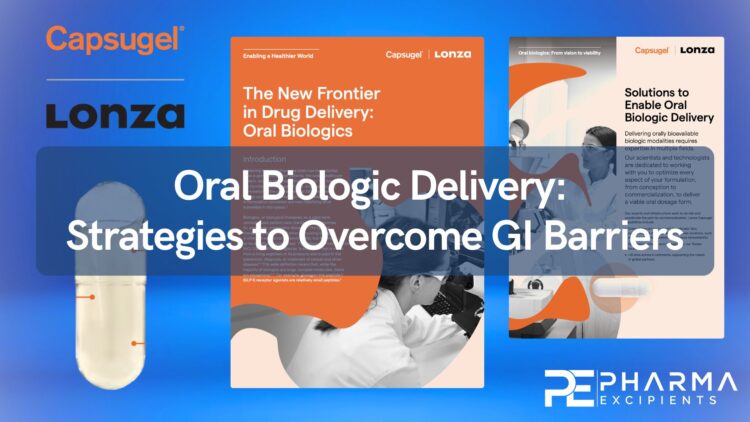
New formulation strategies are beginning to yield clinically and commercially viable oral biological therapies, according to a Lonza whitepaper published alongside a fact sheet that maps each barrier to a capsule or formulation technology.

The whitepaper states that the vast majority of current therapeutic options are limited by the need for parenteral administration, and that the conditions of the gastrointestinal (GI) tract lead to poor stability and permeability of biologics. It sets out the biochemical, mucus, and epithelial barriers behind that problem, then reviews five strategies it says can overcome them. The fact sheet maps three of those challenges to a Lonza Capsugel technology and to the active pharmaceutical ingredient (API) classes each one is compatible with.

Why oral delivery is worth pursuing

The whitepaper notes that biologics have revolutionized patient care, transforming outcomes for previously untreatable diseases, and that the class is broad by definition: it cites the National Cancer Institute definition of a substance made from a living organism or its products and used in the prevention, diagnosis, or treatment of cancer and other diseases. Most are large, complex molecules, though the document notes exceptions such as glucagon-like peptide-1 (GLP-1) receptor agonists, which it describes as relatively small peptides.

Injection is described as invasive and painful, as generating sharps waste, and as often requiring a trained healthcare professional, and many conditions treated by biologics are chronic, which the document says exacerbates the burden and reduces patient adherence. It cites one survey in which 91% expressed a preference for oral delivery over their current parenteral delivery, and in which 55% of patients with twice-yearly injections would prefer daily oral administration if given the choice.

The barriers in the gastrointestinal tract

According to the whitepaper:

  • Biochemical barrier: the acidic pH of the stomach poses a significant risk to biologics, and gastric enzymes activated at low pH, including pepsin, can break them down through pH-induced proteolysis. Proteolytic enzymes also pose a significant risk in the intestine, including trypsin, chymotrypsin, and pancreatic amylases in the lumen, and endopeptidases, alkaline phosphatase, and isomaltase at the brush border membrane.
  • Mucus barrier: composed of water, lipids, and mucins and thickest in the gastric and colonic segments, the layer lets molecules of 200nm enter easily while macromolecules are unable to pass.
  • Epithelial barrier: only a single cell thick, but intercellular junctions prevent the passage of macromolecules, particles engulfed by endocytosis are then degraded by intracellular enzymes, and large or charged compounds need channel proteins to assist uptake.
  • The resulting bioavailability: these conditions lead to low bioavailability, and the document reports an estimate that 94–98% of orally administered proteins are digested by enzymes.
  • Commercial constraints: some biologics may be expensive to manufacture, which can make a reduction in bioavailability commercially problematic, and commercial manufacturing can itself pose a risk to biologics, which can be sensitive to heat, pH, and solvents.

Five strategies the whitepaper reviews

  • Enteric protection: the agent is coated or encapsulated in a pH-sensitive polymer that remains intact at the low pH of the gut but disintegrates at the higher pH of the intestine. Coating is traditionally applied to tablets or pre-filled capsules, which the document says adds a step and can put biological agents at risk of denaturing due to heat or the solvents used. Lonza states that it has developed a bi-layered enteric capsule technology enabling enteric delivery without a post-filling coating step.
  • Permeation enhancers: the main permeation enhancer candidates used in clinical trials currently are sodium caprylate, salcaprozate sodium (SNAC), and bile salts, which the whitepaper says work by destabilizing the integrity of lipid membranes and opening tight junctions to enhance transcellular and paracellular permeability.
  • Lipid-based formulations (LBFs): described as emerging as another key strategy, since lipophilicity can support absorption through the lipid bilayer. LBFs are said to suit both hydrophilic and lipophilic compounds, as self-emulsifying drug delivery systems (SEDDS) using surfactants, cosurfactants, and hydrophobic ion pairing (HIP) can be used to solubilize and stabilize hydrophilic compounds in the oil phase.
  • Nanoparticles: biologics can either be attached to nanoparticles or fully encapsulated, with the function depending on the size and coating properties of the nanoparticle. Particles of a small size (30–200nm) and hydrophilic nature can be used to increase mucus penetration, with coatings of polyethylene glycol (PEG), polyvinyl alcohol, and methacrylamide copolymer (pHPMA) often used to achieve hydrophilicity. Targeting specific receptors can localize delivery, for example in inflammatory bowel disease.
  • Microneedle devices: where bioavailability similar to parenteral administration is needed, the document says microneedle smart capsule devices can be considered, and that they administer drugs painlessly due to the absence of pain receptors in the stomach and intestine. Two bio-compostable devices are reported to have recently shown promising results: one dissolves in the stomach and releases a device with a spring-loaded hook that administers the drug, while RaniPill capsules dissolve in the intestine and inflate a balloon attached to dissolvable hollow drug-loaded needles. Clinical trials are reported to have demonstrated that these are well tolerated and able to deliver octreotide with 65% bioavailability.

Single strategies and combinations

Which route is needed depends on the properties of the biological agent in question and its intended target, and the whitepaper says a single strategy may be sufficient to reach clinical efficacy. Its examples are delivery of fecal microbiota transplant and pancreatic enzymes to the intestine using enteric protection from Capsugel Enprotect capsules; Rybelsus, which uses SNAC as a buffering and permeability agent to increase absorption of semaglutide in the stomach; and microneedle devices, which it says can deliver similar bioavailability to subcutaneous injection.

In other cases multiple strategies may be needed. Alternative models of GLP-1 administration have used a combination of enteric protection, LBFs, HIP, and permeation enhancers, and preclinical models of monoclonal antibodies (mAbs) and RNA-based therapies are reported to have shown promising results with combination strategies. In one, infliximab concentration in the gut tissue was higher with oral delivery, using Phloral enteric coating alongside Soteria as an excipient, compared with intravenous injection. The GENEGUT project, a research partnership of 9 organizations from 8 European countries, is also investigating treatment for Crohn’s disease, using a combination of enteric protection and nanoparticles to support the oral delivery of RNA-based therapy.

Matching the technology to the barrier

The fact sheet sets three challenges against the technologies Lonza Capsugel offers for each, with the API classes each one is compatible with.

Challenge Solution How the fact sheet describes it Compatible APIs
API degradation in stomach acid, by gastrointestinal-tract enzymes, or during manufacturing Capsugel Enprotect capsules Ready-to-use bi-layer capsules that give enteric delivery with no post-filling coating step, which the fact sheet says helps protect sensitive APIs during production and accelerates the manufacturing process Small molecules, microbial therapies, enzymes, peptides
API degradation by intestinal-tract enzymes Lipid-based formulations (LBFs) and hydrophobic ion pairing (HIP) Lipidizing the API is said to keep it within the protective lipid-droplet environment, protecting it from degradation Peptides, proteins
Low permeation across the intestinal epithelial barrier Permeation enhancers Medium-chain fatty acids, such as sodium caprate, are said to increase API uptake by temporarily opening tight junctions and destabilizing membranes, increasing permeability Peptides

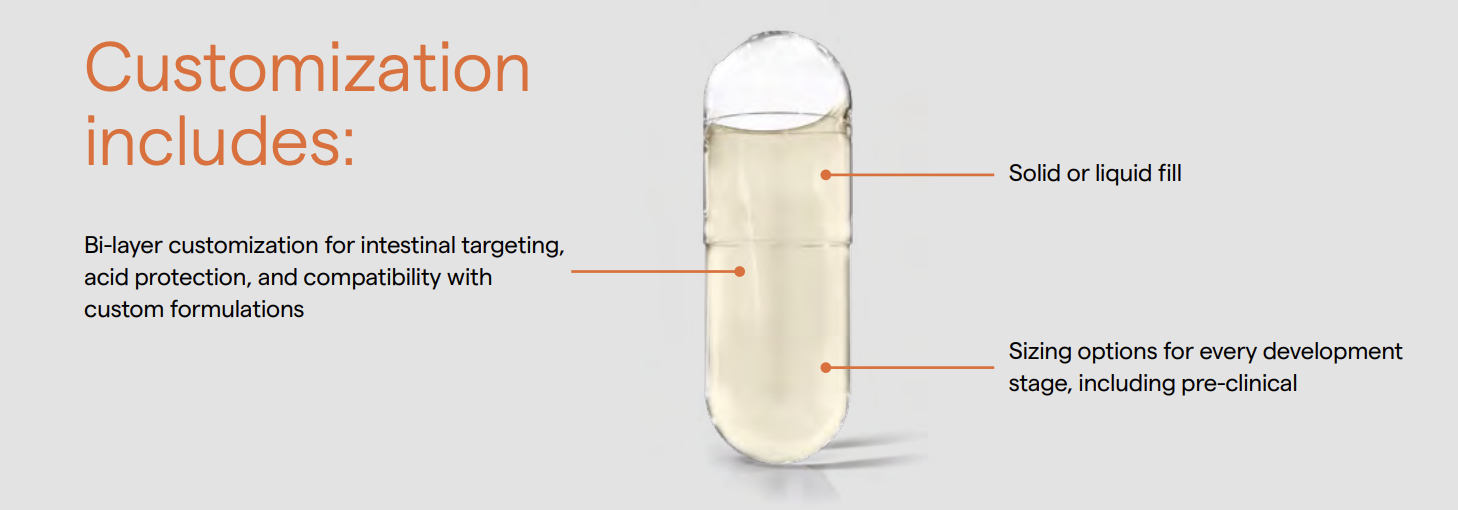
It states that the versatile nature of bi-layer capsules makes them particularly suited to customization, facilitating delivery systems that match the specific challenges and properties of the API. The options listed are bi-layer customization for intestinal targeting, acid protection, and compatibility with custom formulations; solid or liquid fill; and sizing options for every development stage, including pre-clinical. Among the supporting capabilities named are Innovaform Accelerator labs, supporting the development of bespoke solutions such as customized formulations to enhance bioavailability, and good manufacturing practice (GMP) manufacturing and packaging at its Tampa location.
bi-layer capsule customization

Key takeaways

  • The whitepaper groups the obstacles to oral biologic delivery into a biochemical barrier, a mucus barrier, and an epithelial barrier.
  • It reports an estimate that 94–98% of orally administered proteins are digested by enzymes.
  • Five strategies are reviewed: enteric protection, permeation enhancers, lipid-based formulations, nanoparticles, and microneedle devices.
  • Lonza states that its bi-layered enteric capsule technology enables enteric delivery without a post-filling coating step, which the fact sheet says helps protect sensitive APIs during production and accelerates the manufacturing process.
  • A single strategy is described as sufficient for some agents, while combinations have been used in alternative models of GLP-1 administration and in preclinical models of mAbs and RNA-based therapies.

See the full whitepaper on The New Frontier in Drug Delivery: Oral Biologics here:

Lonza – Oral Biologics WhitepaperOral Biologics Whitepaper

(click the picture to download the document)

See the full fact sheet on Solutions to Enable Oral Biologic Delivery here:

Lonza – Oral Biologics FactsheetOral Biologics Factsheet

(click the picture to download the document)

Sources

  1. Lonza, The New Frontier in Drug Delivery: Oral Biologics, whitepaper, 2026.
  2. Lonza, Solutions to Enable Oral Biologic Delivery, fact sheet, 2026.

This article is intended for biopharmaceutical formulation, process, and regulatory professionals. It does not constitute clinical, regulatory, or formulation advice. Always refer to the current pharmacopoeial monograph, the supplier’s current technical data sheet and Certificate of Analysis, applicable ICH/FDA/EMA guidance, and your own development and stability data. Pharma Excipients International AG is not a manufacturer of the excipients discussed.


Request a sample here:

Tags: excipientsformulation

Related Posts

Gasil Mesoporous Silica as a Glidant for Powder Flow and Tableting
DC excipient

Gasil Mesoporous Silica as a Glidant for Powder Flow and Tableting

24. August 2026
Effects of excipient particle size range on the performance of selective laser sintered pharmaceutical printlets
3D Printing

Effects of excipient particle size range on the performance of selective laser sintered pharmaceutical printlets

24. August 2026
TopMill Pigment Premix Reduces Spotting in Colored Tablet Cores
Biogrund

TopMill Pigment Premix Reduces Spotting in Colored Tablet Cores

24. August 2026

Cart

Shop Search

  • Search for excipients and samples
  • Product Inquiry
  • Newsletter Registration
  • Visit the Homepage

Top Pharma-Excipient Links

  • Pharmaceutical Excipients – Some Definition
  • Inactive ingredient search for approved drug products in the USA
  • Excipient Suppliers List
  • GRAS Substances (SCOGS) Database
  • DC Excipients List
  • Homepage

About | Privacy Policy | Cookie policy | Cookie Settings | Contact | Homepage
Copyright: PharmaExcipients AG

Welcome Back!

Login to your account below

Forgotten Password?

Retrieve your password

Please enter your username or email address to reset your password.

Log In
No Result
View All Result
  • Shop
  • News
    • Specials
      • Excipients for CBD
      • Excipients & 3D Printing
      • Infographics – The overview
      • GMP-certified excipient production sites
      • The Future of TiO2
      • Excipients in the COVID-19 Vaccines
      • BASF PVP-Iodine
      • RegXcellence™
      • BASF Parenteral Excipients
    • World Days – The overview
  • Excipient basics
    • Excipient Solutions for CBD
    • Inorganic Chemicals
      • Calcium Carbonate
      • Calcium Phosphates
      • Calcium Sulfate
      • Halites
      • Metallic Oxides
      • Silica
    • Organic Chemicals
      • Actual Sugars
      • Artificial Sweeteners
      • Carbohydrates
      • Cellulose
      • Cellulose Esters
      • Cellulose Ethers
      • CMC and Croscarmellose Sodium
      • Converted Starch
      • Dried Starch
      • Microcrystalline Cellulose
      • Modified Starch
      • Starch
      • Sugars
      • Sugar Alcohols
    • Petrochemicals
      • Acrylic Polymers
      • Glycols
      • Mineral Hydrocarbons
      • Mineral Oils
      • Mineral Waxes
      • Petrolatum
      • Polyethylene Glycol (PEG)
      • Povidones
      • Propylene Glycol
      • Other Petrochemical Excipients
    • Oleochemicals
      • Fatty Alcohols
      • Glycerin
      • Mineral Stearates
      • Pharmaceutical Oils
      • Other Oleochemical Excipients
    • Proteins
  • Applications
    • 3D Printing – Drug Carrier
      • 3D Printing
      • Binder
      • Coating
      • Colour / Color
      • Coating Systems and Additives
      • Controlled Release Excipient
      • DC excipient
      • Disintegrant / Superdisintergrant
      • Drug Carrier
    • Emulsifier – Glidant
      • Emulsifier
      • Excipient for Inhalation
      • Filler
      • Film former
      • Flavour / Flavor
      • Glidant
    • Lubricant – Preservative
      • Lubricant
      • Nanotechnology
      • Orally Dissolving Technology Excipient
      • Pellet
      • Plasticizer
      • Preservative
    • Solubilizer – Viscocity Agent
      • Solubilizer
      • Speciality Excipient
      • Surfactants
      • Suspension Agent
      • Sustained Release Agent
      • Sweeteners
      • Taste Masking
      • Topical Excipient
      • Viscosity Agent
  • Sources
    • Handbook of Pharmaceutical Excipients – 9th Edition
    • EINECS Numbers
    • Excipient DMF List
    • Excipient cGMP Certification Organisations
    • FDA Inactive Ingredient List
    • FDA GRAS Substances (SCOGS) Database
    • Excipient E-Numbers
    • Whitepapers / Publications
    • Contract Development|Contract Manufacturing
  • Suppliers
    • A-B
      • ADM
      • ARMOR PHARMA
      • Ceolus™ & Celphere™
      • Ashland
      • BASF
      • Beneo – galenIQ
      • Biogrund
      • Budenheim
    • C-G
      • Captisol
      • Croda
      • Cyclolab
      • DFE Pharma
      • DuPont Pharma Solutions
      • Evonik
      • Fuji Chemical Industries
      • Gattefossé
      • Gangwal Healthcare
    • I-O
      • ingredientpharm
      • IOI Oleochemical
      • JRS Pharma
      • Kerry
      • KLK Oleo Life Science
      • Lactalis Ingredients Pharma
      • Lipoid
      • Dr. Paul Lohmann
      • Lubrizol
      • Magnesia
      • MEGGLE Excipients
      • Nagase Viita – Pharmaceutical Ingredients
      • Nordic Bioproducts Group
    • P-Z
      • Pfanstiehl
      • pharm-a-spheres
      • Pharma Line
      • PMC Isochem
      • Roquette Pharma
      • Seppic
      • Shin-Etsu
      • Sigachi Group
      • Südzucker AG
      • VIKRAM THERMO
      • Zerion Pharma
      • ZoomLab® – Your Virtual Pharma Assistant
  • Inquiries
    • Product Inquiry
    • Tailored Tableting Excipients
      • Tailored Film Coating
  • Events
    • Overview Pharmaceutical Webinars
    • Videos CPhI Frankfurt 2025
    • CPhI China 2024
    • ExciPerience – The great excipient event!
  • All4Nutra

About | Privacy Policy | Cookie policy | Cookie Settings | Contact | Homepage
Copyright: PharmaExcipients AG