
- Suppliers





ADM 
Antares 
Armor Pharma 
Asahi KASEI 
Ashland 
BASF 
Beneo 
Captisol 
Clariant 
Croda 
DFE Pharma 
Dow 
Excipio Chemicals 
Fuji Chemical 
Gattefossé 
Gangwal 
Indovinya 
Ingredient Pharm 
IOI Oleo 
JRS Pharma 
KLK Oleo 
Lipoid 
Lubrizol Life Science Health 
MAGNESIA 
MEGGLE 
Mingtai Chemical 
Nagase Viita 
Nordic Bioproducts 
pharm-a-spheres 
PMC Isochem 
PQ 
Seppic 
ShinEtsu 
Sigachi 
SPI Pharma 
Südzucker 
Vikram Thermo 
Zerion Pharma  All4Nutra
- Suppliers
ADM Antares Armor Pharma Asahi KASEI Ashland BASF Beneo Captisol Clariant Croda DFE Pharma Dow Excipio Chemicals Fuji Chemical Gattefossé Gangwal Indovinya Ingredient Pharm IOI Oleo JRS Pharma KLK Oleo Lipoid Lubrizol Life Science Health MAGNESIA MEGGLE Mingtai Chemical Nagase Viita Nordic Bioproducts pharm-a-spheres PMC Isochem PQ Seppic ShinEtsu Sigachi SPI Pharma Südzucker Vikram Thermo Zerion Pharma - All4Nutra

Regulatory Challenges of Novel Pharmaceutical Excipients: A Review

Regulatory Challenges of Novel Pharmaceutical Excipients
Abstract
Modern drug delivery systems depend heavily on pharmaceutical excipients, which are fundamental to critical quality attributes (CQAs) like bioavailability, stability, and targeted release profiles. Historical regulatory inertia continues to impede the commercial adoption of novel excipients, despite rapid progress in complex drug modalities, such as biologics, mRNA-lipid nanoparticles, and targeted localized delivery systems. Traditionally, excipients are not reviewed independently but rather approved as part of a final New Drug Application (NDA) or Abbreviated New Drug Application (ANDA). This exposes excipient innovators and drug developers to significant clinical, financial and regulatory risk.
This comprehensive review describes the existing regulatory framework for novel excipients. In this paper, we review the United States Food and Drug Administration (FDA) Novel Excipient Review Pilot Program framework and initial results, describe the integration of novel excipients into the International Council for Harmonization (ICH) Q8, Q9 and Q10 Quality by Design (QbD) lifecycles, and provide a comprehensive analysis of non-clinical toxicology requirements. Finally, this article examines the barriers to adoption by the industry and presents systemic, harmonized frameworks to lower the risk and to speed up the deployment of next-generation functional materials in drug product development.
Continue reading here
Zeinab Al-Tal, Mai Khanfar, Noor Baniali, Athar Tahat, Regulatory Challenges of Novel Pharmaceutical Excipients: A Review, Journal of Drug Delivery Science and Technology, 2026, 108986, ISSN 1773-2247, https://doi.org/10.1016/j.jddst.2026.108986.
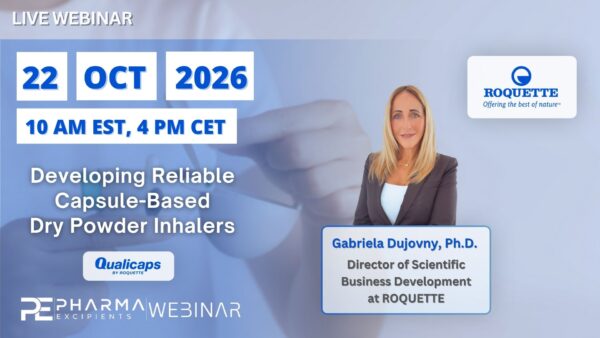
Enjoy our new free webinar, registration & information here:
Developing Reliable Capsule-Based Dry Powder Inhalers
Related Posts


